The region captivates visitors with its contrasts: between north and south, heaviness and lightness, sea and land, wildness and beauty. And it is incredibly attractive – Brittany…
Page Contents (click line to jump the text)
Intro and travel report
Rugged nature and a mild climate. Rocks, cliffs and dolmens, fishing villages, ancient settlements and golden sunsets on white beaches.
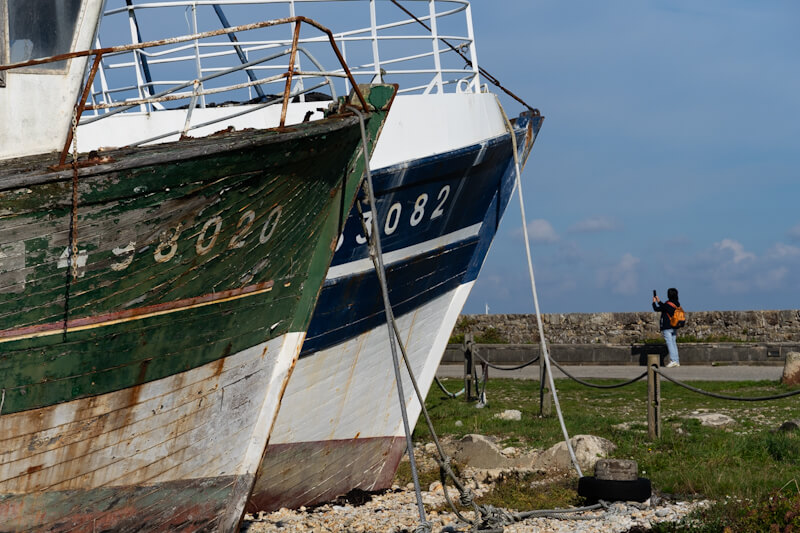
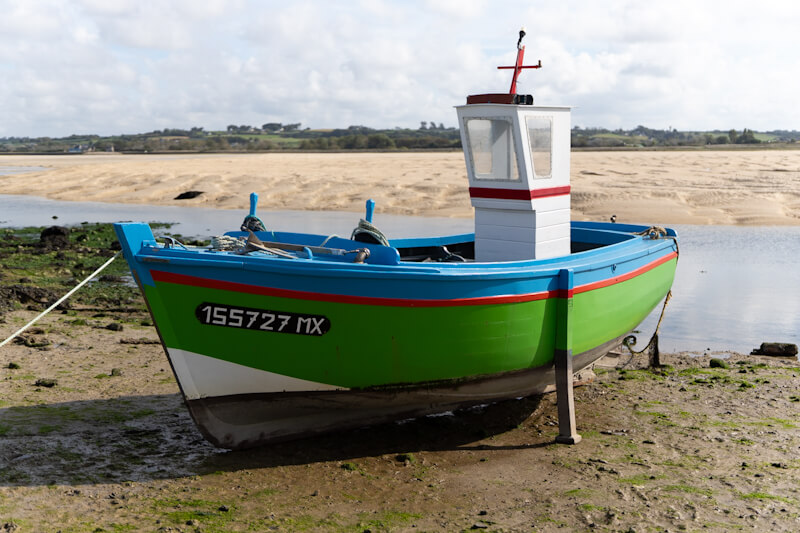
Old fishing boats, modern yachts, small harbours, sophisticated seaside resorts, pink cliffs and quiet bays, hearty food and light wine.
Contrasting, or even contradictory. That’s how I felt about Brittany. It’s constantly changing and always interesting.
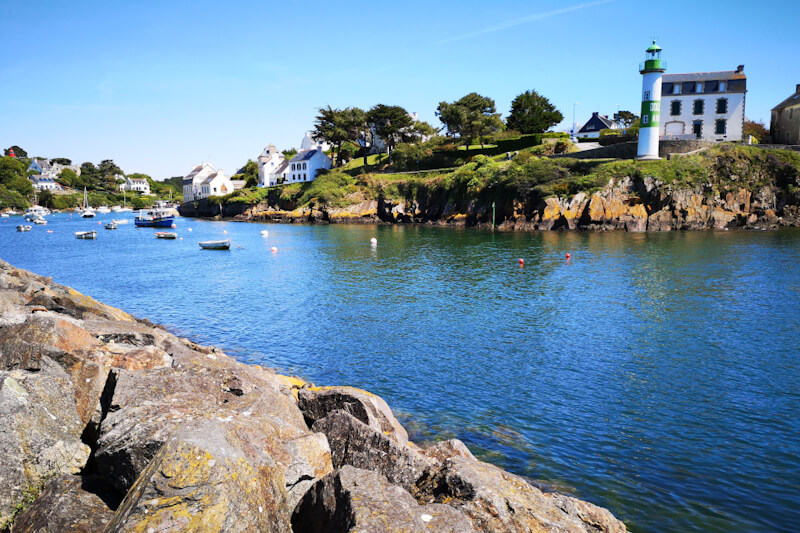
Our motorhome rolls over wooded hills, up and down. Then the road winds downhill in long curves and we follow a river estuary. The sea glitters in the background. Numerous boats bob at their moorings in the estuary.
White boats and blue water on one side, green pine forest on the other. We follow the river upstream for a while and then cross it via a high bridge.
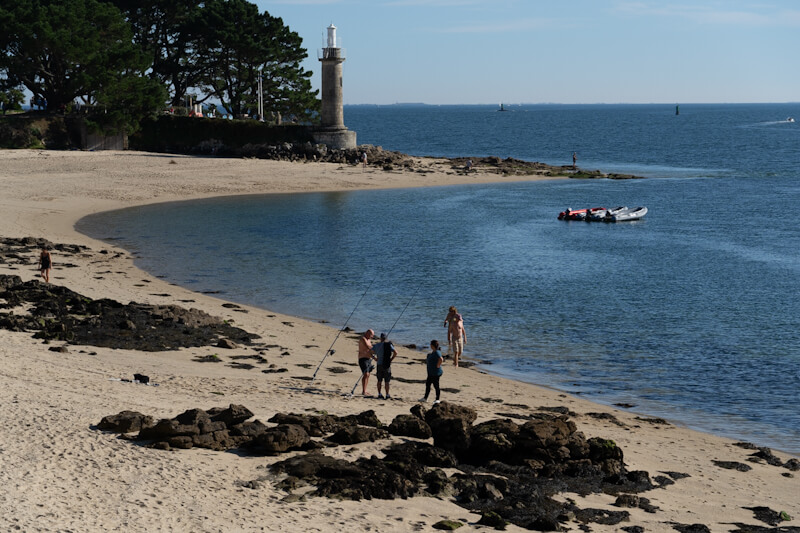
On the other side, we follow the river downstream again until we see the sea in front of us. The river mouth opens up in front of us and widens into a large bay. The rocky walls that accompanied the river also recede and we see yellowish-white sandy beaches appear in front of us.
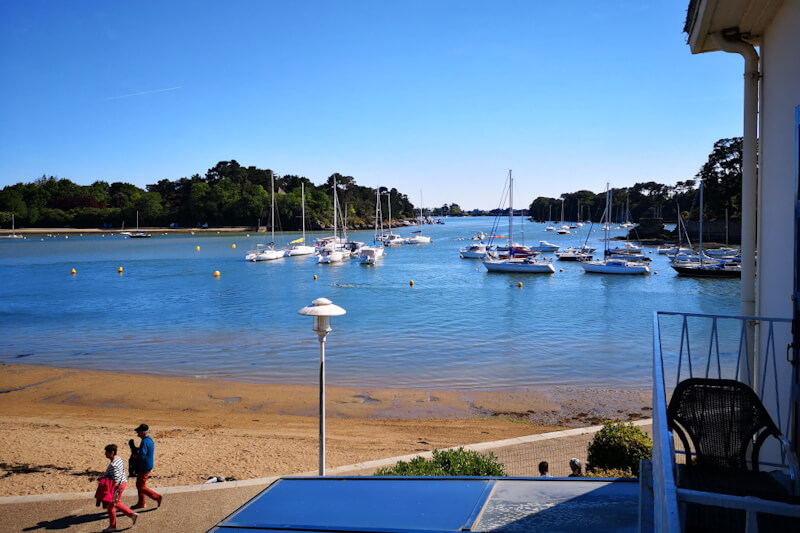
It’s perfect for the seaside resort that also appears before us. This used to be a small fishing harbour, but today there are several marinas here. I’ve never seen so many motorboats and sailing yachts in one place as I have in Brittany.
It feels like every family here has at least one boat. But there are probably so many boats here because there are also lots of holiday homes.
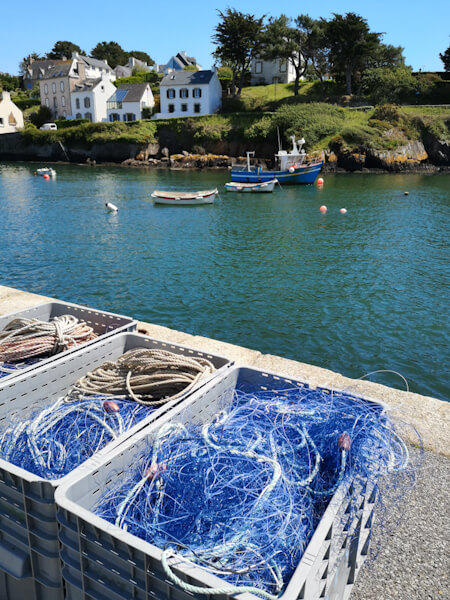
Many of the ‘residents’ are probably French families from larger cities inland who spend their weekends and holidays here in Brittany. The French like to holiday in their own country, and we hardly ever hear any other language spoken around us.
It is autumn, and the weather is mostly warm and sunny. People enjoy their time on the long beach promenade and on the terraces of the restaurants.
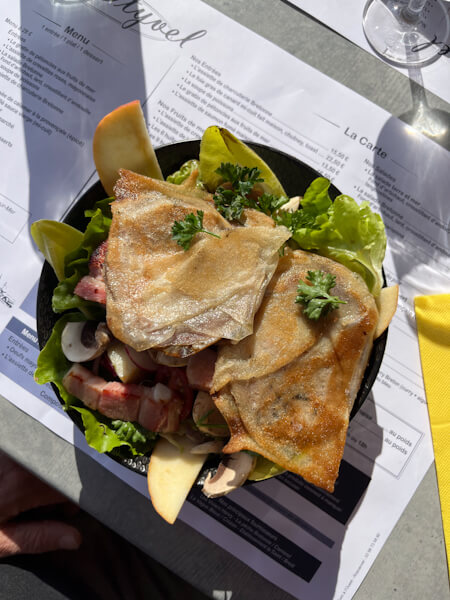
In the marina, there is a relaxed bustle, and on the beach, many guests are relaxing in the sun or swimming in the sea. The sunny weather makes us sluggish and automatically slows down our movements. Others seem to feel the same way, because time seems to pass more slowly and leisurely here.
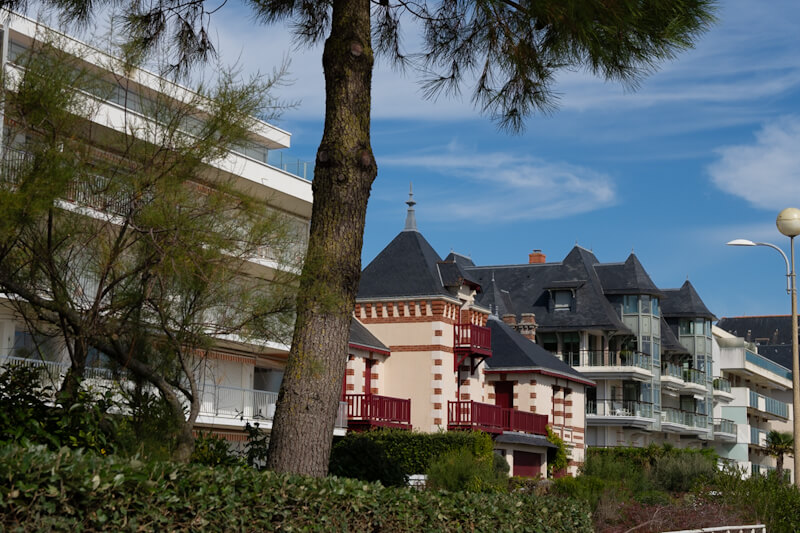
We see many beautiful old small villas, wonderfully restored half-timbered houses, similar to those we have already seen in Normandy.
But there are also modern seaside resorts with multi-storey modern buildings and many holiday apartments. Overall, all the towns look very good and very well maintained. There is clearly money in the region. Or rather, it is being invested here.
A few kilometres further on, the landscape changes completely: no forests, but small fields and pastures, interrupted by strips and areas of heathland.
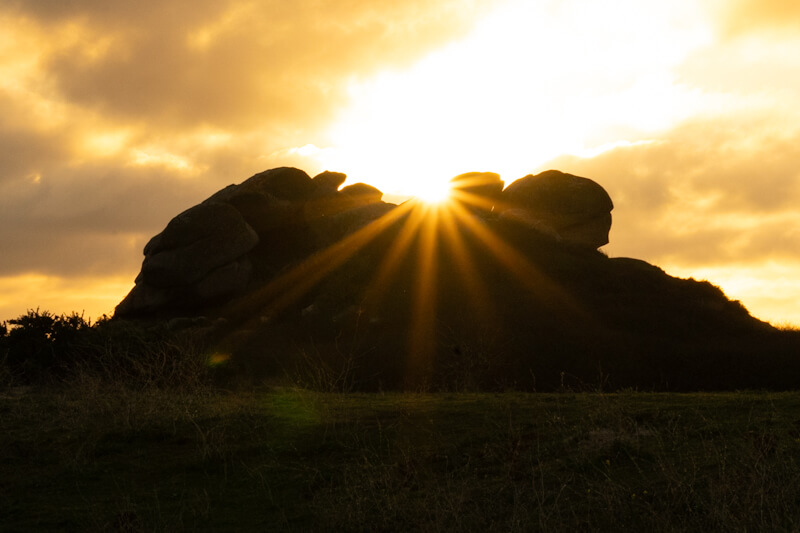
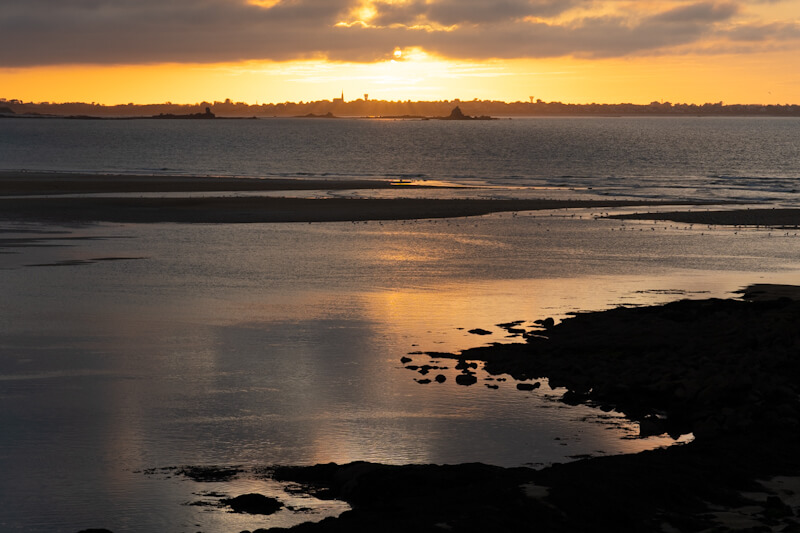
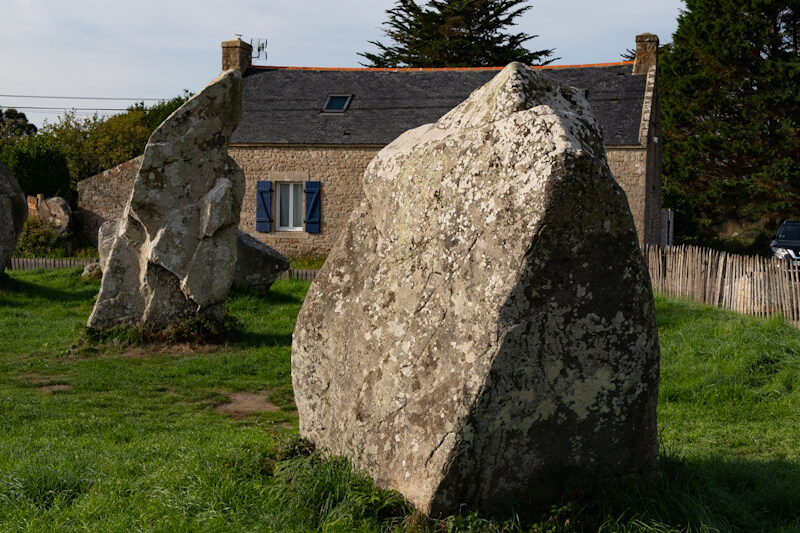
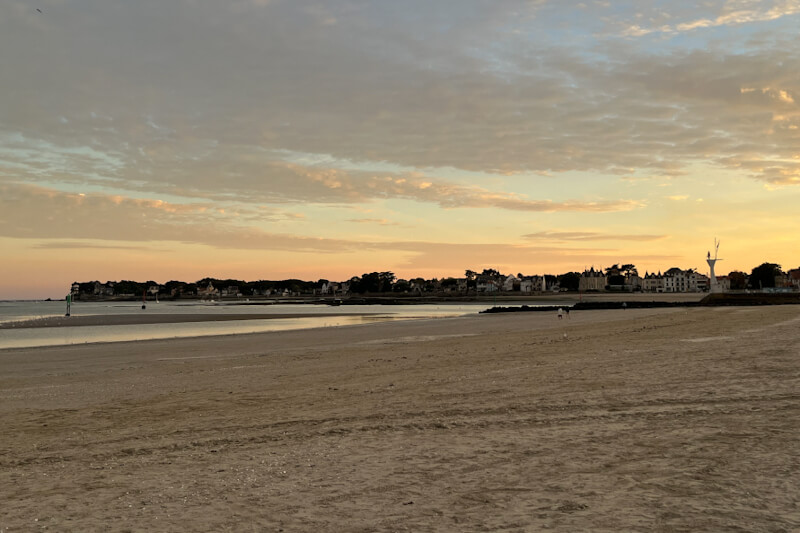
Again and again, we see large, rounded boulders in the landscape and at the roadside. This impression continues right down to the water’s edge, where thick, round boulders alternate with white sandy beaches. At sunset, the rocks become silhouettes against the orange-red sky and appear almost mystical.
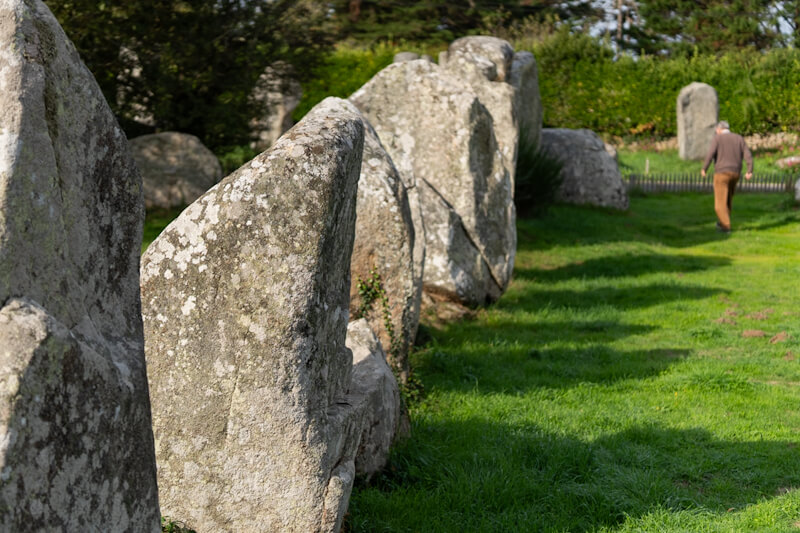
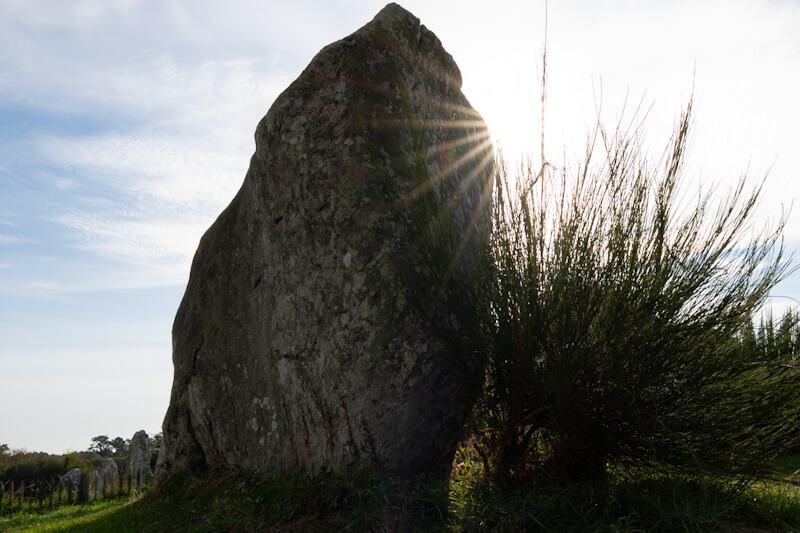
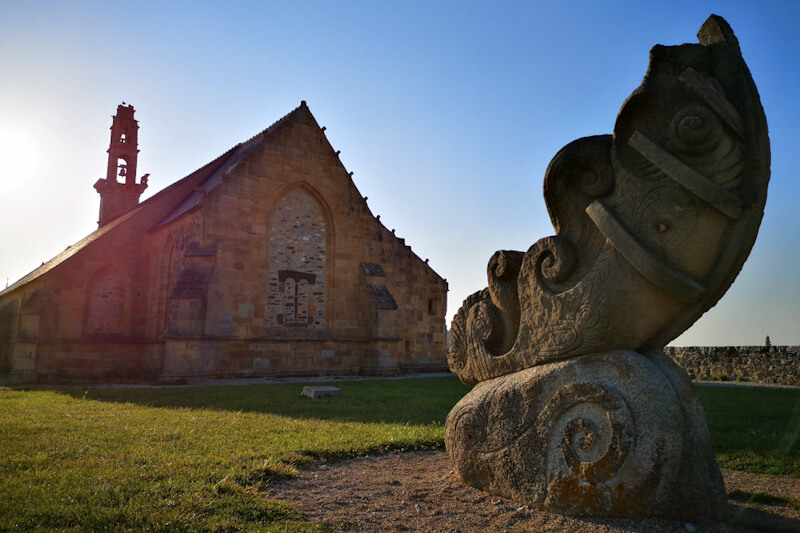
Perhaps it was these impressions that inspired the Druids thousands of years ago to create places of worship where long rows of dolmens were erected? These can be found in large numbers in the Carnac region – and they are definitely worth seeing!
However, they can be found almost everywhere in Brittany, along with stone tombs, altars and portal dolmens. Such megalithic cultures existed around 4,000-5,000 years ago in many places in Europe, including Ireland and the British Isles. But here in Brittany, they are extremely common.
Incidentally, we are in the land of the comic Gauls Asterix and Obelix, who lived here in the region of Armorica in what is now Brittany, beat up Romans, celebrated festivals and went out to sea to fish. Oh yes, and Obelix was constantly making menhirs and carrying them around the area.
In fact, this was one of the last bastions of the Celtic Gauls before their final subjugation by the Romans. The Romans settled in the region and introduced wine growing to the area. The remains of thermal baths and other buildings from Gallo-Roman culture can still be found here today.
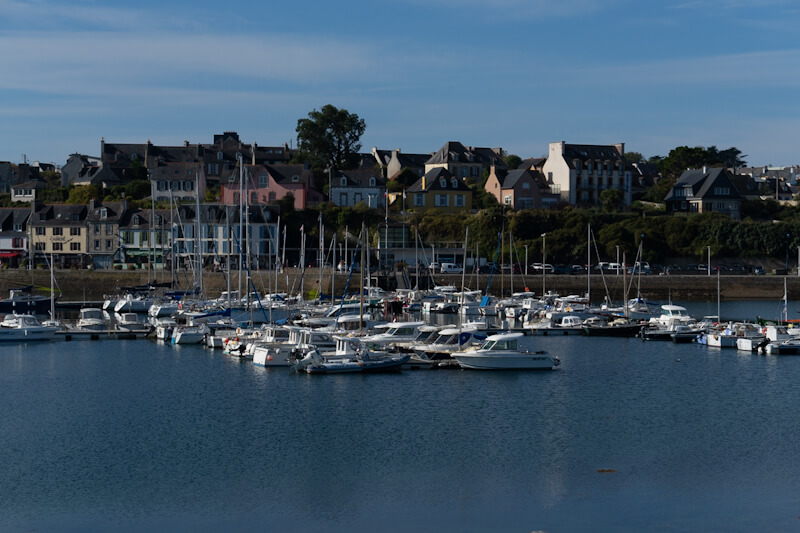
However, fortified towns with stone buildings were not built until the Middle Ages. One example is the town of Concarneau. The medieval town centre is still surrounded by massive walls today. It is located on a small island with narrow access points directly in the harbour. Its massive towers offered protection to the harbour, just as the surrounding water protected the town.
Brittany is a huge peninsula with a long and rugged coastline. With its many bays, Brittany has always offered sheltered moorings for boats and ships. As a result, fishing, maritime trade and the navy have always played an important role in the region.
This is particularly true in recent times, as the port of the larger city of Brest has been greatly expanded and is now one of the largest ports on the French Atlantic coast. It is home to the French Atlantic Fleet (navy) and is also an important trading base.
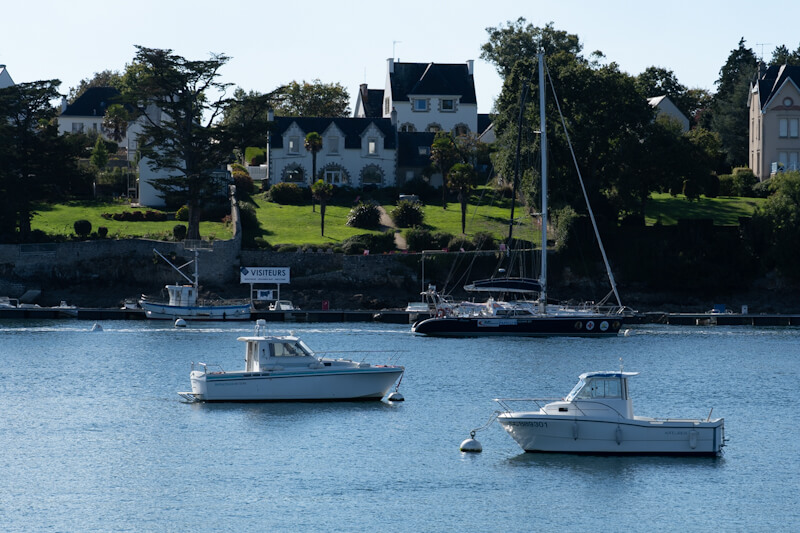
But anyone looking for other larger towns in the region will find it rather difficult, because despite tourism, Brittany has managed to retain its rural character with small villages and towns.
We are very happy about this, because the varied landscapes, small villages and towns are really beautiful and make driving around and exploring very exciting.
Helpful links for your travel planning
Lonely Planet France: You cannot go wrong with Lonely Planet – well written with lots of tips on and off the beaten path.
Lonely Planet Best Road Trips France: This one is focused on great road trips around France.
The Rough Guide to Brittany and Normandy: Lovely guide for an area that we absolutely love.
Lonely Planet France Planning Map: Very useful planning helper.
Photo Location Finder North West France: Find great vistas and photo spots at the Atlantic Coast
French Classics: The instant SUNDAY TIMES BESTSELLER: Enjoy french cuisine at home – while planning your trip.
Enjoy your reading!
Conclusion
We loved Brittany! Diverse, wild and charming landscapes, small old fishing villages and harbours, beautiful seaside resorts, historical sights, stunning coastlines and an incredible number of boats.
It’s so much fun to cruise around and explore here. Unfortunately, we didn’t have enough time to really explore Brittany in depth and detail.
That’s why we decided to go back to Brittany in the spring to take a closer look! So this article was just a ‘teaser’ – there will be more to come!
A word about the best time to travel: Brittany is definitely developed for tourism. It’s not mass tourism, but there are many places that are very tourist-oriented. On the one hand, this is good because there are many holiday apartments, hotels and campsites, but in some places it can get a bit crowded.
During the summer school holidays, Brittany is bound to be crowded. Those who prefer a quieter atmosphere, like us, should visit this beautiful peninsula in the far west of France in spring or autumn.
Enjoy your trip!
More interesting articles for you
Normandie: nordic charme
Travelling France by motorhome: experiences
Saint-Malo: massively impressive
La Rochelle: enchanting harbour town
Image credits Cover photo: Sunset in Brittany (Photo: Ulrich Knüppel-Gertberg)