Ports are fascinating. Old and new, history and the present, the gateway to the world… In recent times, they have also increasingly become office and residential districts, cultural hubs and centres of gastronomy. Dublin’s port district is definitely all of that – and more…
Page Contents (click line to jump the text)
Intro and travel report
We have been to Dublin many times. We have also driven through the harbour area many times, usually on our way to the ferry. But we have never taken a closer look at Dublin’s harbour area. Until today…
To explain: we (come from Germany and) have our second home in the south-east of Ireland, about an hour and a half south of Dublin.
But even if you don’t live there, you’re bound to arrive in Dublin, depart from Dublin or pass through Dublin on your trip to Ireland. There’s hardly any way around Dublin in Ireland – and that’s perfectly fine.
We chug leisurely into the capital by train. This is very pleasant compared to driving, because Dublin is a big city and the traffic is heavy. Finding a car park in the city centre is also not easy. But Connolly Station, the main railway station, is located almost in the middle of the city.
Was meine ich damit? Die Altstadt rund um Templebar liegt am Südufer des River Lifffey. Der Bahnhof liegt nahe dem Nordufer des Liffey. Wer mag, kann auch eine Station früher aussteigen und ist dann schon mittendrin.
Meine Frau steigt hier aus, denn sie möchte shoppen. Ich fahre noch bis Connolly, denn ich möchte besichtigen und fotografieren…
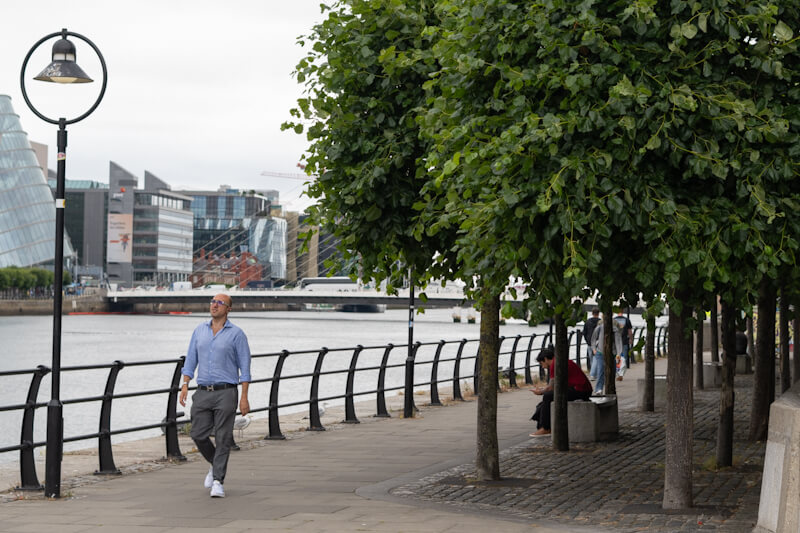
It is only a few metres from the station to the banks of the River Liffey. The river flows right through the middle of Dublin. Wide and sluggish, it winds its way from the city centre to the estuary, where the large cargo and ferry ports are located today.
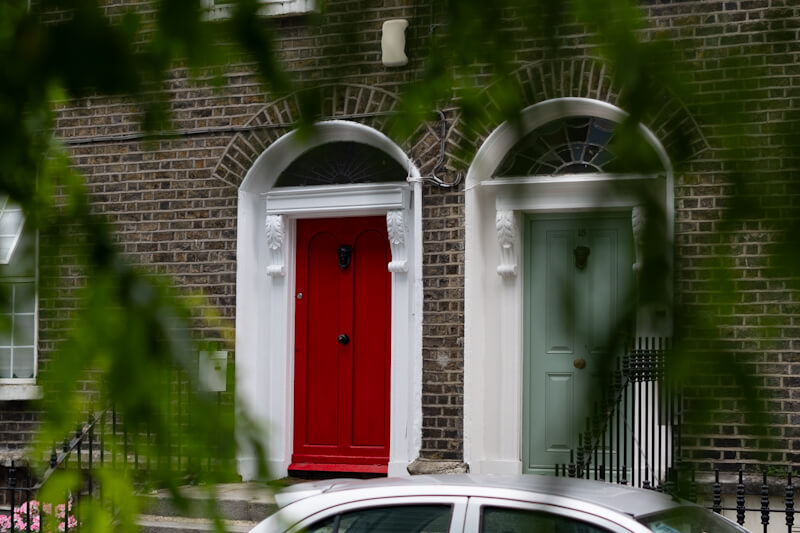
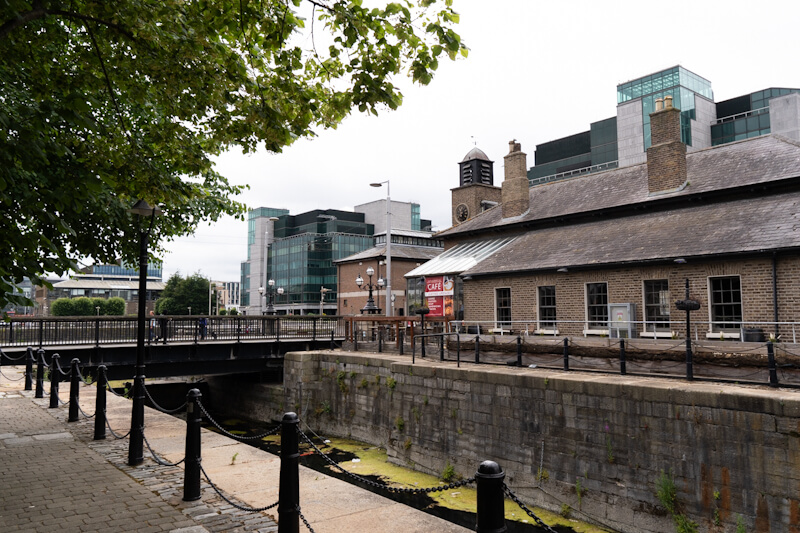
On the way there, it passes through the old harbour area. In the past, there were jetties directly on the river and several smaller canals that could be reached from the river via locks. Cargo ships used to sail into these canals and unload their cargo in the canals, where the old warehouses were located.
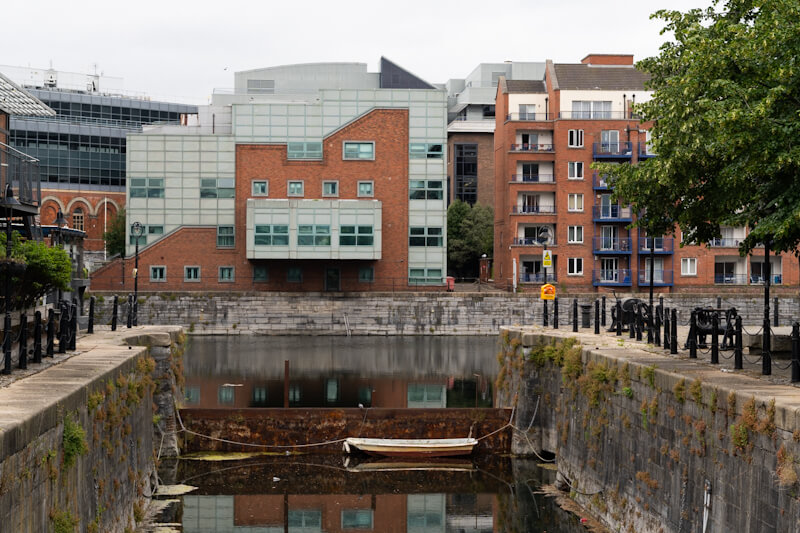
The renowned Guinness Brewery was also supplied with wood, hops, malt and everything else it needed for brewing beer via the river. The full beer barrels were then transported overland to Ireland or shipped across the sea to many European countries and, above all, to the United States.
Small, mechanical lift bridges carried road traffic over the side canals. When a ship approached, the bridge was raised or tilted vertically.
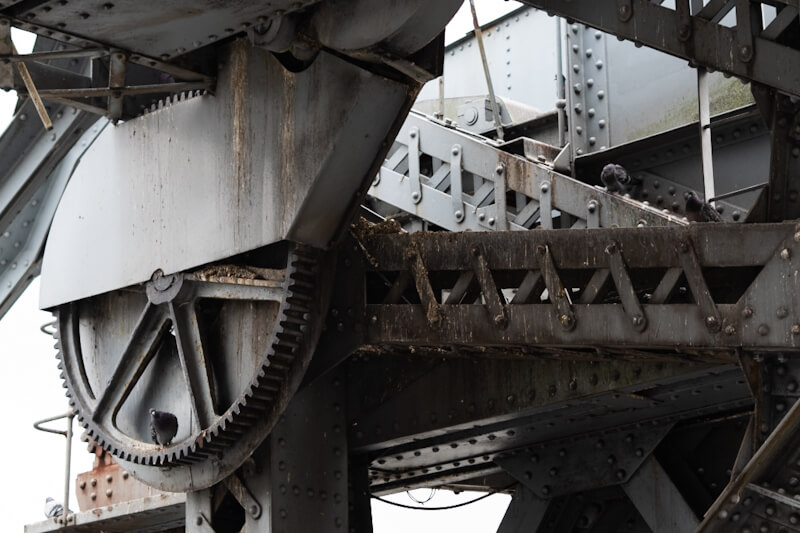
I stroll along the beautiful promenade by the River Liffey and cross one of the old canals via a lift bridge.
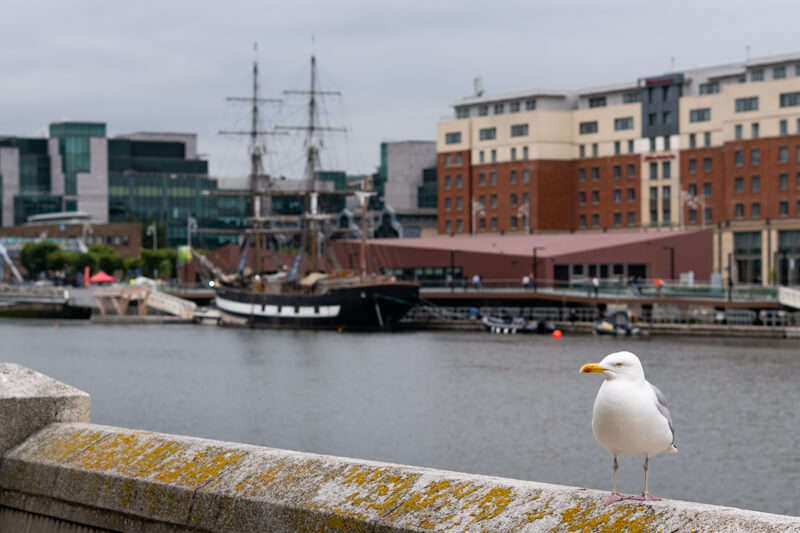
In front of me, I see a bridge over the river, modern office buildings and an old sailing ship. This is the Jeannie Johnston, a museum ship moored directly in front of EPIC. EPIC is Dublin’s Emigration Museum.
In the mid-19th century, Ireland was hit by a devastating potato blight, which led to several years of famine, known as the Great Famine. During this period, the island’s population was dramatically decimated. Many starved to death and around 2 million Irish people emigrated from Ireland.
They formed the basis for the approximately 40 million Americans of Irish descent today! Numerous American celebrities are and were of Irish descent, such as actors Grace Kelly, Clint Eastwood and Harrison Ford, as well as Presidents John F. Kennedy, Ronald Reagan and Joe Biden.
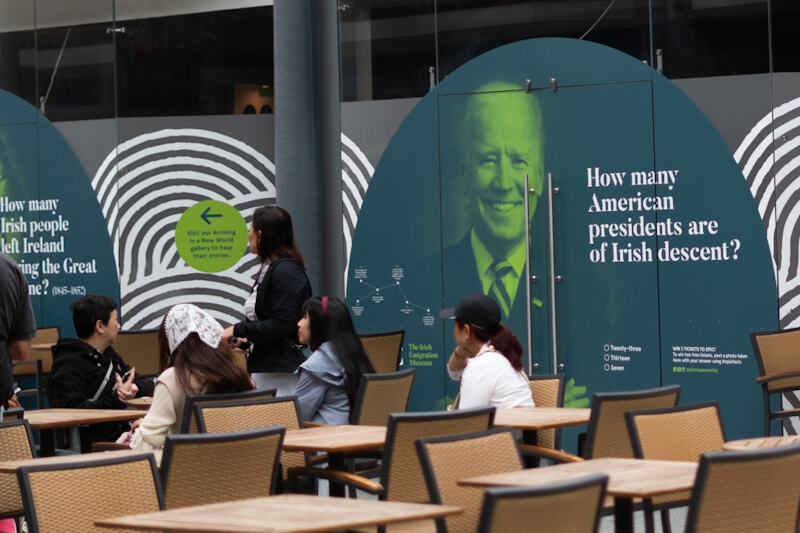
The EPIC is housed in former warehouses: large halls with glass walls, supported by elaborate, ornate iron columns. The halls are freely accessible and there are several food and coffee shops inside.
I don’t visit the EPIC itself this time, and I only view the Jeannie Johnston from the outside. New Ross also has a museum ship and a museum on the same theme.
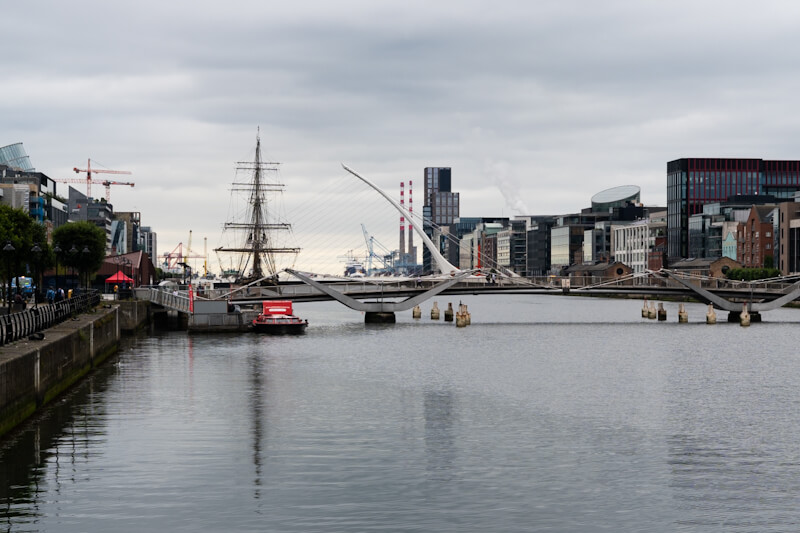
I visited both and therefore feel well informed. If you haven’t done so yet, you should visit the EPIC and the Jeannie Johnston in Dublin; I highly recommend it.
I follow the river for a while longer and then walk across the Samuel Beckett Bridge to the south side of the river. If you’ve ever seen pictures of Dublin, you’ll recognise the bridge, as it looks like a white Irish harp.
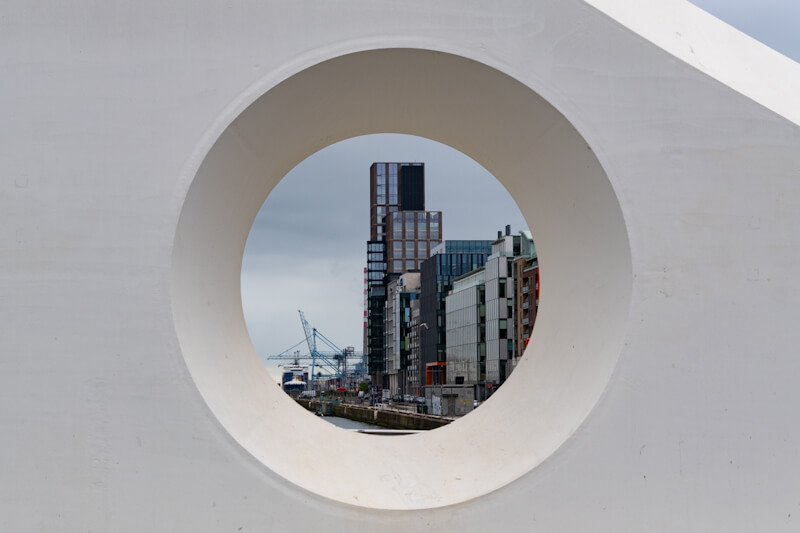
A single large, curved column rises above the bridge. Numerous steel cables branch out from it, spreading out like a fan and supporting the bridge. A harp, of course – it’s obvious, isn’t it?
I follow the river in amazement, unable to take my eyes off the striking contrast between old and new that I encounter again and again.
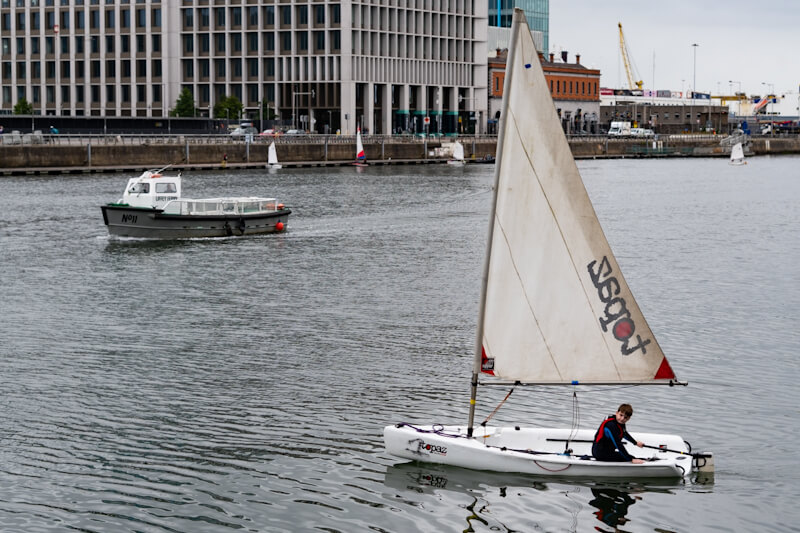
On the river, I see children taking sailing lessons. People paddle or row past me, and every now and then a tour boat chugs by. In the distance, I can already see the loading cranes of today’s harbour area.
I prefer to photograph old buildings and am not at all attracted to modern architecture. Not at all. But here on the River Liffey, I find myself fascinated:
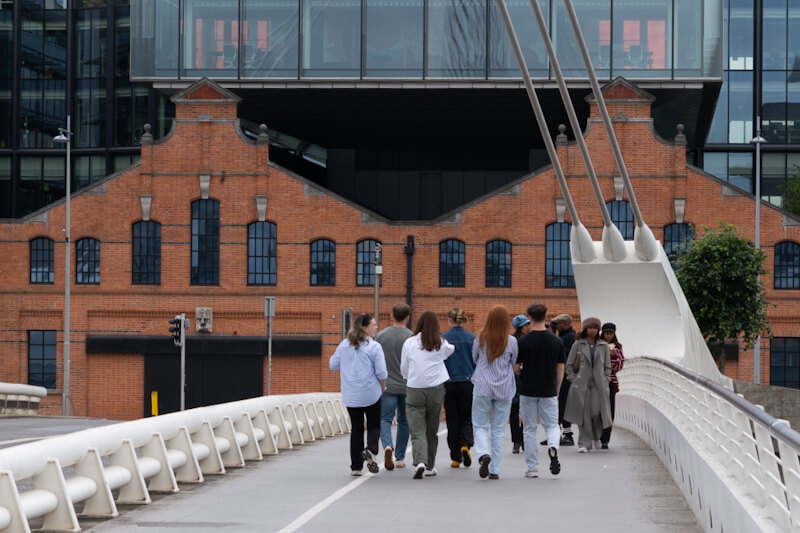
Tall, modern glass façades alternate with old, smaller brick buildings. The contrast is striking, especially where the new buildings have been integrated into the old façades or built around them.
Incidentally, Ireland is the Silicon Valley of Europe. Almost all major American software companies, including Google and Amazon, have their European headquarters in Ireland, most of them in Dublin and most of those here, on the River Liffey.
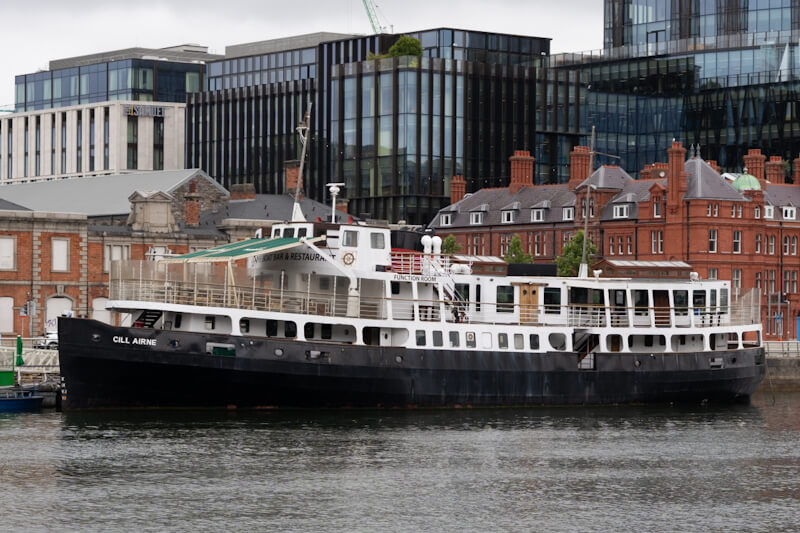
I pass numerous company names that I recognise as major or minor software brands.
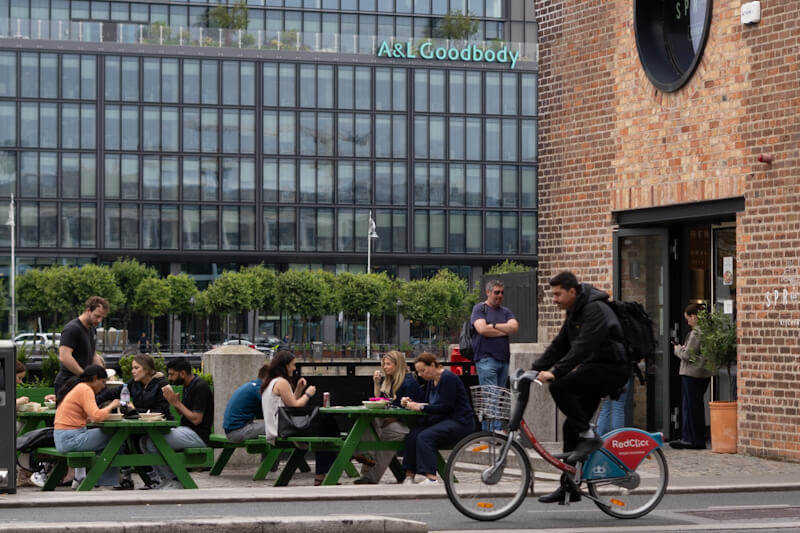
Accordingly, the atmosphere here is bustling and businesslike. Many young people from all corners of the world work here. Suits, laptop bags, business casuals, business hipsters. Lots of life, lots of languages, lots of young people.
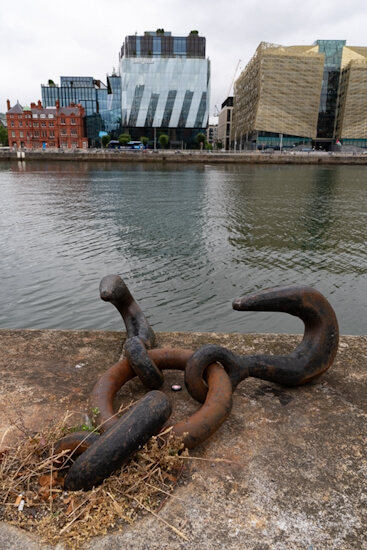
I come to a side canal that doesn’t have a bridge over it yet. This is the Grand Canal. It branches off from the River Liffey and runs across the country to the River Shannon in the west. There is also the Royal Canal, which does the same thing.
Both canals lead to the River Shannon in the west. One further north and one further south. Narrow boats used to travel along these canals. Narrow cargo ships, originally pulled by horses, supplied the country with goods.
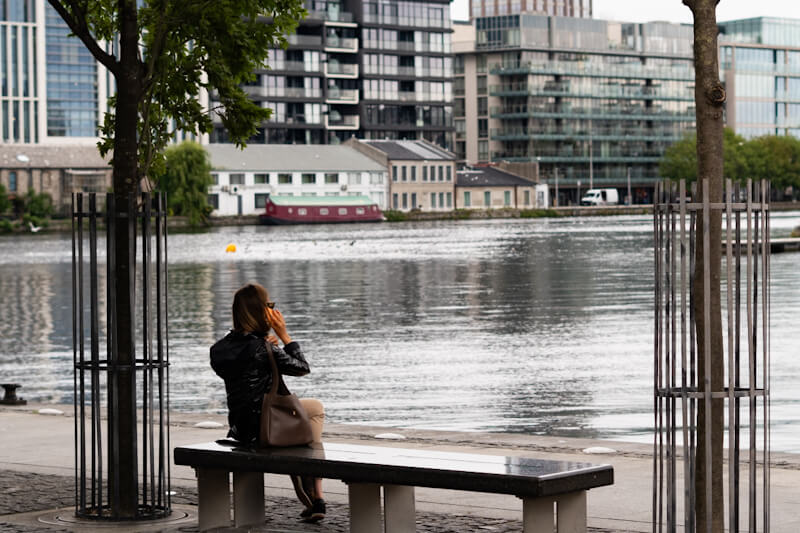
Today, many of these narrow boats are motorised and converted into houseboats. Some of them are moored in the harbour of the Grand Canal, others on the River Shannon or the River Barrow, or they sail around somewhere on the island’s extensive network of rivers and lakes.
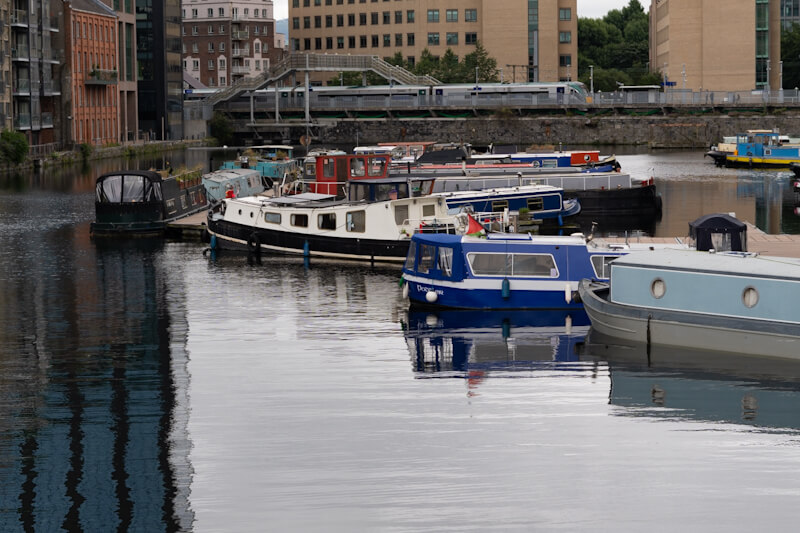
The old harbour on the Grand Canal is now also an office district. A pleasant promenade and several restaurants invite you to linger. I watch the colourful hustle and bustle pass me by.
A guided tour group stands by the river with their bicycles. It makes sense to explore Dublin by bicycle or on foot. Just not by car, that makes little sense.
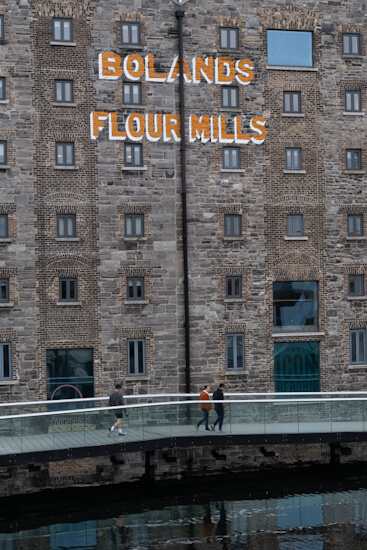
A little further on, there is another bridge. Several boats are moored there and behind it, and the old flour mills of Bolands stand out strikingly against the modern high-rise buildings behind them. New and old – what a contrast – again and again!
It’s now lunchtime. The restaurants on the Grand Canal are filling up, and a few minutes’ walk away on the banks of the Liffey, there are also many restaurants with lots of people. My stomach is now growling audibly. A small footbridge takes me back to EPIC, where I find my lunch.
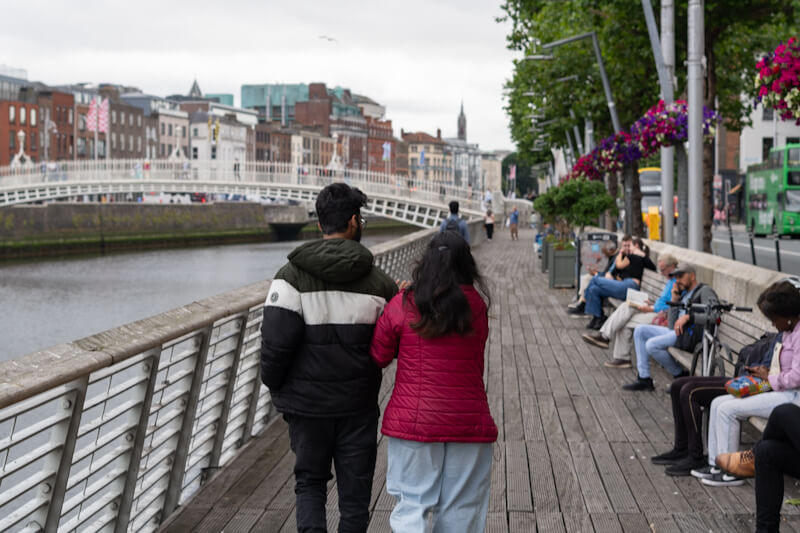
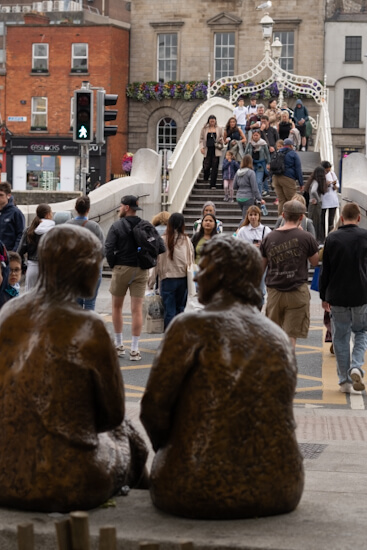
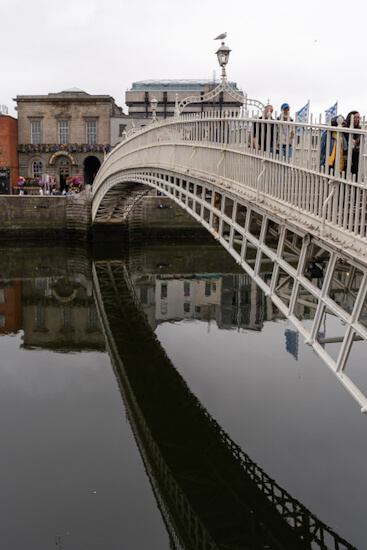
But I’m not just here to eat – so I set off again! I follow the north bank towards Ha’Penny Bridge. The name is short for Half Penny Bridge, because back then it cost half a penny to cross the small arched footbridge. Today, it’s free to cross, and because the bridge is very pretty, it’s one of Dublin’s sights.
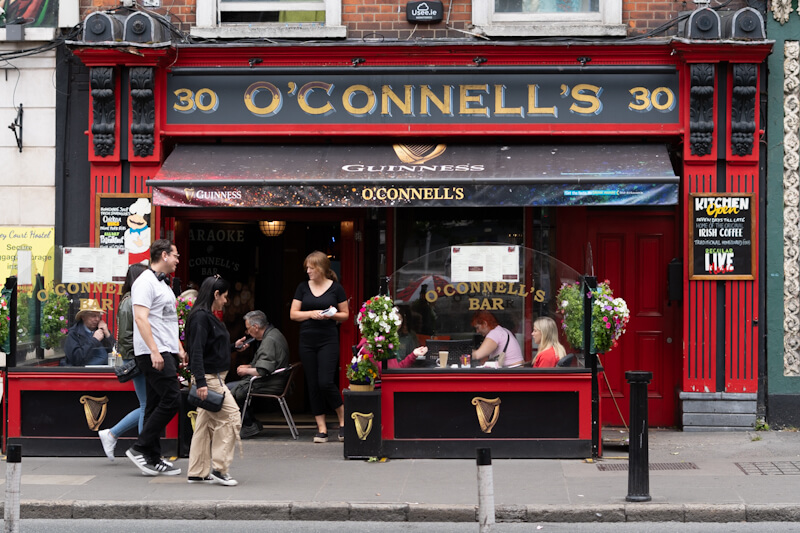
I stroll a little more through the side streets and slowly make my way back to the train station. My wife has also finished her shopping, and with sore feet and lots of impressions, we happily make our way home.
Helpful Links for your travel planning
Coming soon…
Conclusion
I’ll keep it short: Dublin is really cool! Whether you want to explore the old town around Temple Bar, visit Trinity College, check out one of the many museums such as Dublinia or EPIC, go shopping, eat and drink, enjoy live music or take a walk along the River Liffey, you’re sure to find something to suit your taste here.
But I must warn you: the city is largely modern, loud and hectic with lots of traffic, and if you prefer cosy old towns like we do, then not everything will be to your liking.
But there are many beautiful spots, and to my own surprise, I found the modern business districts along the River Liffey and the Grand Canal to be very cool!
Enjoy Dublin!
More interesting articles for you
THE MOST IMPORTANT SIGHTS IN THE CITY OF DUBLIN
CITY WALKS AND CITY TOURS IN DUBLIN – FROM CLASSIC TO SPECIAL FORMATS
HOW TO GET AROUND DUBLIN – TRANSPORT AND PRACTICAL TIPS
Frequently asked Questions and Answers about Dublin
Image credit cover photo: In the old harbour on the Grand Canal in Dublin (photo: Ulrich Knüppel-Gertberg)
