Should I go on holiday to England in January? Do I really have to do this to myself?
Page Contents (click line to jump the text)
We’ll now explain why this is actually not a ‘punishment’ at all and why it can even be really enjoyable…
Intro and travel report
We must have driven past Bath a hundred times without ever stopping to look at it. But it was always on my mental to-do list.
Where is Bath? In the south-west of England, not far from the large port city of Bristol.
When we drive through England and Wales and then take the ferry to Ireland, where we have our second home, we pass through here.
This time, we drove back to Germany from Ireland and took a little more time for the journey. Enough time to finally spend a night in Bath.
Why is this interesting? Bath is famous for its Roman baths with hot springs and is considered one of the Great Spa Towns of Europe. It is listed as a UNESCO World Heritage Site. It also has a very beautiful old town that is well worth seeing.
Actually, we come from a similar town: in Germany, we live on the outskirts of Baden-Baden, which basically means the same thing as Bath.
There are Roman baths, hot springs and a beautiful old town here. Baden-Baden is also a World Heritage Site and one of the Great Spa Towns of Europe.
So what could be more natural for us than to visit its English counterpart? We find a beautiful place to stay (via Airbnb) and book a night.
A terraced house in a neighbourhood within walking distance of the city centre. The little house is beautifully furnished and surprisingly quiet inside.
This is important, because the city has around 100,000 inhabitants and the traffic is quite lively. The next morning, we get up early and make our way to the old town.
The morning traffic is a bit too loud for our liking, and we are glad when we reach the River Avon.
It winds its way through the countryside in a long loop, surrounding the old town on three sides. This is typical of old towns that were built on hills or by the water for protection. This made them easier to defend, at least on the river side.
Bath is very old. The Celts already knew about the hot springs, and when the Romans conquered southern Britain, they built the town of Aqua Sulis here.
This began in 43 AD and probably took many years. They built thermal baths and bathhouses, and the settlement grew into a town that continued to develop.
About 500 years later, the Roman Empire collapsed and the Romans gradually withdrew from Britain. The weakened empire was apparently inviting to other powers, and so the Anglo-Saxons invaded Britain.
In 577, the Anglo-Saxons conquered the town of Aqua Sulis and gave it the name ‘Hat Batha’, which later became ‘hot baths’ in English and gave the town its current name.
However, the Anglo-Saxons had already finished naming them, because they did not have a bathing culture like the Romans and no longer cared about the baths.
In the following centuries, they literally sank into the mud of the riverbank and were only rediscovered and restored in the 19th century.
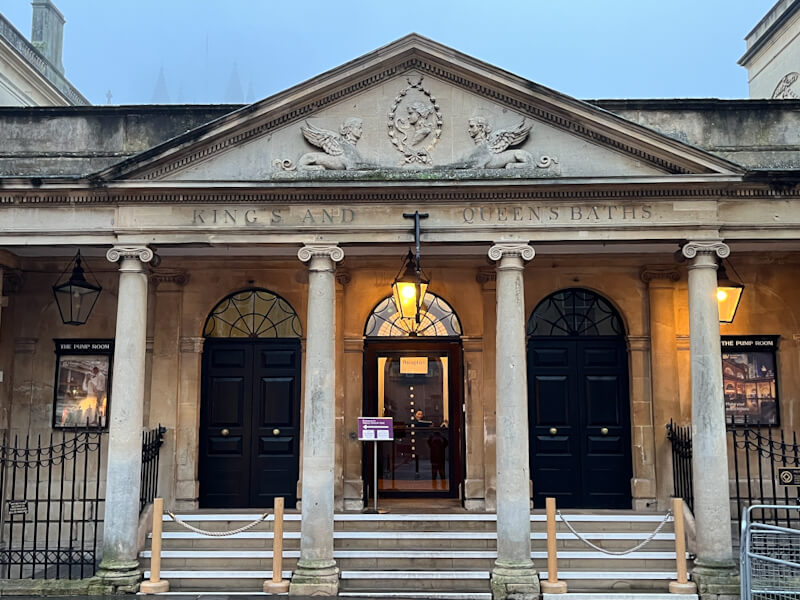
In addition to the Roman Bath, there were also the Kings Bath, the Cross Bath and the Hot Bath, which were built in the Middle Ages and were also used as spa facilities for nobles in the 16th and 17th centuries.
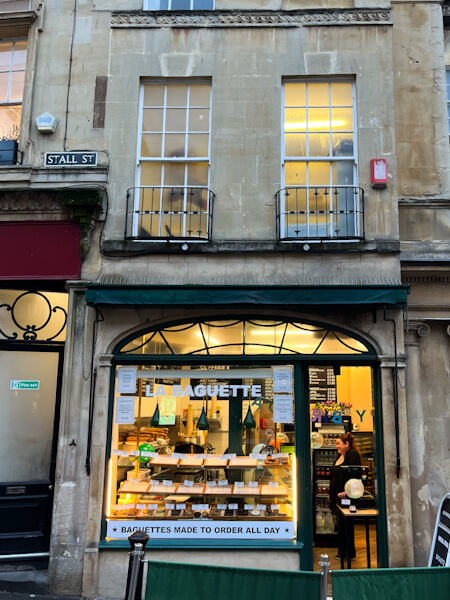
When Kings Bath was restored and expanded by Queens Bath in the 19th century, the Roman foundations were discovered and uncovered.
During the Victorian era, Bath was rebuilt and became a fashionable spa town. Most of the buildings in today’s old town date from this period.
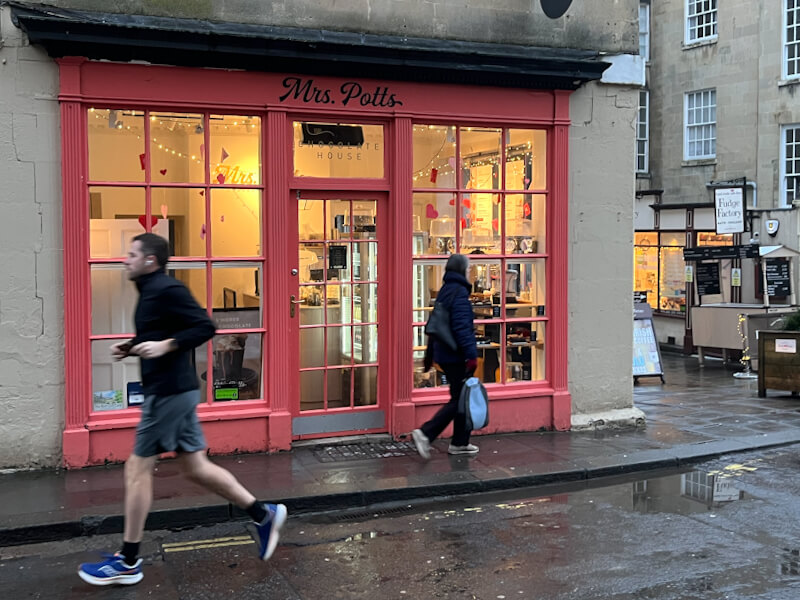
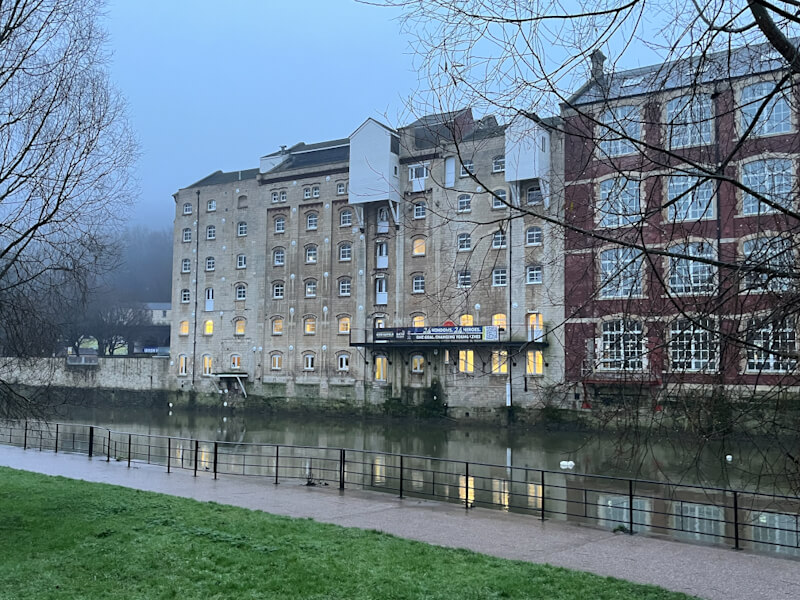
So we follow the River Avon. It is relatively quiet on the riverbank, trees surround us and we soon reach a park. Old warehouses stand on the riverbank.
At that time, the River Avon was already connected to the Thames by a canal. Narrowboats, i.e. narrow cargo ships, could travel via locks to London – and back again. Against the current, they were pulled by horses walking along narrow paths along the riverbank.
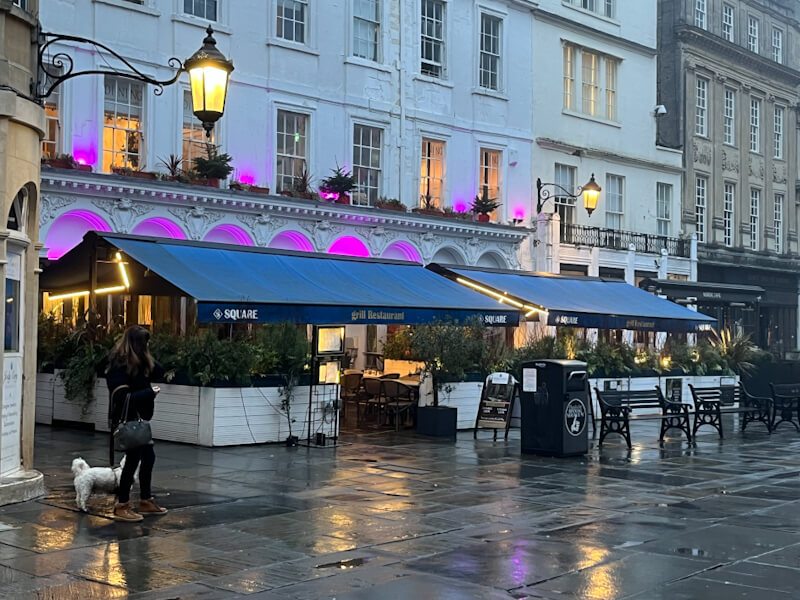
The old freight and trading houses have been restored and now apparently contain offices and lofts, i.e. flats in a wonderful location right by the river.
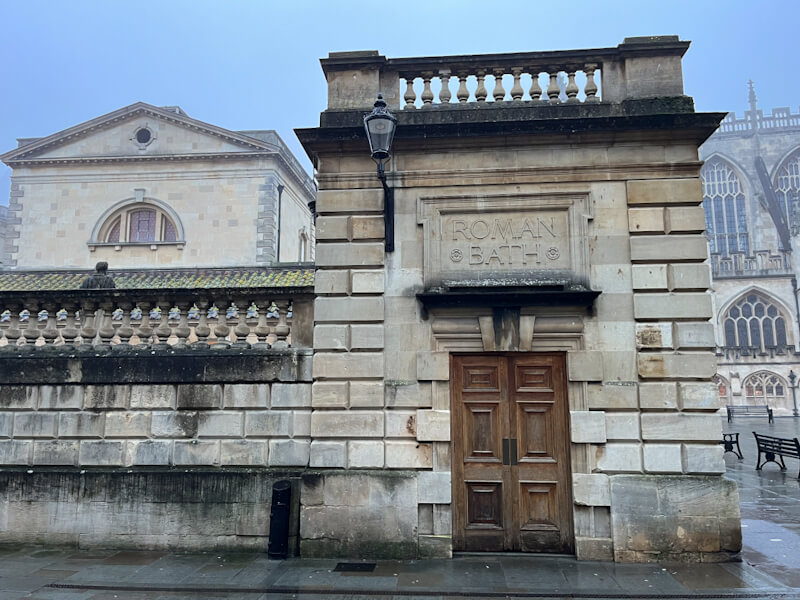
We arrive in the old town, which is largely car-free. The heart of the old town, and certainly the most beautiful part, lies around the Roman Baths. The entrance to these can be found at the Kings and Queens Baths.
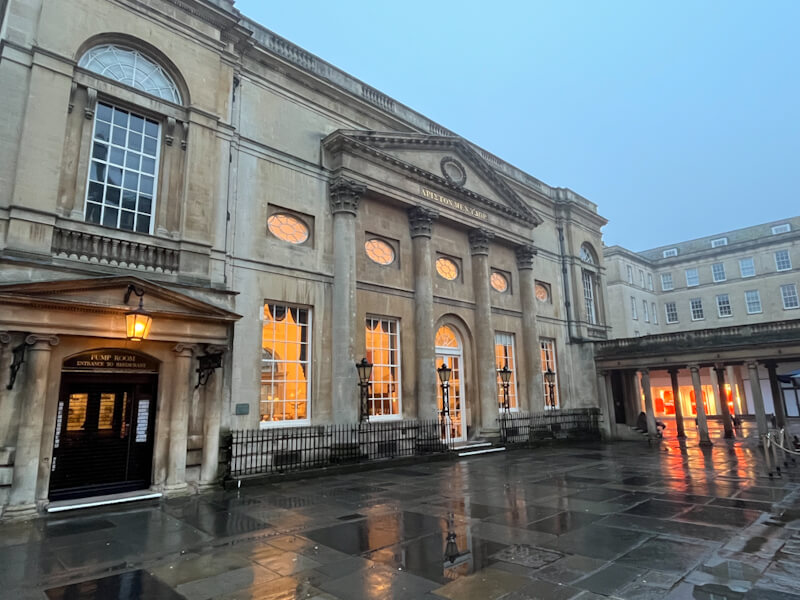
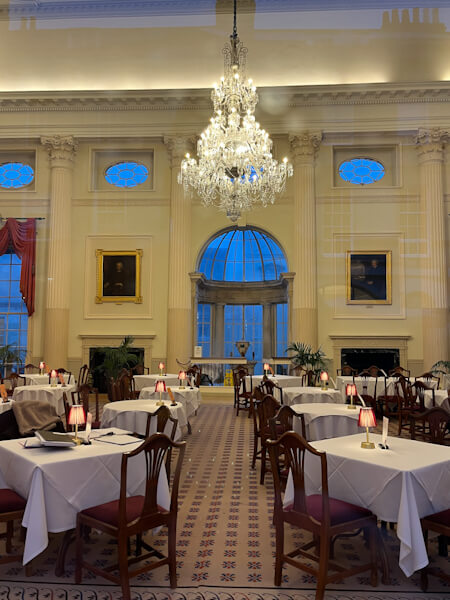
The beautiful Roman Baths include a museum, and you can of course take guided tours. Unfortunately, we don’t have much time as we are travelling on today, so I just stroll around the extensive grounds, past the Pump Room, Bath Abbey and to the River Avon.
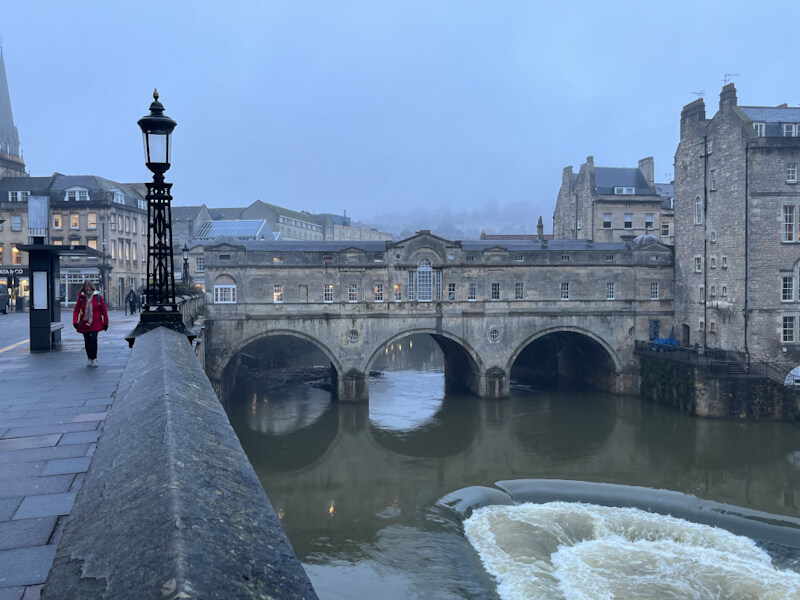
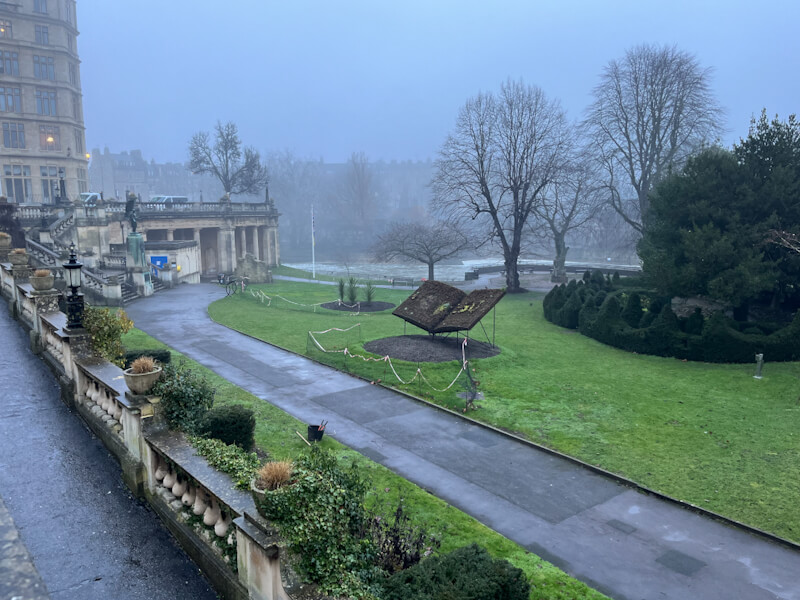
I come across a beautiful park by the river, the City Parade Gardens, and follow it until I reach Pulteney Weir and the beautifully built Pulteney Bridge.
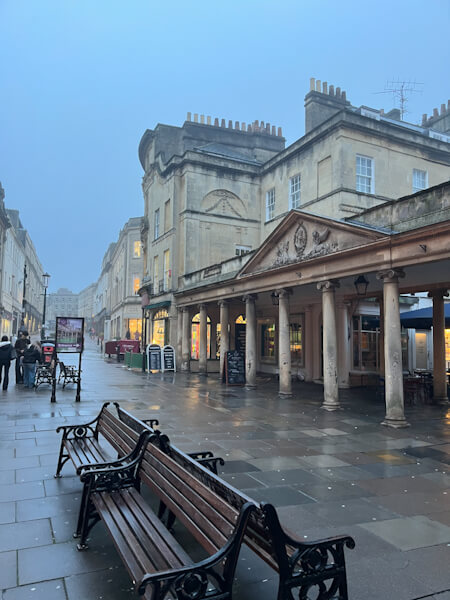
The scenery is simply picturesque, even though the January weather is damp and cool and the morning is rather dark. It’s one of those winter days that seems like it will never get light. But we are still very lucky, because it isn’t raining during our city tour.
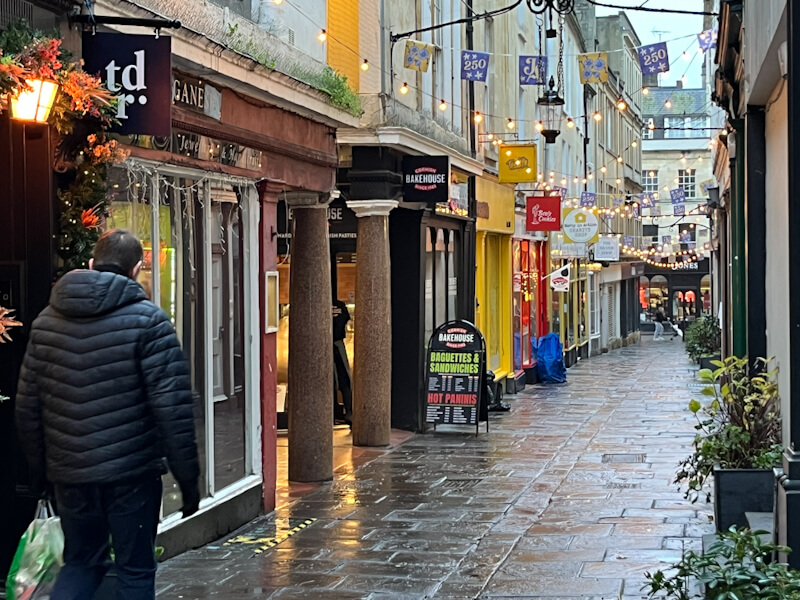
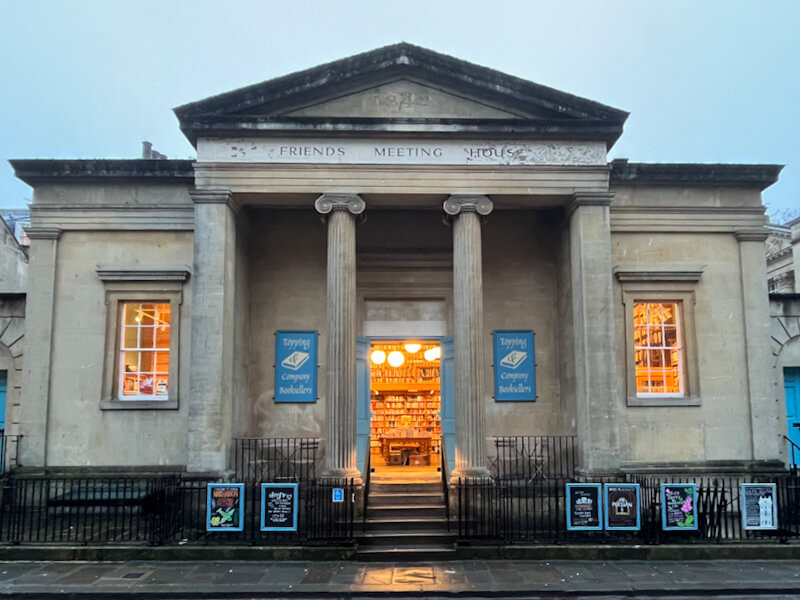
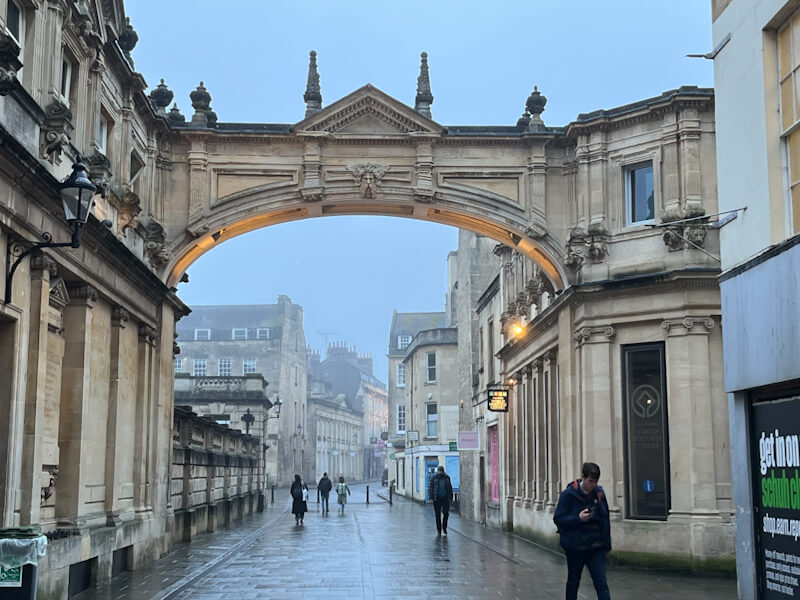
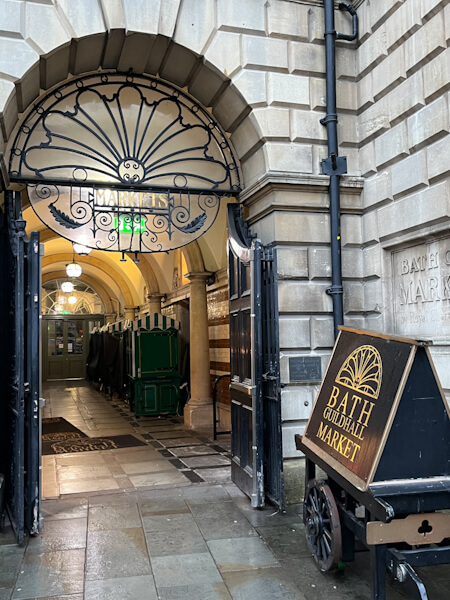
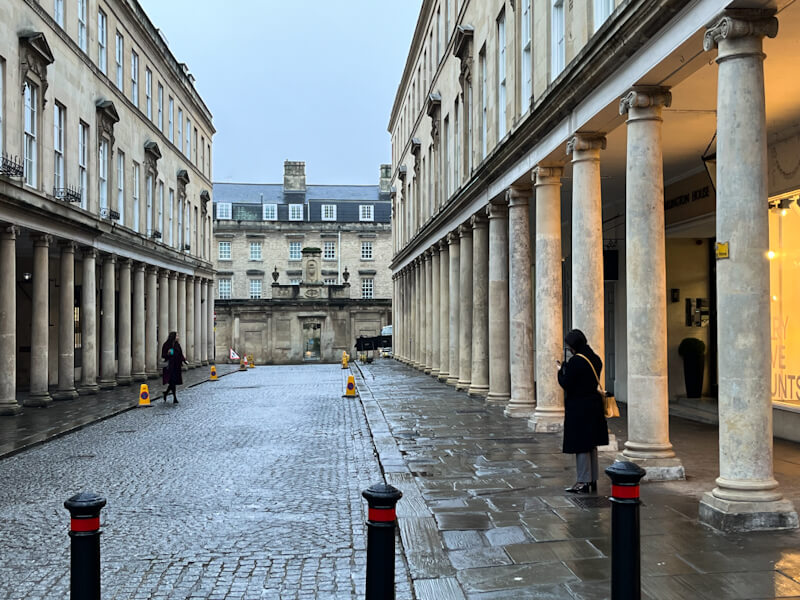
I enjoy the misty morning atmosphere by the river and walk in an arc, past the Guildhall with its market hall, through the narrow streets of the old town and back to the baths.
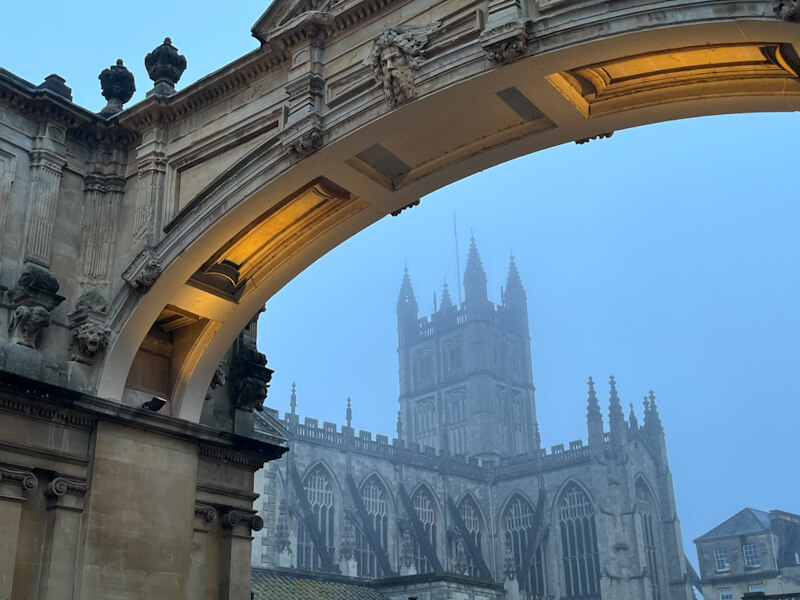
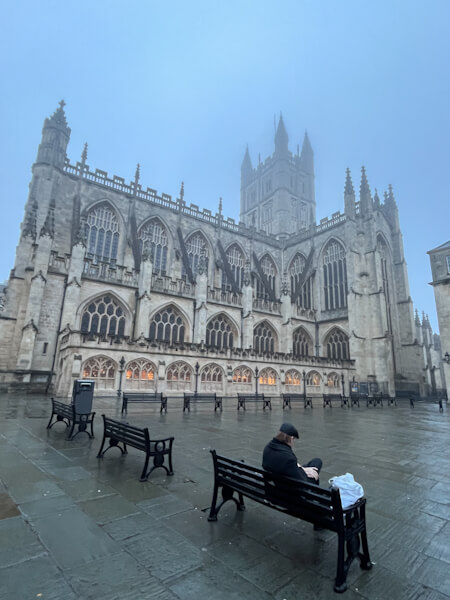
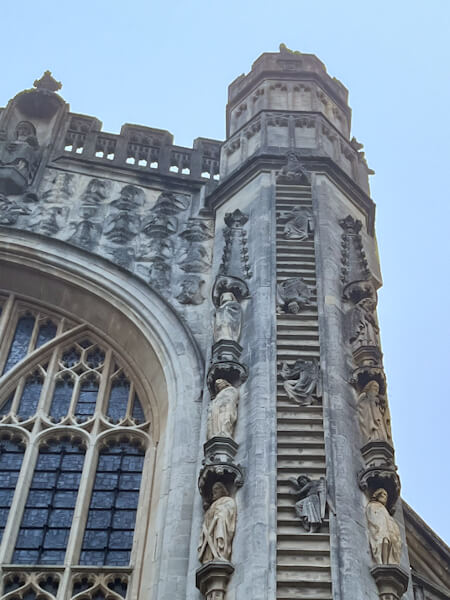
Bath Abbey, located directly behind the baths, is beautiful! It is lavishly decorated with many stone figures. The ladder to heaven with angels on one of the towers is particularly interesting. I am not religious at all, but the building is simply impressive.
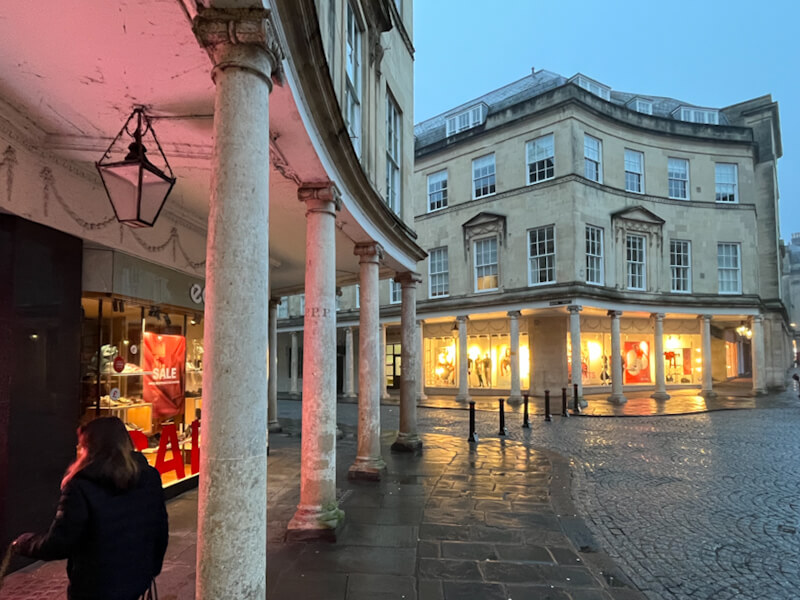
Strolling and doing a bit of shopping, we walk back to our accommodation and our car and shortly afterwards continue our journey home.
Helpful links for your travel planning
Coming soon…
Conclusion
Bath is definitely worth a visit! Is January the ideal month for it? Perhaps not necessarily, but that’s not a problem, because winters are relatively mild in the southern part of England.
Of course, it can rain, more in winter than in summer, but when you’re visiting a city, you spend a lot of time indoors in buildings, sightseeing, shopping, eating and drinking.
Bath is definitely a tourist town with an incredibly wide range of accommodation options. However, these are significantly more expensive in summer than they are now in winter, and can sometimes be booked up well in advance!
We thoroughly enjoyed our short stay and can definitely recommend Bath. The old town is beautiful, especially around the ancient baths – even in January!
More interesting articles for you
ROMANS IN BRITAIN: AT HADRIAN’S WALL
A trip through the north and west of Wales
Touring Cornwall
Image credit cover photo: Early winter morning at the Baths of Bath (Photo: Ulrich Knüppel-Gertberg)
