On the south-western coast of France, in the Aquitaine region, lies a port city that could hardly be more beautiful: La Rochelle. We will now explain why this is so….
Page Contents (click line to jump the text)
Intro and travel report
La Rochelle is located a little south of Brittany, roughly halfway between Nantes and Bordeaux, which definitely puts it in southern France.
The port city on the Atlantic coast has had an eventful history: it was originally founded by the Gauls. The Romans introduced wine growing and the extraction of table salt in salt pans, which can still be seen today along the coast.
Later, the Alans, a tribe originally from the Danube, settled here. They were joined by escaped slaves, the Colberts, and in the Middle Ages, the Knights Templar also arrived.
The Templars expanded and fortified the harbour, which became the largest harbour on the Atlantic coast. In addition to fishing and maritime trade, several naval battles also took place in the sea around La Rochelle.
In the 14th century, the Spanish and French fought here with 60 ships against 40 English ships. The French won and thus gained sovereignty over the English Channel.
During the Second World War, the Germans built a large submarine bunker near La Rochelle, from which German submarines operated far into the Atlantic, from the English coast to the coast of East Africa.
Even today, bunkers from the Second World War can still be found along the entire French Atlantic coast.
But today, La Rochelle is a peaceful place, because in addition to fishing, which is still important, there are hundreds (or more) sailing yachts of all sizes here, and the city also thrives on tourism.
We find a wonderful campsite for our motorhome near the sea and not far from the old town. We’ve probably snagged one of the last available spots. La Rochelle still attracts many travellers in autumn.
But autumn in the south of France is also extremely mild, so we set off on our e-bikes to explore the old town around the harbour.
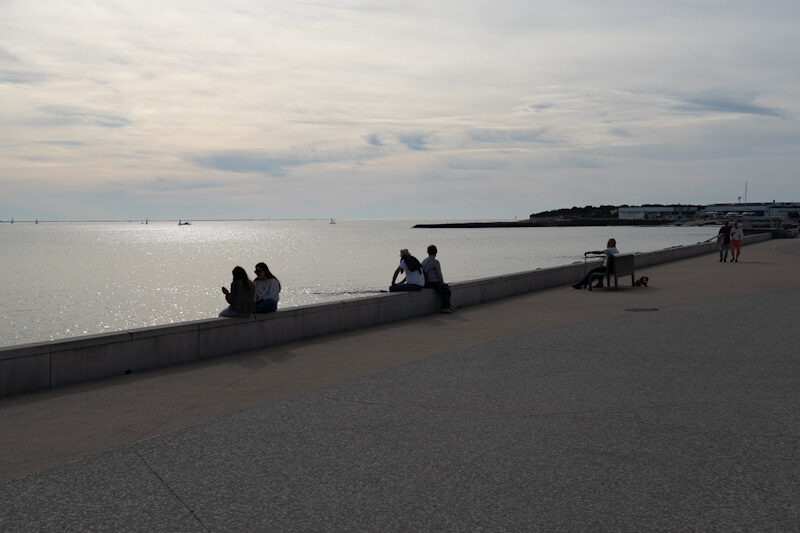
The city is extremely bicycle-friendly. There are plenty of cycle paths, including along the long beach promenade and through several wonderful parks in the city.
The centre itself is largely free of car traffic. But there are lots of bicycles and scooters, some of which travel quite fast – so always keep your eyes open!
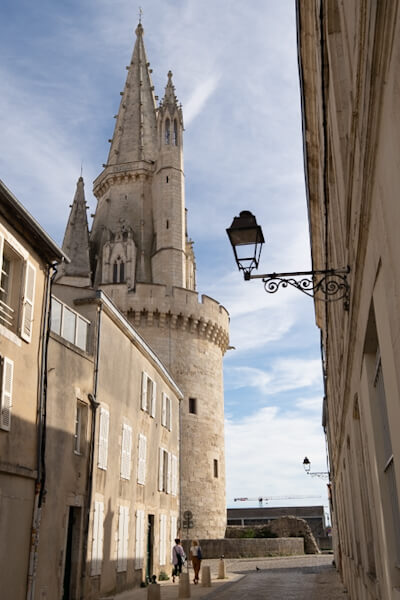
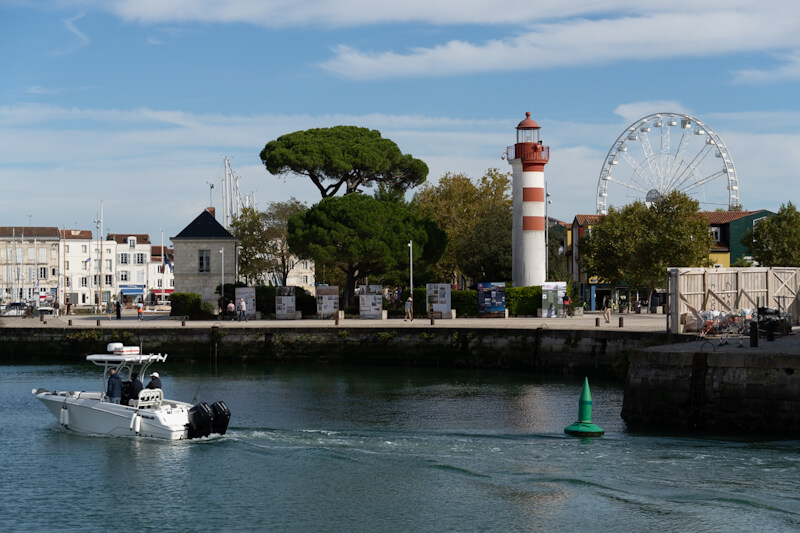
The old town was surrounded by a large city wall, parts of which still remain. The beautiful Tour de la Lanterne tower is particularly striking. The harbour entrance itself is also protected by massive towers, the Tour de la Chaine and the Tour Saint-Nicolas.
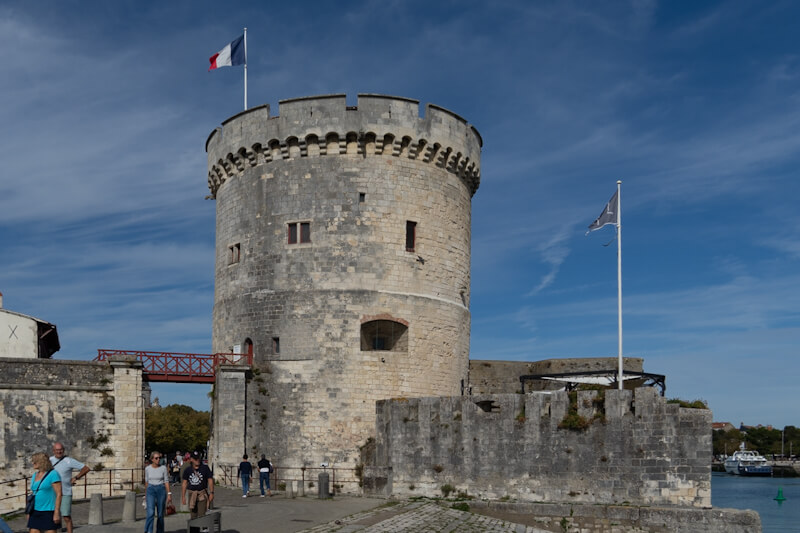
The latter is currently marred by scaffolding, but restoration work has to be done sometimes.
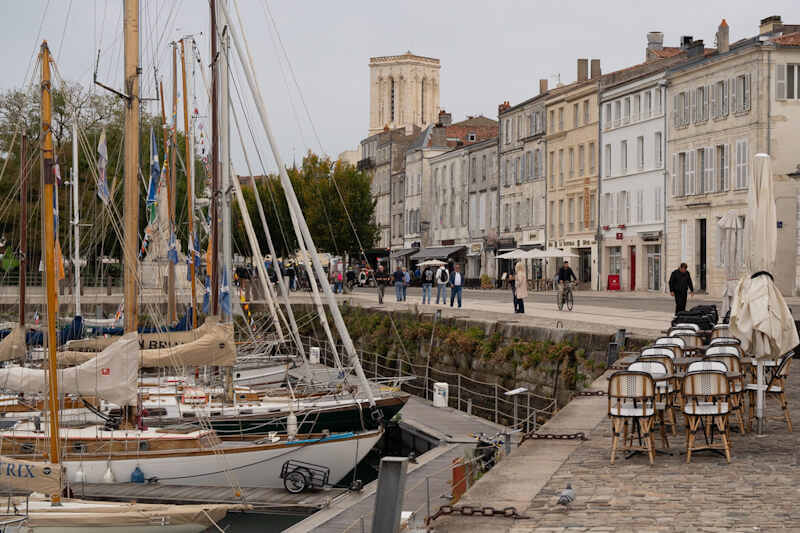
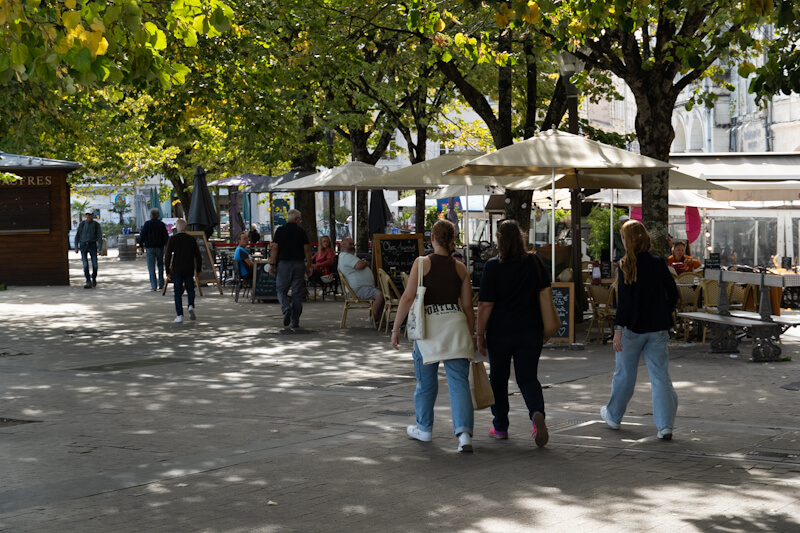
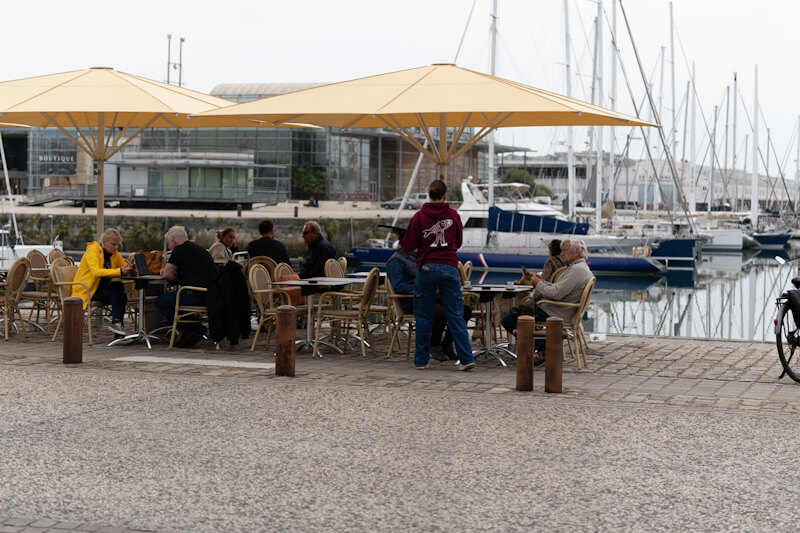
The old town is located around the old harbour basins. There is a wonderful shady avenue with restaurants and two other open sides with lots of restaurants and cafés.
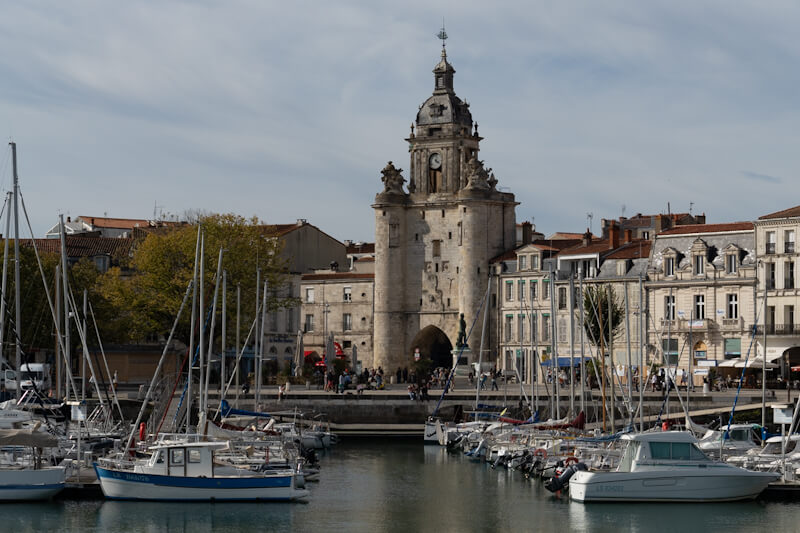
With the beautiful weather today, the terraces are soon filled to capacity and remain so for the rest of the day.
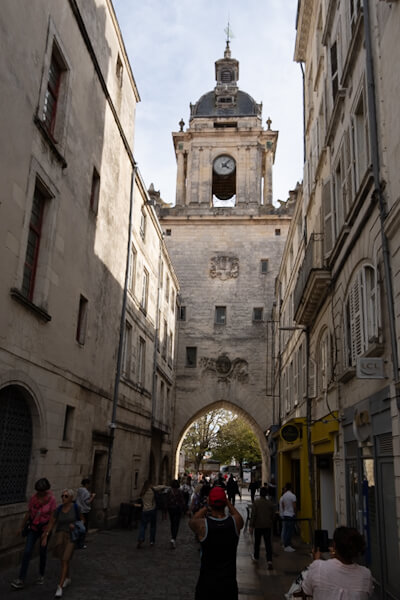
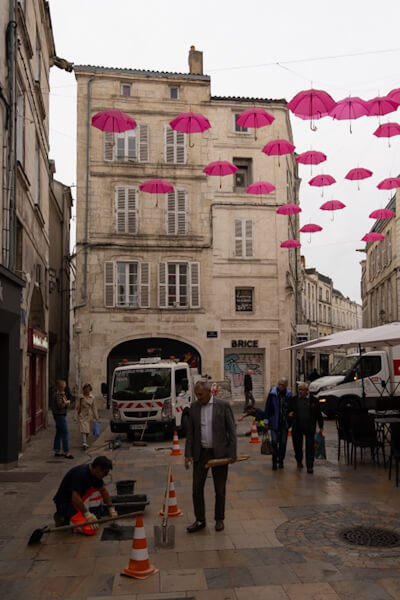
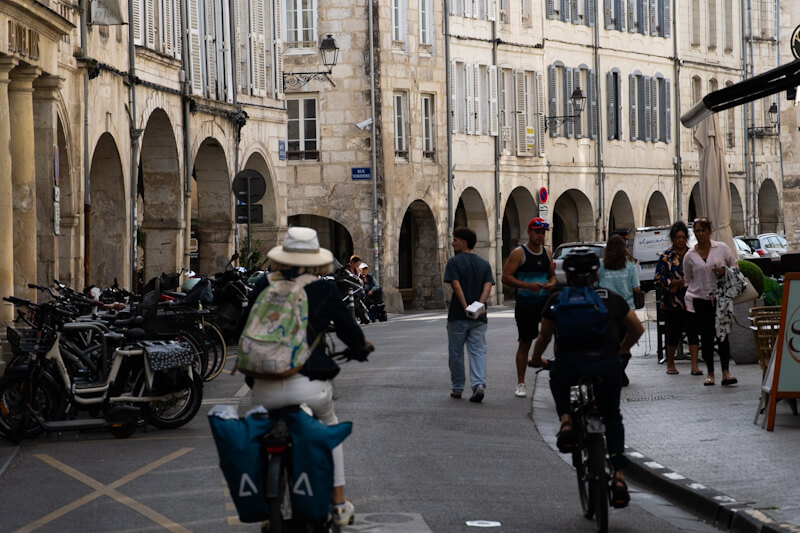
Through the Grosse Horloge gate, we enter the alleys of the old town. Stone pavements, old houses, many shops of all kinds and lots of arcades, i.e. arched passageways, catch our eye. Even the narrow alleys seem friendly and inviting.
The light-coloured stone used to build most of the houses contributes greatly to this. Even if one or two houses are not so well maintained, the overall impression is very beautiful.
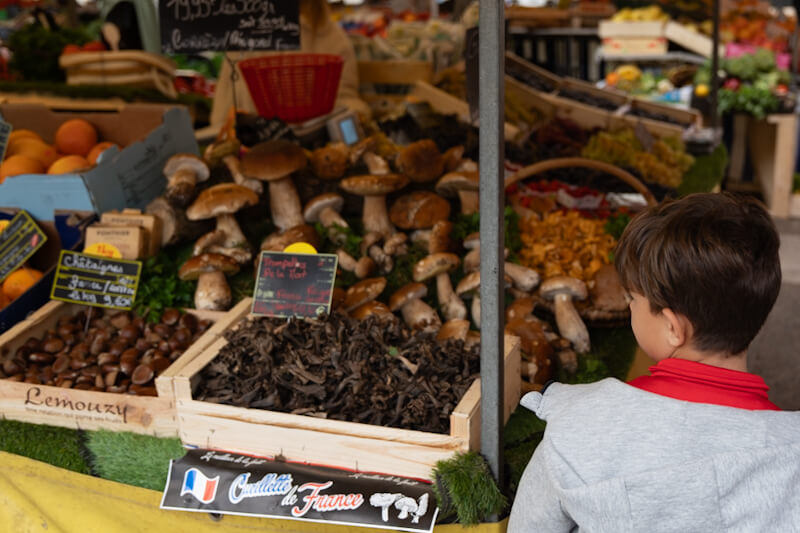
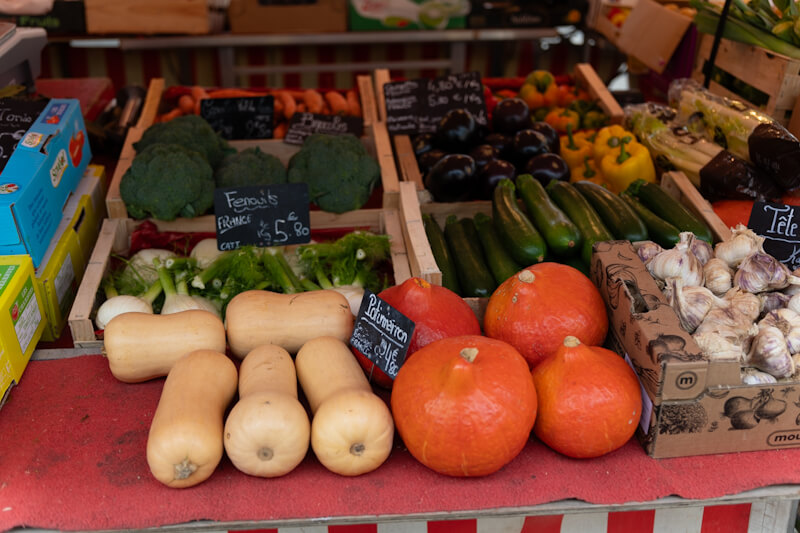
We stroll through a food market, pop into a few shops and take a long walk back to the harbour, where we find a place to have lunch with a view of the boats.
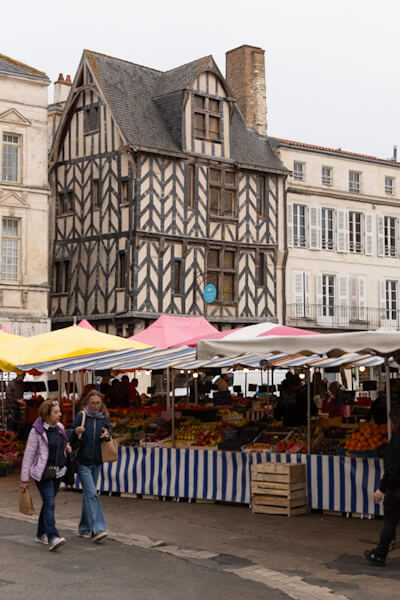
On the way, we passed a few sights, and anyone who is interested can certainly spend much more time here.
But what really sets this city apart, in my opinion, is that it is a wonderful place to get around by bicycle or on foot.
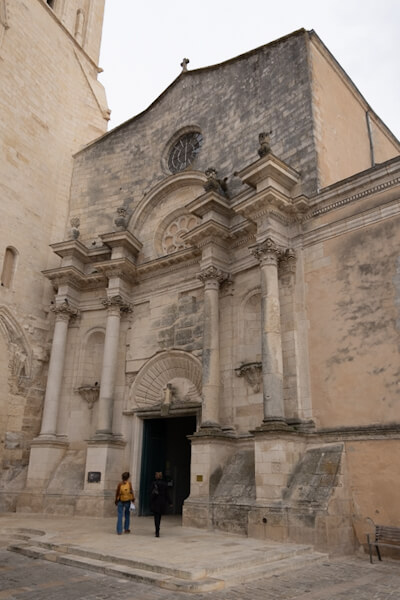
This allows you to comfortably enjoy the beautiful old town and harbour, the nearby beach or parks, while remaining wonderfully relaxed despite the crowds.
Relax and enjoy – like a king in France. In the south of France, to be precise!
Helpful links for your travel planning
Lonely Planet France: You cannot go wrong with Lonely Planet – well written with lots of tips on and off the beaten path.
Lonely Planet Best Road Trips France: This one is focused on great road trips around France.
The Rough Guide to Brittany and Normandy: Lovely guide for an area that we absolutely love.
Lonely Planet France Planning Map: Very useful planning helper.
Photo Location Finder North West France: Find great vistas and photo spots at the Atlantic Coast
French Classics: The instant SUNDAY TIMES BESTSELLER: Enjoy french cuisine at home – while planning your trip.
Enjoy your reading!
Conclusion
Actually, I’ve already given away the conclusion. La Rochelle is really beautiful, really pleasant, really interesting and really relaxing.
Was that too many superlatives? I think the city deserves them.
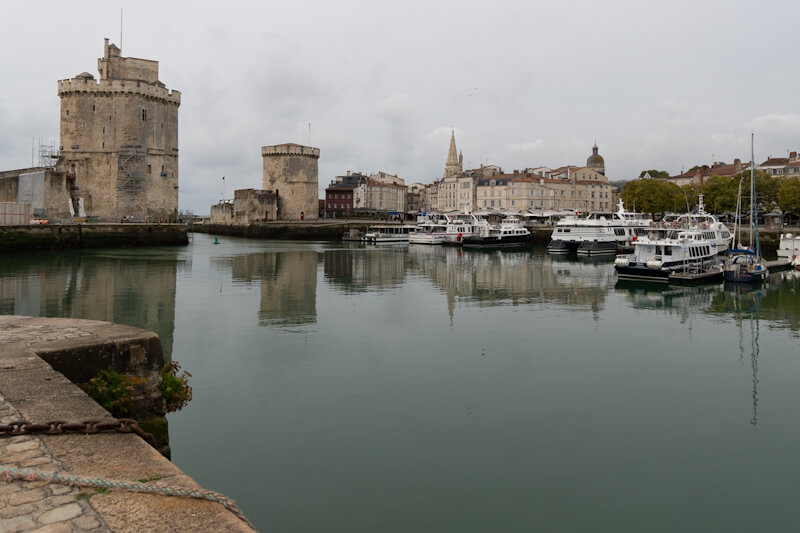
But it’s important to note that it was already quite busy here in autumn, even though we heard almost exclusively French spoken in the streets. When lots of tourists from all over Europe arrive in midsummer, it will certainly be very busy.
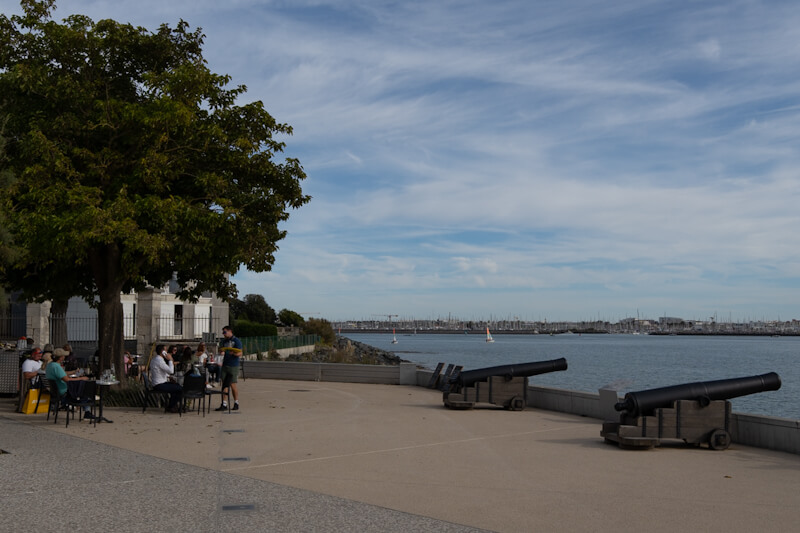
Our tip for tourist destinations: don’t go when everyone else is going. Visit La Rochelle in spring or autumn, when temperatures are usually pleasant and the crowds are still manageable.
Have fun in La Rochelle!
More interesting articles for you
Bretagne: wild and enchanting
Saint-Malo: massively impressive
Biarritz: charmingly sophisticated
Image credits Cover photo: In the old harbour of La Rochelle (Photo: Ulrich Knüppel-Gertberg)