Tourism along the Wild Atlantic Way usually bypasses Limerick. Very few people realise, however, what they’re missing out on. Let’s shed some light on the matter…
Intro and travel report
The city of Limerick wanted to become part of the famous Wild Atlantic Way. But at the time, it was snubbed by the relevant decision-makers. Perhaps it was too far from the coast; perhaps there were other reasons. In any case, Limerick lies quite far to the west, but is not part of the WAW.
However, the town lies on the River Shannon, so I suppose it can be classified as part of the Irish Heartlands. Even though the River Shannon’s estuary actually begins just to the west of the town. It forms a very long, narrow bay, however, which only opens out after many kilometres and flows into the Atlantic Ocean.
The city also lies right on the border between County Limerick and County Clare. It effectively forms the border itself, or at least a section of it.
Limerick is therefore situated somewhere between the coast and the inland, between two counties, and, in terms of tourism, can be classified as somewhere between well-known and less significant. A city caught between two stools, so to speak.
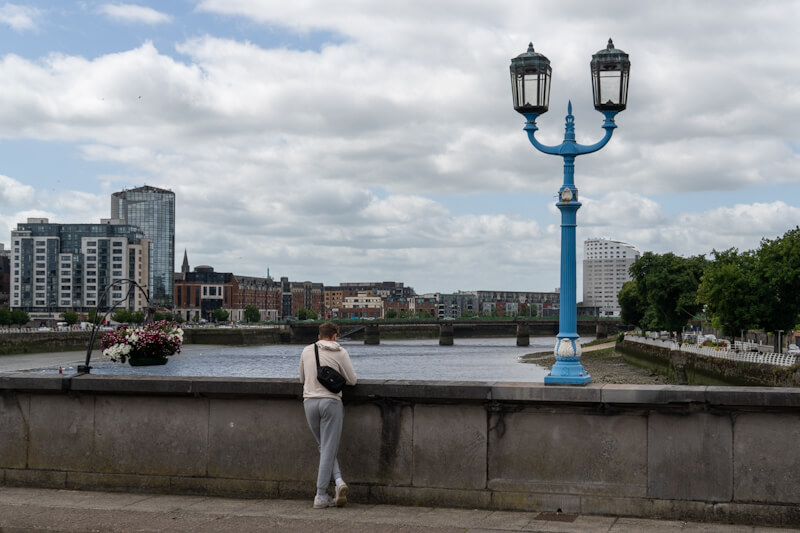
But is that justified? With a population of between 60,000 and 70,000, the city on the River Shannon is now one of Ireland’s larger and more important cities, and it is also one of the country’s oldest:
It is mentioned in Roman writings in the second century, in ecclesiastical writings in the 7th century, and it really began to grow in size and importance by the time the Vikings arrived in the Early Middle Ages at the latest.
The Vikings founded a settlement here around 812. At first, they sailed up the River Shannon in their ships to plunder and raid; later, they settled down and engaged in trade. They founded several towns, mostly on the south and east coasts. Limerick was probably their most important trading post on the west coast.
By the 12th century, the predominantly Danish Vikings had either disappeared or become part of the local population, but their rule in Ireland had long since come to an end.
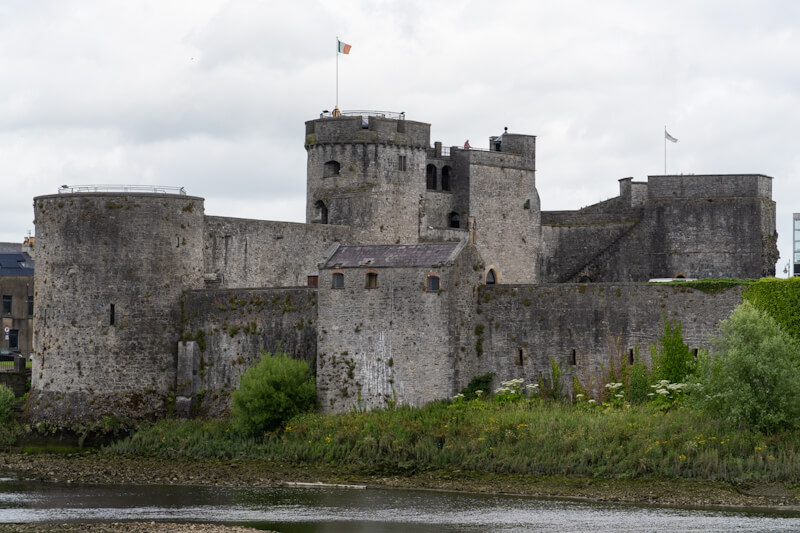
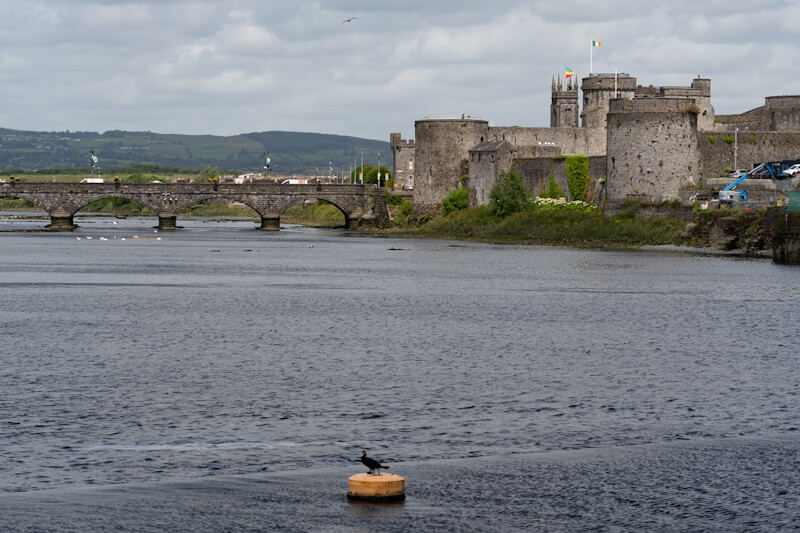
In their place, the Anglo-Normans now rule the island. Around 1200, they rebuilt what is now known as King John’s Castle in Limerick to consolidate their power at the strategically important mouth of the River Shannon.
Originally, they lived in the ‘English Town’ on King’s Island, an island in the River Shannon on which King John’s Castle stands and which was surrounded by high walls. The Irish and Danes lived in the ‘Irish Town’, that is, on the mainland.
Over time, however, the Anglo-Normans became ‘more Irish than the Irish’, which means that they became highly independent and no longer obeyed the English Tudor Crown. In the 16th century, the Crown felt compelled to bring the city back under its control, which it succeeded in doing.
The English would probably not have gone to such lengths had Limerick not been important. Indeed, the years of peace and trade under the Normans had had a very positive effect on the city, so much so that a 16th-century Spanish document stated: ‘Limerick is stronger and more beautiful than any other city in Ireland’.
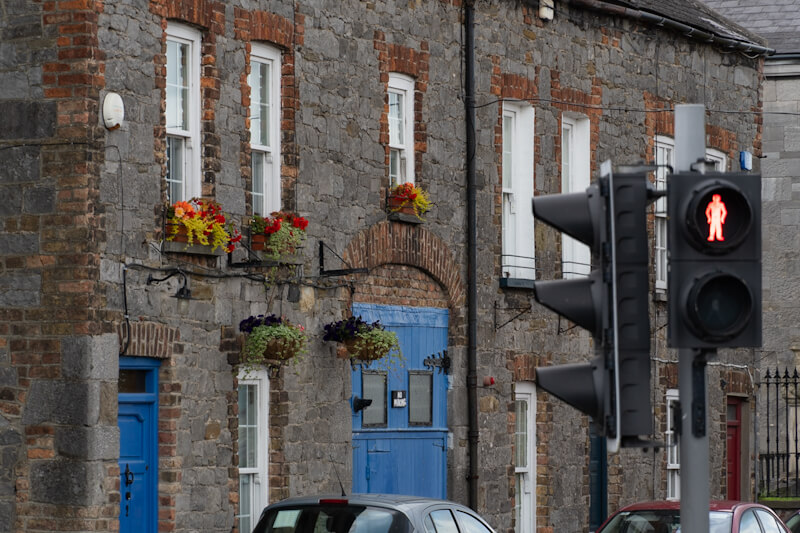
But is that still the case today? Having, like many before us, driven past Limerick several times without giving it a second thought, we decided to visit the town this time.
However, we had great difficulty finding a parking space for our motorhome. As is so often the case in larger towns, parking spaces are restricted to cars, and larger vehicles are left to fend for themselves.
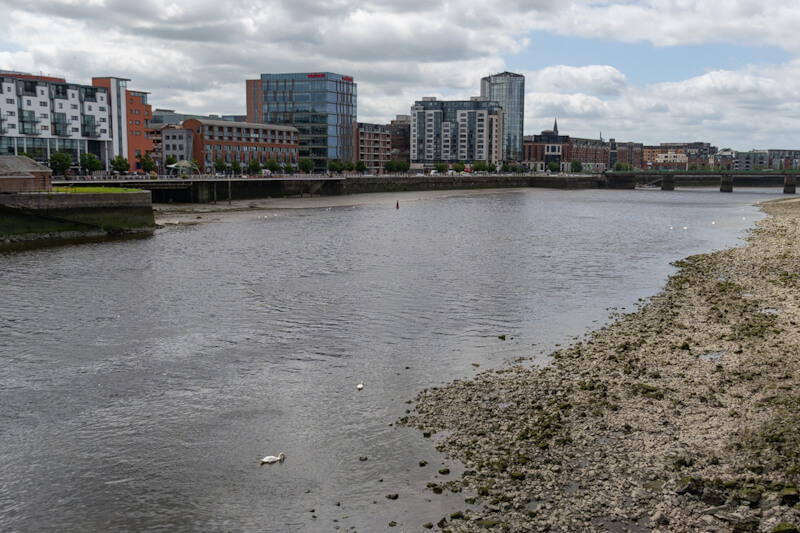
But eventually we found a sufficiently long spot by the roadside – so far, so good. So off we went into the city centre:
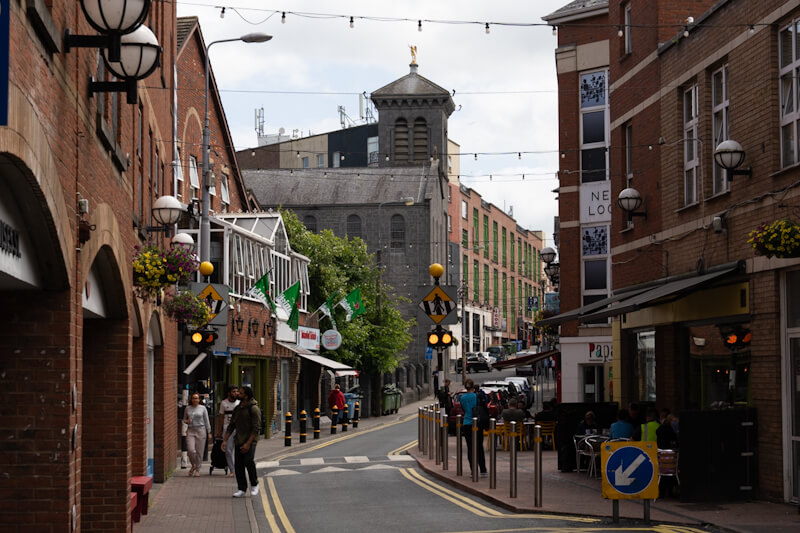
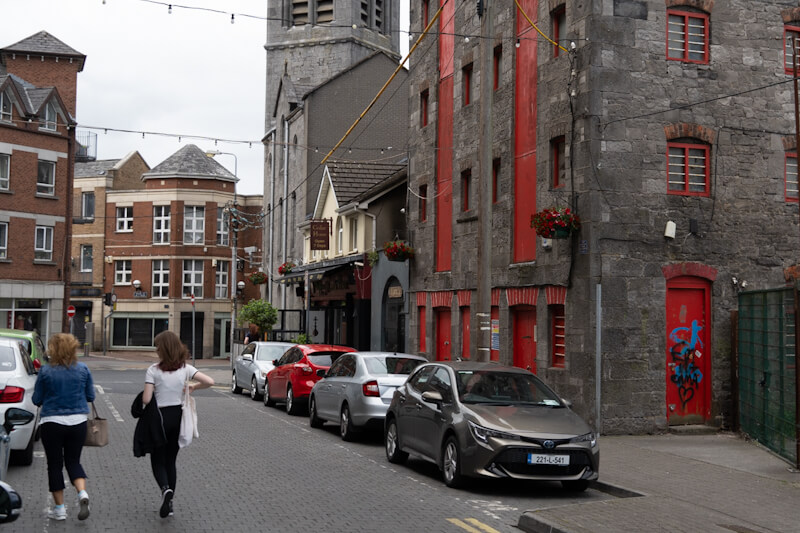
The city is largely modern these days, characterised by large department stores and high-street chains. Shopping is no problem, but I’m not particularly interested in that.
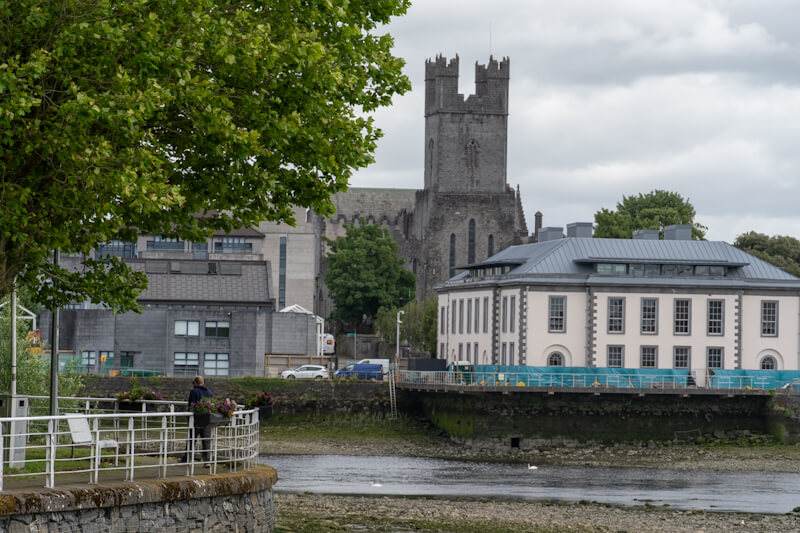
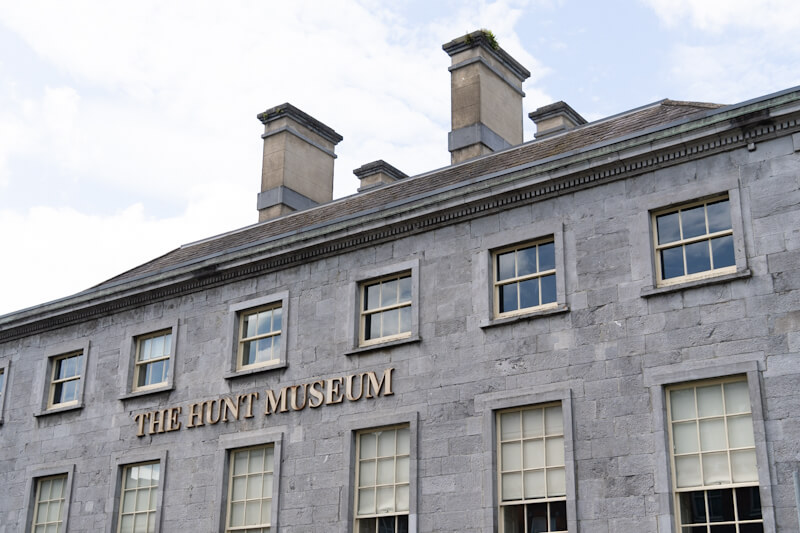
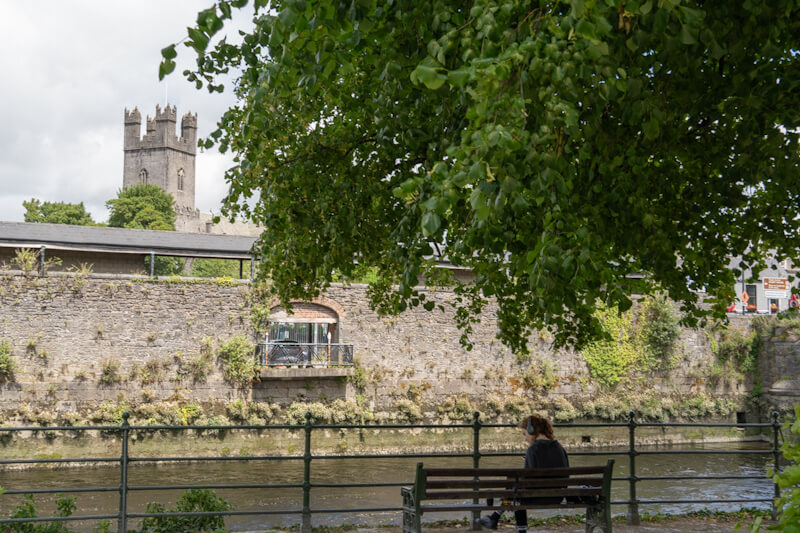
As is so often the case, I find the older parts of the city much more appealing. In this instance, King John’s Castle, King’s Island, but also the area around the Hunt Museum and Arthur’s Quay Park. And they really are beautiful!
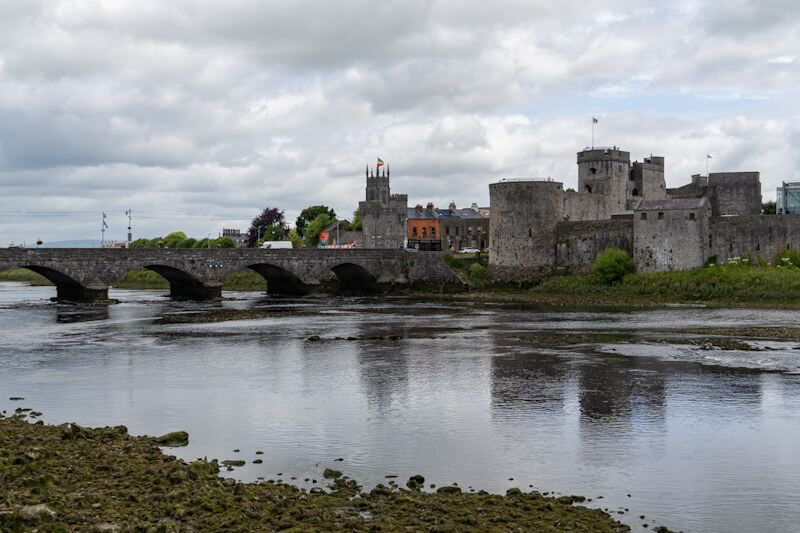
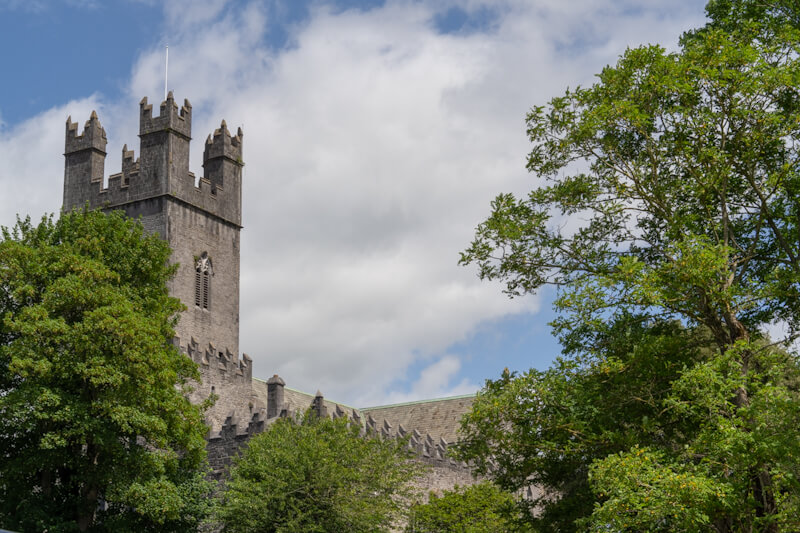
King John’s Castle is a massive, imposing fortress that stands guard over the River Shannon. It looks particularly beautiful when viewed from the other side of the river.
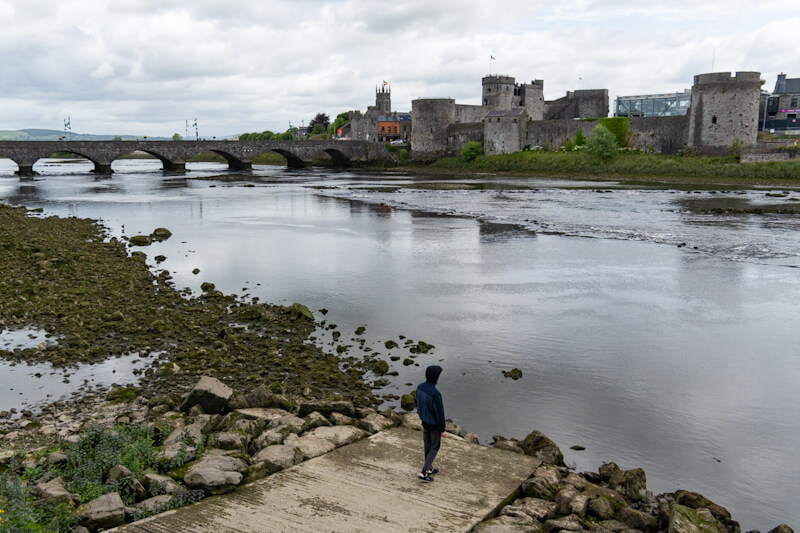
A beautiful old bridge, Thormond Bridge, leads there. There are many other historic buildings around the castle, such as the Bishop’s Palace. At the rear of the castle is a more recent building which houses the museum, as well as a café, and is also where the guided tours start.
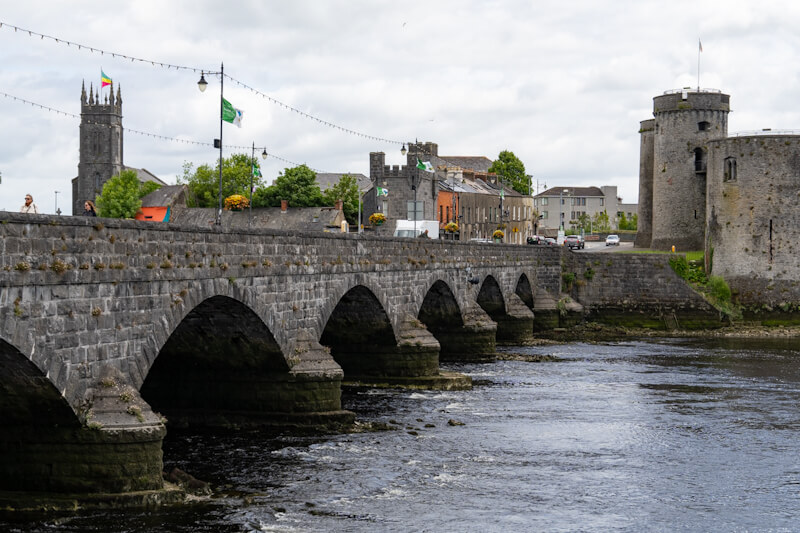
A short walk across the island and around the castle is great fun and highly recommended. I continue south along the shore, winding my way through various narrow lanes and streets, and arrive at the old Merchant’s Quay and Potato Market.
Behind it lies a small harbour and, next to it, the Hunt Museum – an art museum housed in a beautiful old building with a small park in front of it. It’s practically on the mainland already, so no longer on King’s Island.
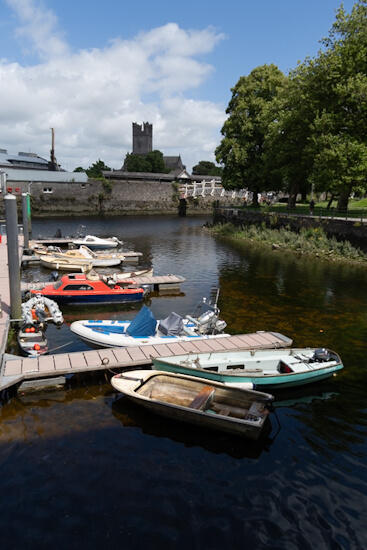
A little further on, I come to a larger park, Arthur’s Quay Park. It’s beautifully situated on the riverbank with a great view of the Castle and is also ideal if you fancy a bit of a ‘chill’ in a green space, which is exactly what I’m up for right now.
Feeling refreshed, I pop into the modern shopping district for a quick look around (not really my thing…), follow the Shannon for a bit further and find my way back to our motorhome on the opposite bank.
Conclusion
So was the visit worth our time? I’d say yes, absolutely! The old parts of town, especially around King John’s Castle on King’s Island, are beautiful.
With the castle, the Hunt Museum and other attractions, you can easily spend quite a while here if you like. You can find plenty of information here: https://www.limerick.ie/discover/visiting.
The town’s riverside location is beautiful, and it’s well worth taking a walk along both banks of the Shannon for a few kilometres.
Limerick can also be an excellent starting point or destination for a trip along the River Shannon, or you can easily include the town in your journey along the Wild Atlantic Way, even though it isn’t situated directly on the west coast.
If, like me, you’re into castles and palaces, you’ll find another stunning castle not far from Limerick, in the little village of Bunratty – Bunratty Castle – which you can also include in your itinerary.
And if you enjoy a spot of shopping, Limerick is the place for you…
More interesting articles for you
GALWAY: COOL VIBES
CORK: LOVE AT SECOND GLANCE..?
A WALK IN DUBLIN`S DOCKLANDS
Credit for cover image: View from Arthur’s Qay Park towards King John’s Castle in Limerick (Photo: Ulrich Knüppel-Gertberg)