There are places that are heavily advertised and completely touristy, totally overcrowded and therefore extremely annoying. And then there are places that are very touristy – but still very cool…
Page Contents (click line to jump the text)
Intro and travel report
Carcassonne is one such place. The city is located in southern France. More precisely, it is close to the Pyrenees and not far from the Mediterranean Sea.
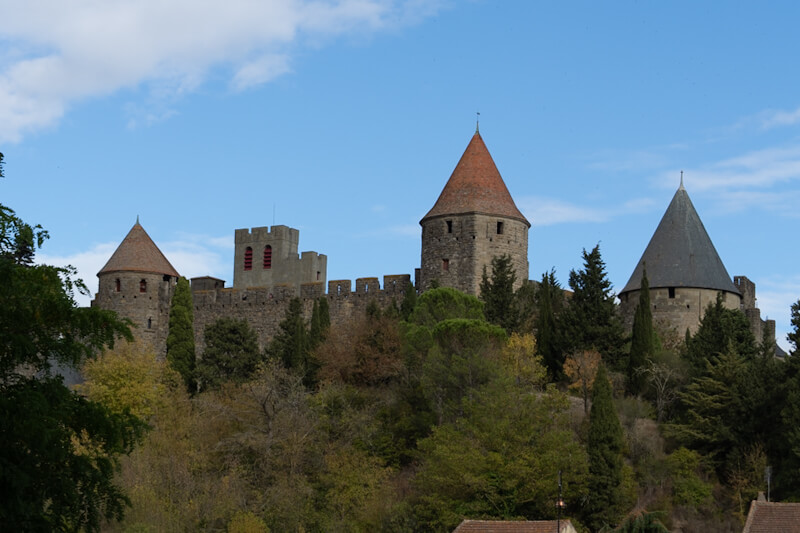
Here, the foothills of the Pyrenees form chains of hills, and on one such hill stands medieval Carcassonne.
Unlike other cities, the modern city did not grow around a medieval core, but was built right next to it. And that was a long time ago.
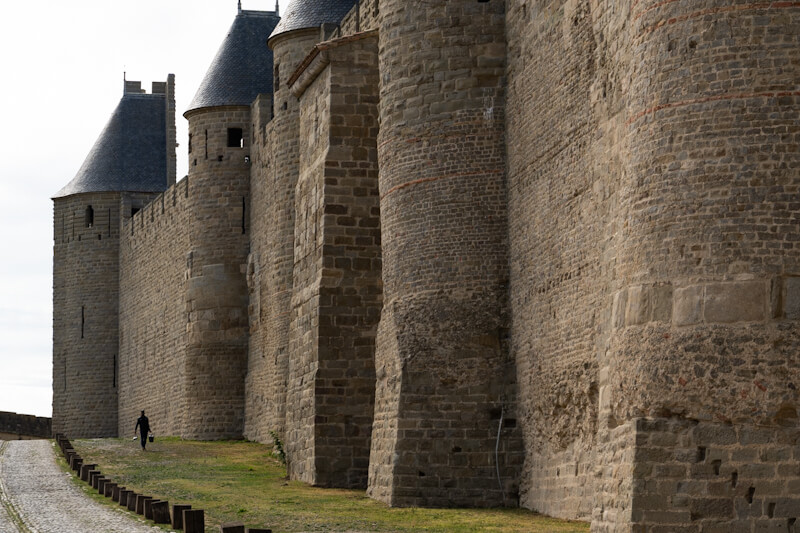
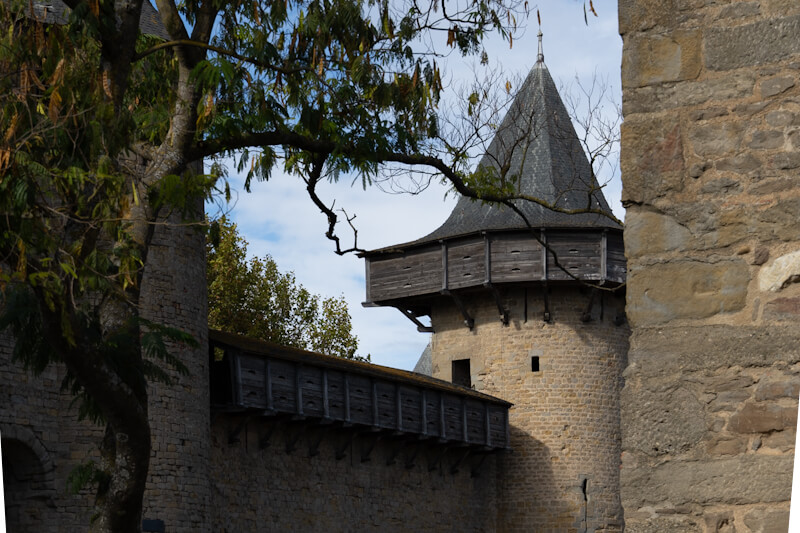
The original medieval town of Carcassonne thus stands almost entirely free and is still completely surrounded by high walls. An unusually large number of towers adorn the town walls, giving it a majestic appearance even from a distance.
Incidentally, the Cité de Carcassonne (old town) is surrounded by a double ring of walls and is unique in the world in terms of its shape and design. It is a World Heritage Site and one of the most important sights in southern France.
This region has always been a contested border region. It belonged to the Romans, Cathars, Saracens, Spanish and finally the French.
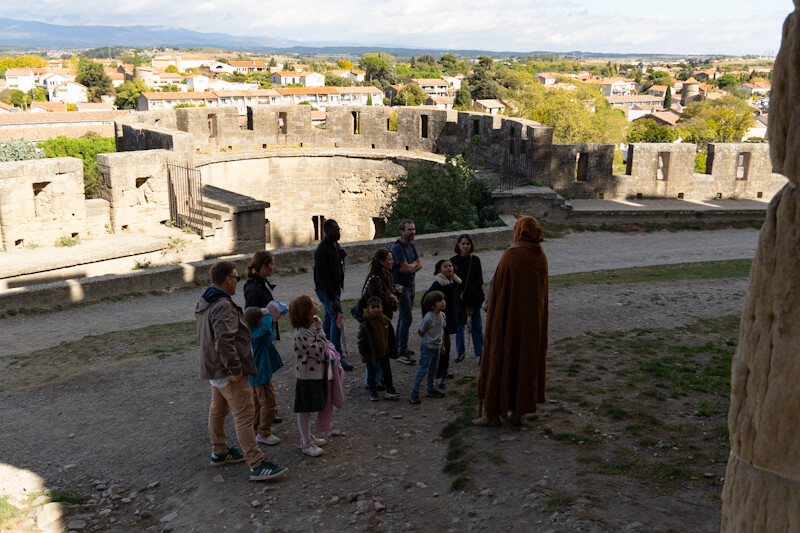
The fortified city of Carcassonne was besieged several times and changed hands numerous times. Although the lower town went up in flames at one point, the massive stone walls and buildings remained largely intact.
Around 3,000 to 4,000 people once lived within the walls. Today, we would call it a village, but in the Middle Ages it was an important city.
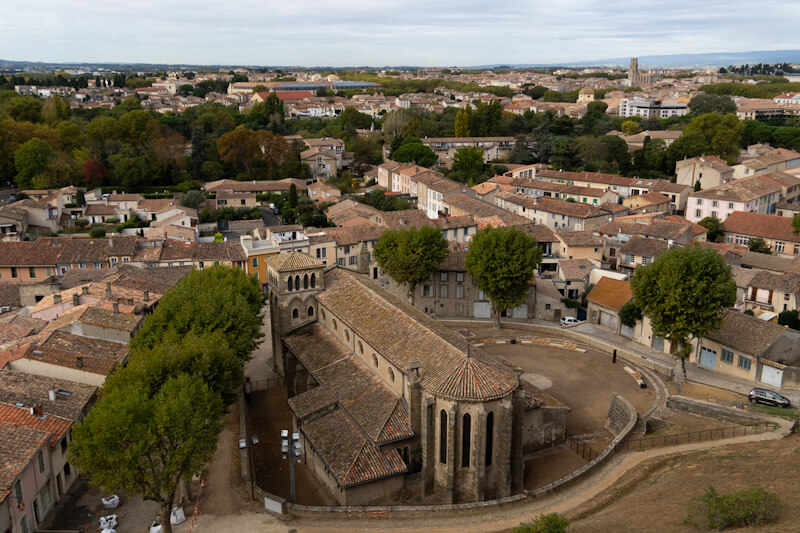
We are lucky enough to be able to park our motorhome for two nights at a beautiful campsite nearby.
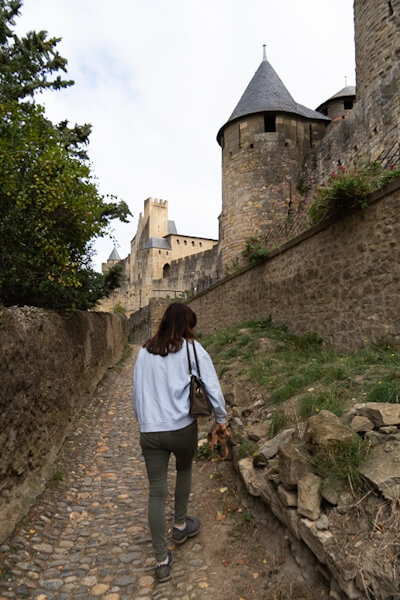
We walk along a stream in the shade of the trees to the Cité de Carcassonne, which we could already see from afar.
We reach the town from the rear. A small path leads us up the castle hill and a long ramp takes us through the outer and inner gates into the town.
The view of the surrounding area is already impressive. Vineyards adorn the hills on one side and the new town rises on the other.
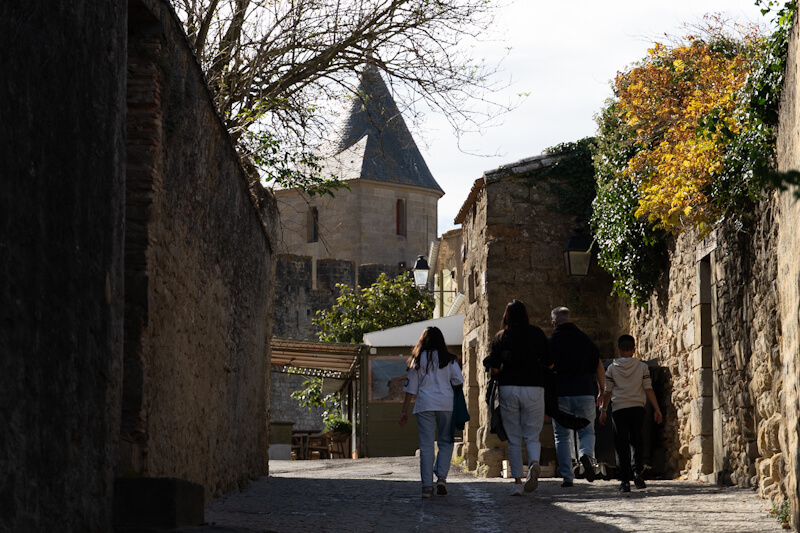
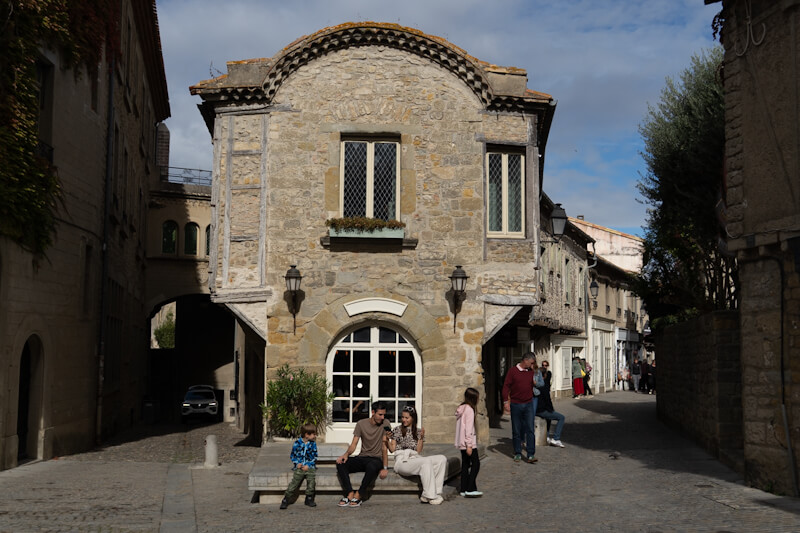
There is practically no car traffic inside the walls; only residents and businesses are allowed to load and unload here, and that probably only happens early in the morning or late in the evening.
That’s a good thing, because the narrow streets are already crowded with visitors; cars would be completely out of place here.
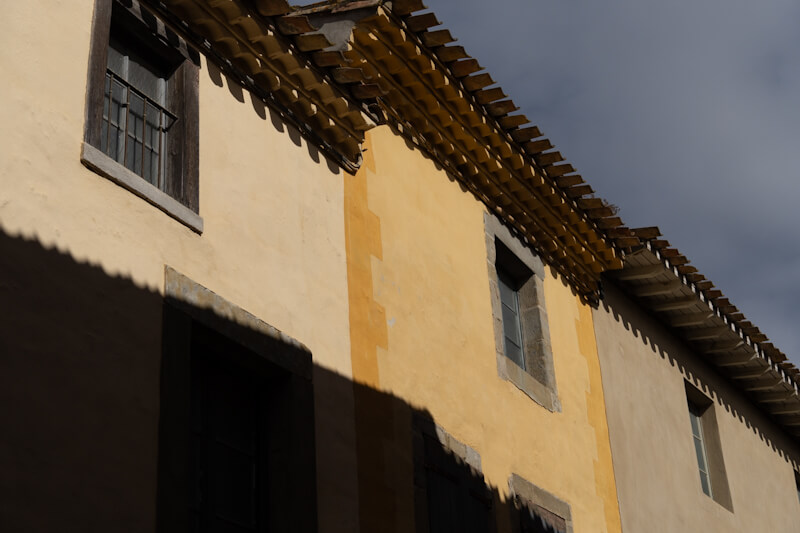
It is still relatively early in the morning and the small town is already bustling, but not yet overly crowded. As the day progresses, it will fill up even more.
Most people park their cars or buses on the other side of the car park and, unlike us, enter through the large front gate – the main entrance.
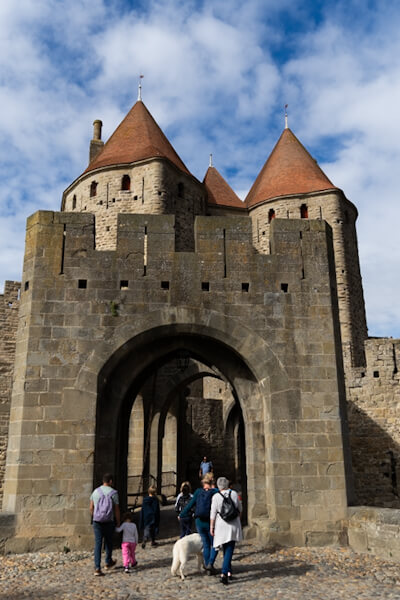
Luckily, we’re here in autumn; I don’t even want to know what it’s like here in summer!
Entrance to the city is free. But once inside, you’ll find plenty of shops and restaurants where you can spend your money.
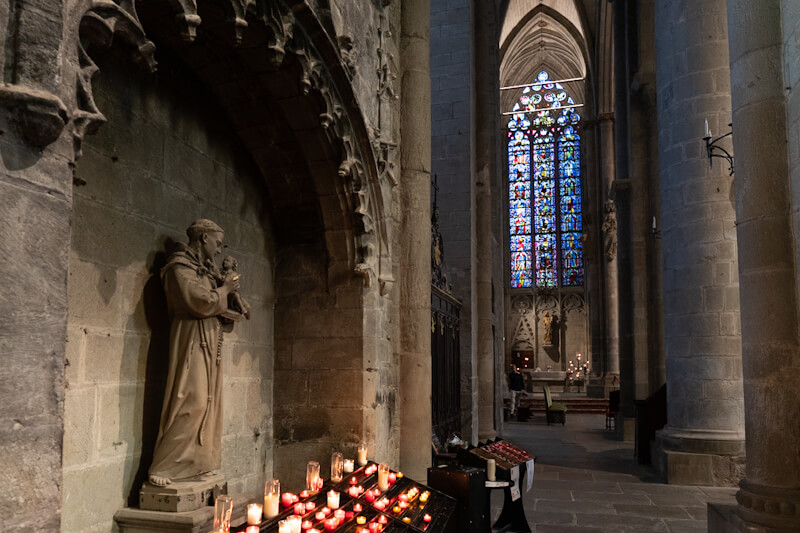
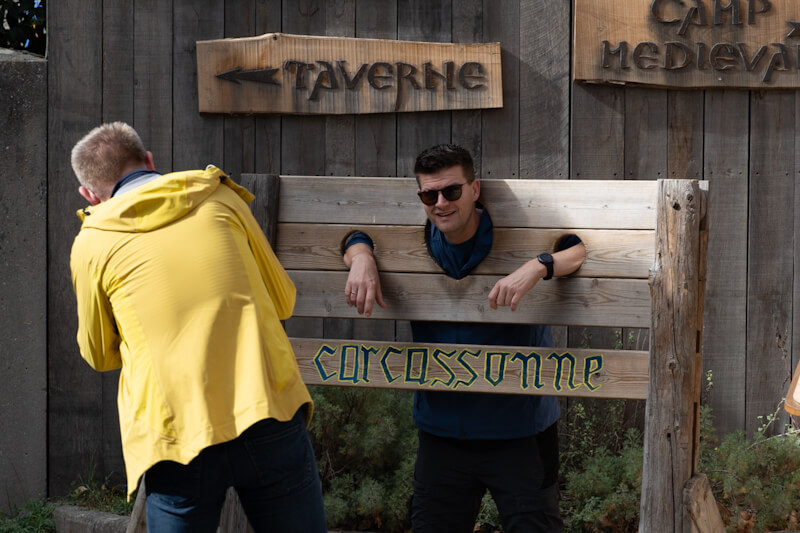
Yes, the place is very touristy, but still really beautiful. It’s great fun to walk along the city walls (you can also climb up onto them) and stroll through the narrow streets.
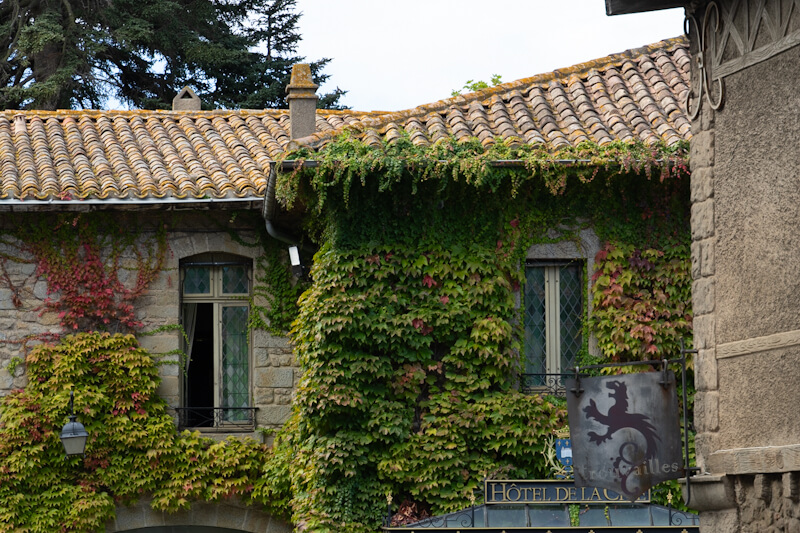
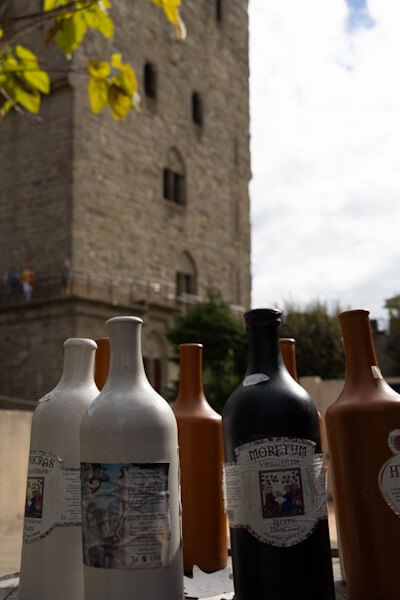
Many of the old façades are very pretty, some painted in bright colours and some covered in vines. No wonder, as the area is a wine-growing region.
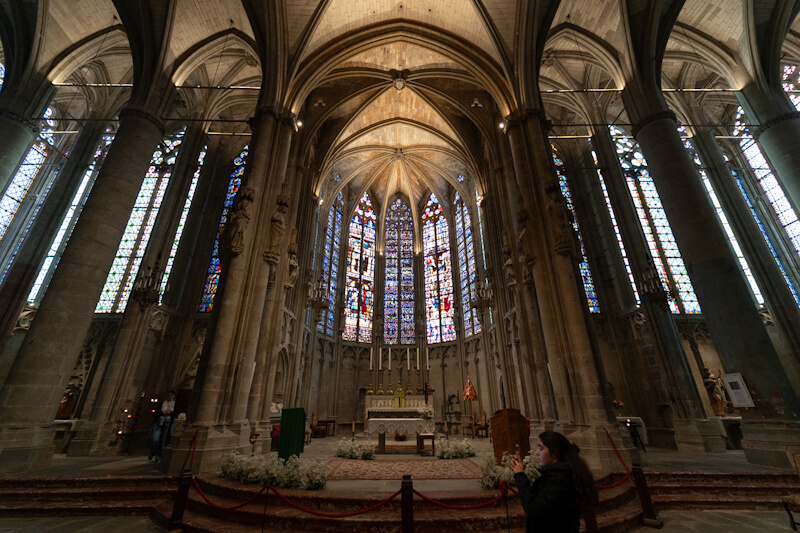
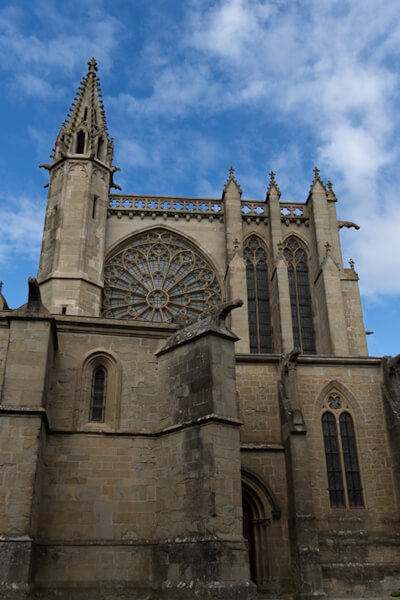
Wir erkunden die kleine Stadt in alle Richtungen und ich schaue mir auch die wunderschöne Basilique Saint-Nazaire genauer an.
Innerhalb der Mauern befindet sich eine weitere separate Burg, das Chateau Comtal. Hier lebten und regierten die Grafen der Region. Eine schmale Brücke und ein Tor führen von der Stadt zur Burg.
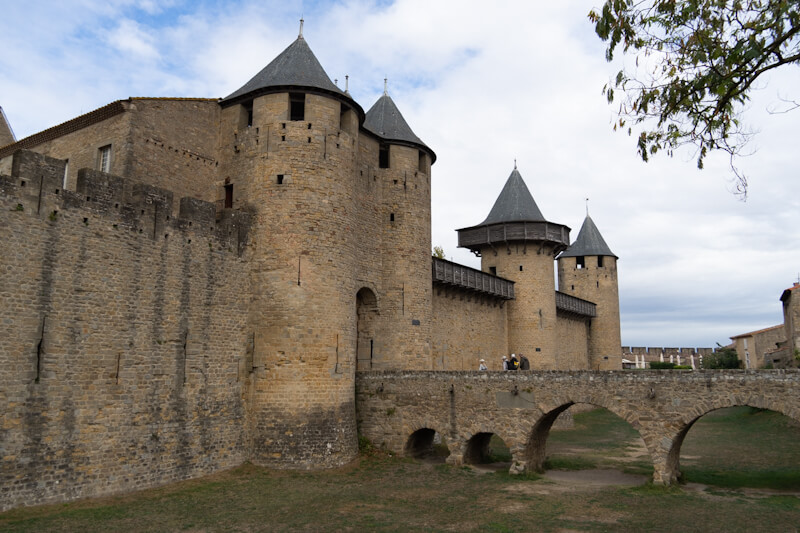
You can find more information about the town and the castle here: https://www.tourisme-carcassonne.fr/.
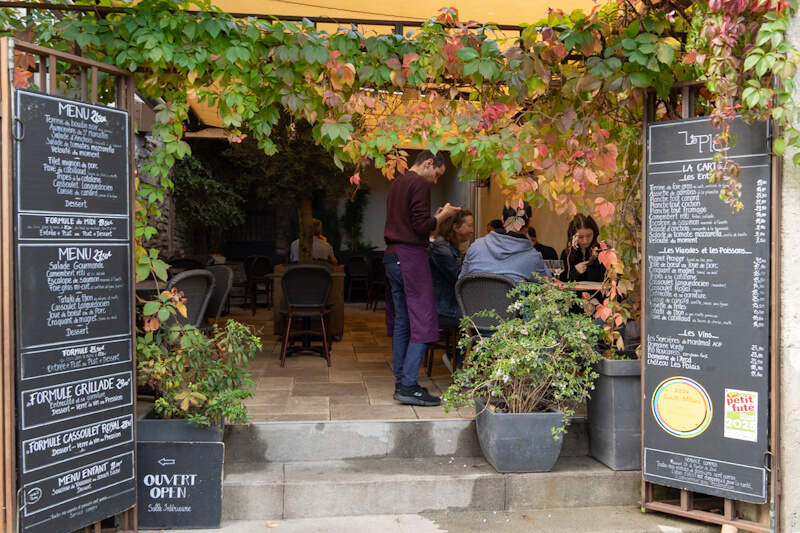
Meanwhile, the autumn sun is shining warmly high above the south of France and we choose one of the many shady restaurant terraces for a late but hearty lunch.
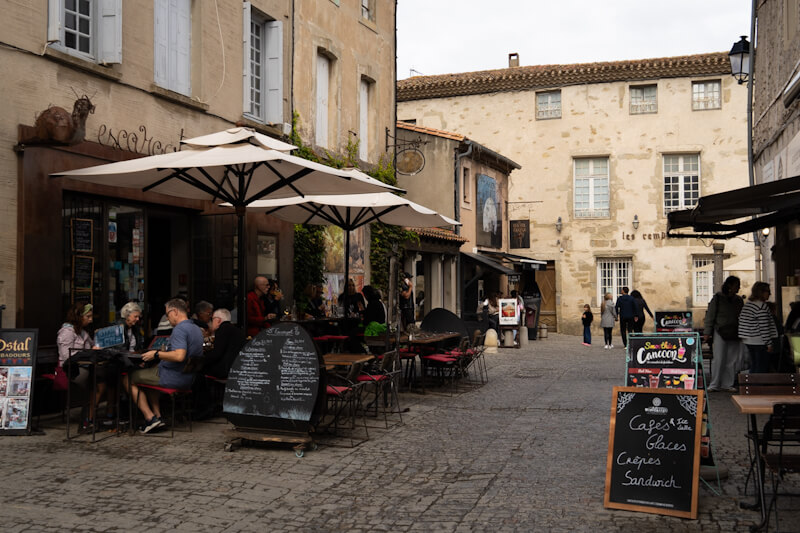
The cuisine in this region is hearty, with lots of meat and sausage. One speciality that can be found everywhere here is cassoulet, a stew made from white beans with duck legs, sausage and pork with bacon, seasoned with garlic, thyme and other herbs from the region.
An amazing mixture, which is also available in lighter versions. I try the original and afterwards can hardly move – a less hearty version would probably have been enough to fill me up.
We spend a little more time in the medieval town and then walk out the back door and along our shady stream back to the campsite.
Helpful links for your travel planning
Lonely Planet France: You cannot go wrong with Lonely Planet – well written with lots of tips on and off the beaten path.
Lonely Planet Best Road Trips France: This one is focused on great road trips around France.
The Rough Guide to Brittany and Normandy: Lovely guide for an area that we absolutely love.
Lonely Planet France Planning Map: Very useful planning helper.
Photo Location Finder North West France: Find great vistas and photo spots at the Atlantic Coast
French Classics: The instant SUNDAY TIMES BESTSELLER: Enjoy french cuisine at home – while planning your trip.
Enjoy your reading!
Conclusion
We often find that tourist hotspots, which are on every AI-generated must-see list, actually annoy us.
Too many buses, too many people, too loud and, in the end, just a financial rip-off. We usually find smaller places that are less advertised and less visited, but often just as beautiful, or even more beautiful than the well-known ‘top 10 places’, much nicer.
Carcassonne is an exception. It certainly appears on every top 10 list for south-western France, but it didn’t annoy us at all; we really liked it.
This is also because there is practically no car traffic in the old town. And it is certainly because we visited the town in autumn, when it was relatively busy during the day but not overcrowded (do not go in summer…).
And, of course, it is also because the double city wall with its many towers, the basilica and the castle are an absolute feast for the eyes.
Strolling and exploring the small old streets is great fun, and the region’s landscapes are also diverse and beautiful.
Although I was initially put off by the many shops and restaurants, we were ultimately glad that there was plenty of food for everyone without having to queue anywhere :-).
More interesting articles for you
Perpignan: Is it worth a visit?
Avignon: surprisingly delightful
Biarritz: charmingly sophisticated
Image credits Cover image: View of medieval Carcassonne (Photo: Ulrich Knüppel-Gertberg)
