If you know and like the German North Sea coast, then you’ll definitely like Normandy too. It’s practically like the North Sea coast on steroids! What I mean by that is…
Page Contents (click line to jump the text)
Intro and travel report
When you think of holidays in France, Paris, the Côte d’Azur or Provence probably spring to mind rather than Normandy. Normandy is located on the Atlantic coast in north-western France.
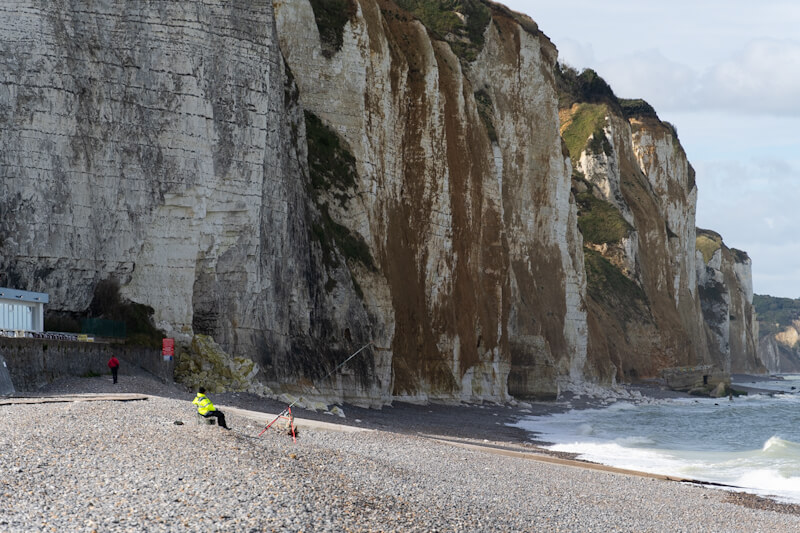
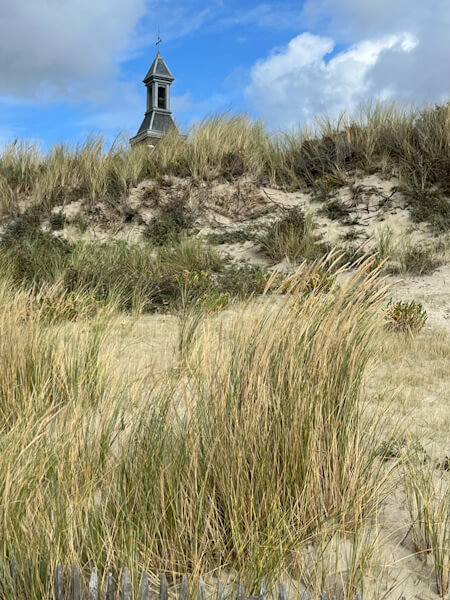
The far north of France has its own unique charm: breathe freely – breathe freedom. I have taken Normandy firmly into my heart.
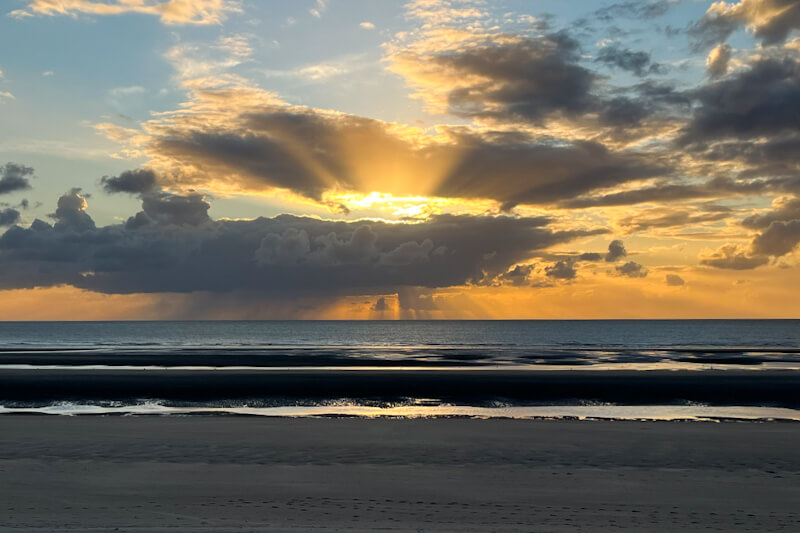
Imagine standing by the sea, the seagulls screeching, a fishing boat chugging away in the distance. A fine sandy beach stretches out before you for miles.
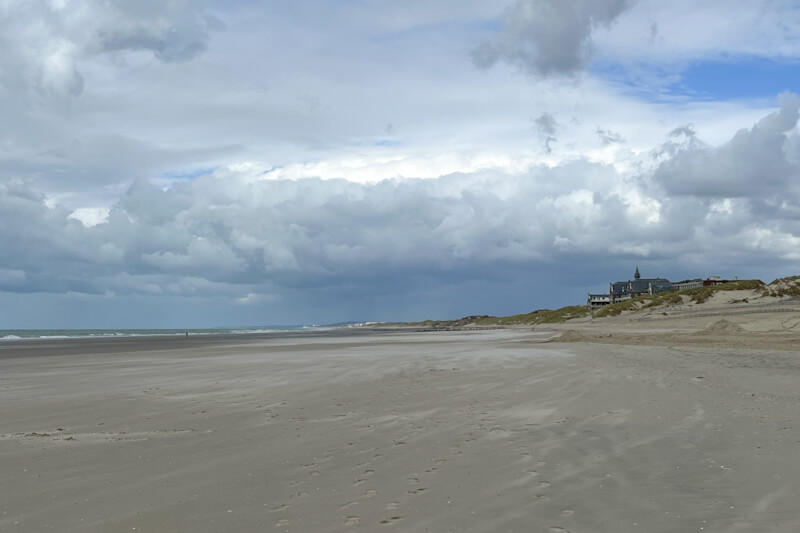
The wind blows coolly in your face and plays with the dunes. There is a little seaweed, oysters and shells on the beach. Breathe in deeply, breathe out, enjoy. In the here and now.
I am not a spiritual person at all and I don’t meditate. But nature can trigger such thoughts. In this case, the pure beauty of the long coastline of Normandy. Gazing into the distance, to the horizon.
Back in the motorhome. We drive through the countryside. This also reminds me of northern Germany. Rather flat land, a few orchards, a few fields, lots of pastures, horses, cattle. Open countryside.
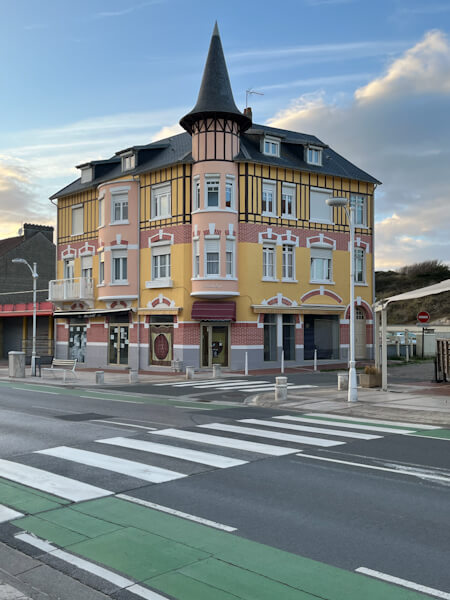
In the distance, the silhouette of a small village rises up. Farms and small houses in the half-timbered style of Normandy pass us by. A small fishing village, a medium-sized seaside resort, a small town with a beautiful chapel and many historic buildings.
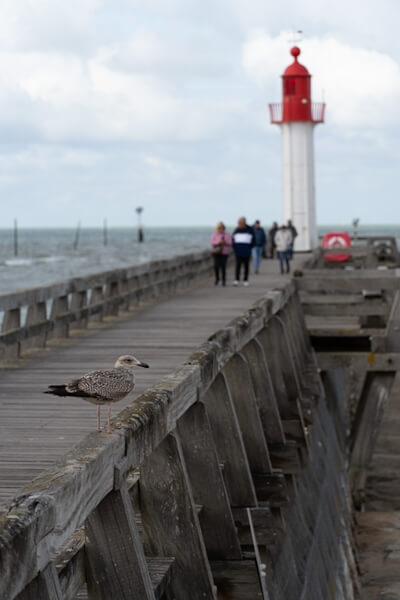
We have travelled through Normandy many times, mostly by car on our way to the ferry in Cherbourg, which took us overnight to Ireland, to our second home.
This time, we set off from Ireland in our motorhome to drive down the French Atlantic coast and via Spain and Portugal to the French Mediterranean and back to Germany.
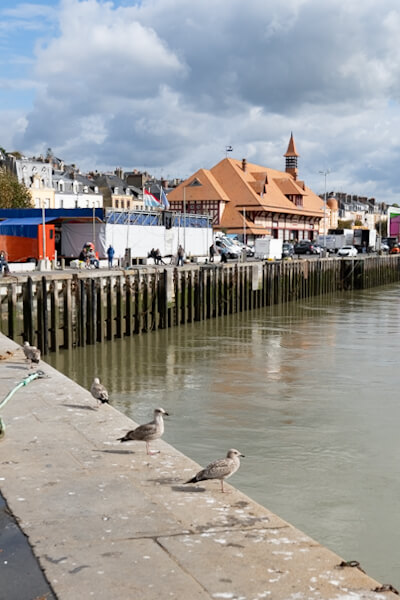
As we already know the Cherbourg headland well, we have shortened this part of the trip a little this time and are spending more time on the coasts that we don’t know so well yet.
Massive walls appear before us: an estate with apple orchards. Most of the apples from the region are processed into cider. But they also end up in local kitchens, accompanying traditional meat dishes, for example.
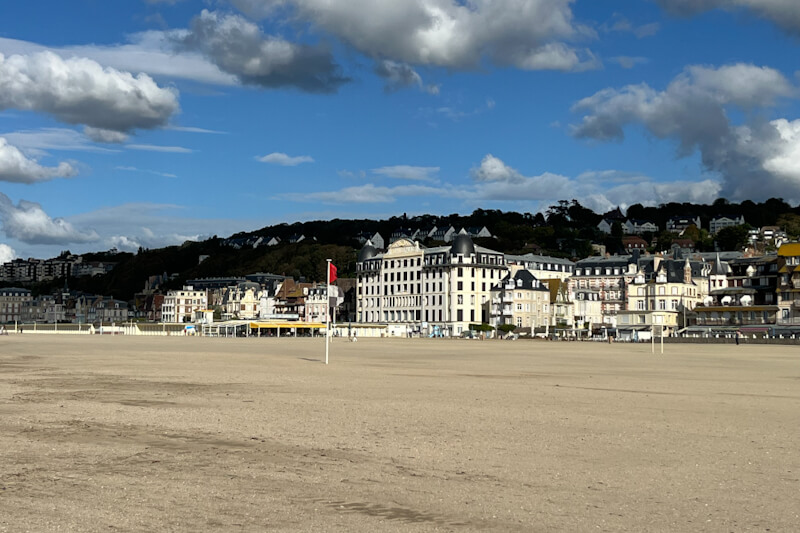
This estate also has a beautiful, larger motorhome parking area in front of the farmhouse. We park under tall trees, with the farm behind us and apple trees in front of us. There are a few other motorhomes here besides ours, but it’s not even half full.
The young lady who is in charge of the parking area knows why: now in autumn, it is already getting a little cooler here in Normandy. Many motorhomes have already moved on to the south. She also finds it too cold in Normandy.
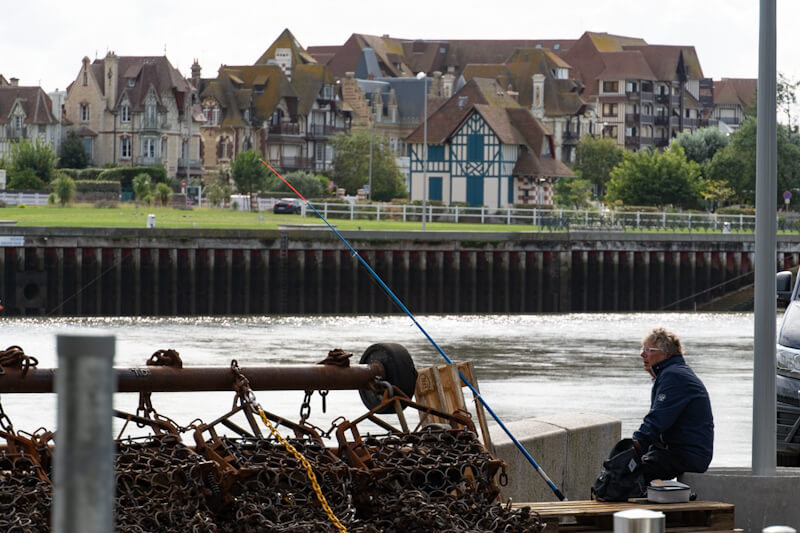
She comes from Bordeaux, about 600 kilometres further south. And she prefers hot weather. People are also more relaxed in the south. In the north, they are more reserved.
This all sounds very familiar to me from Germany: different country, same discussion. But we are here at the level of Frankfurt am Main, and from our perspective, Normandy is not far north at all.
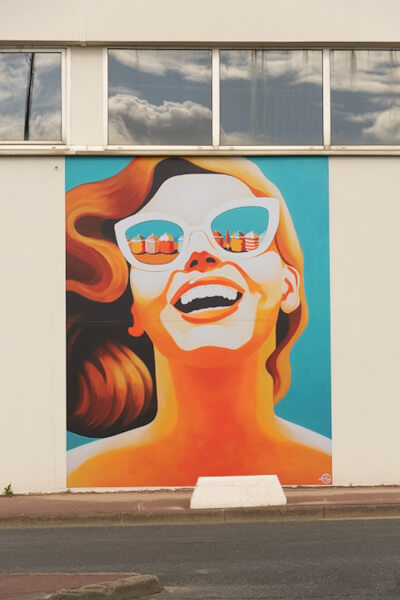
Anyway, we really like it here. Lots of countryside, beautiful coastlines, charming towns, relaxed travel – what more could you want?
Things weren’t always so relaxed in Normandy. During the Second World War, the broad beaches of Normandy were the site of the Allied invasion, which is still celebrated here every year. For example, at Omaha Beach or Utah Beach.
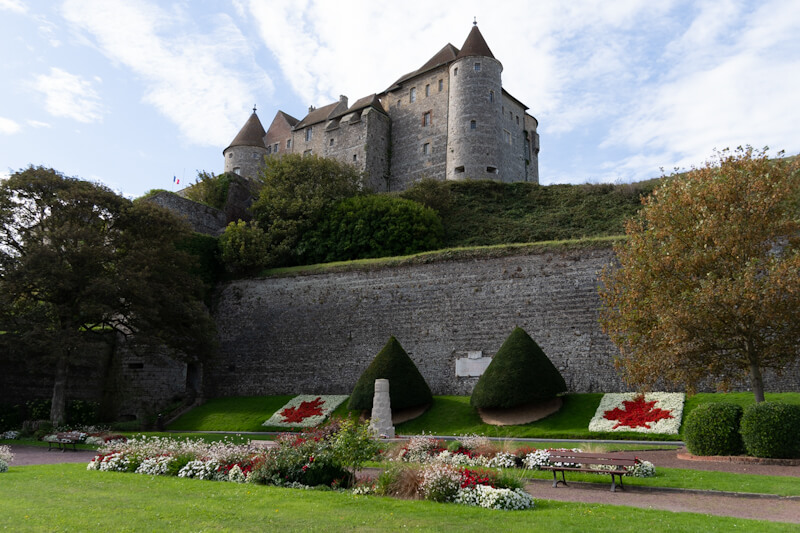
There are still many bunkers here on the coast and several museums where you can see tanks, jeeps, aeroplanes and other equipment from that period.
But these were not the first armed conflicts in the region. In 911, the French king Charles gave the duchy as a fief to the Viking leader Rollo.
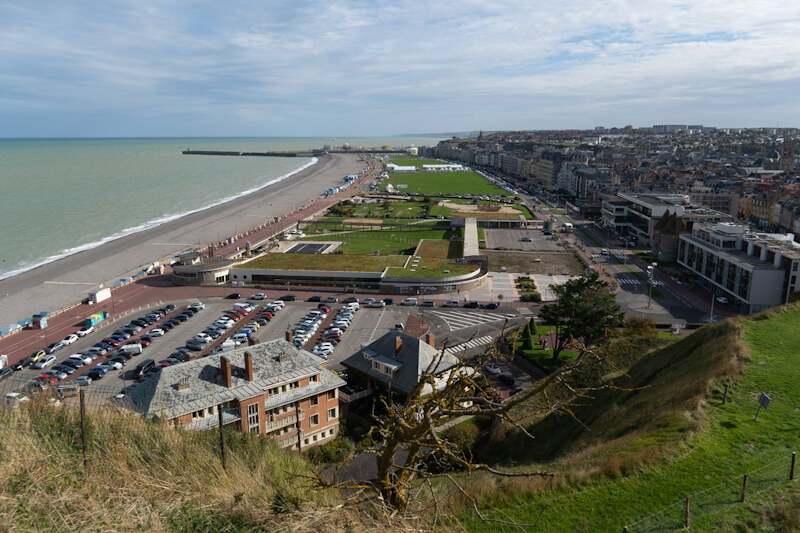
The deal was that the Vikings were allowed to settle on the sparsely populated coasts of north-western France, but had to swear allegiance to the French crown and defend the long coastline – including against other Viking tribes.
In doing so, they also protected the mouth of the Seine River and controlled access by ships to Paris. Today, the large port city of Le Havre lies at the mouth of the Seine.
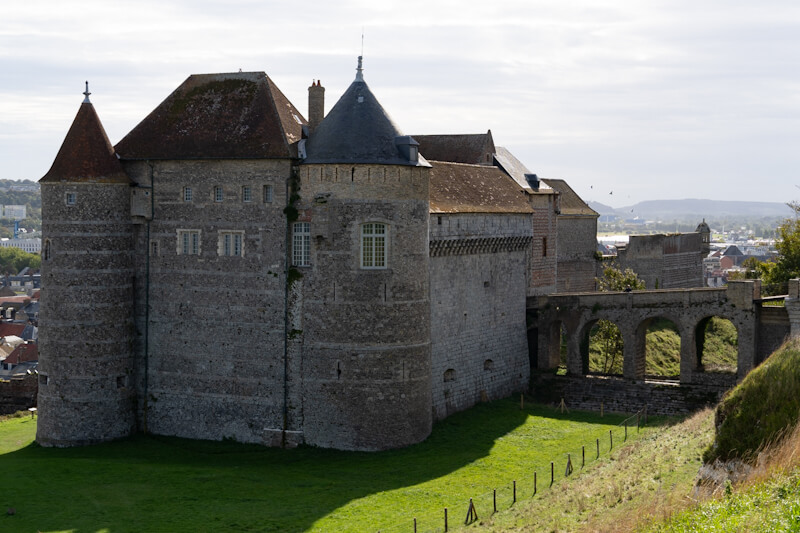
The Vikings under Rollo did this so well that they were allowed to stay permanently and mingle with the French population. This gave rise to the mixed population of Normandy.
Their descendants conquered England and Ireland, ruled the islands for several hundred years and built numerous defiant Norman castles there to consolidate their new territory
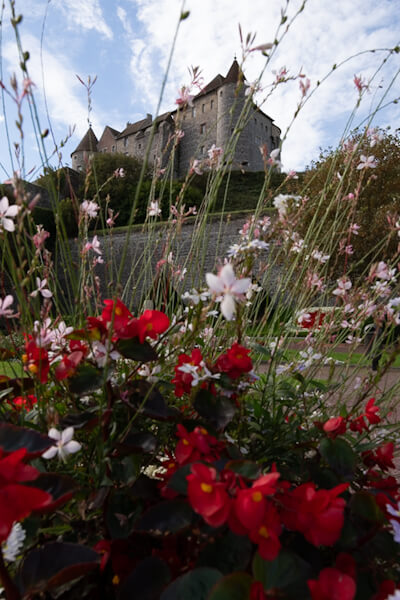
There are probably more Norman castles on the British Isles than in Normandy itself.
But Normandy also has many fortified towns, castles and palaces that you can visit. Incidentally, the name ‘Normandy’ is derived from the “Nordmannen” or ‘Nordic men’ who settled here.
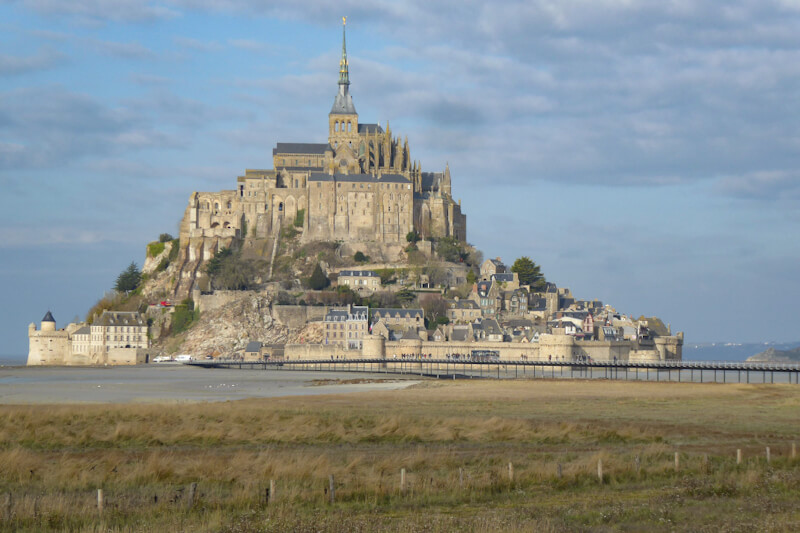
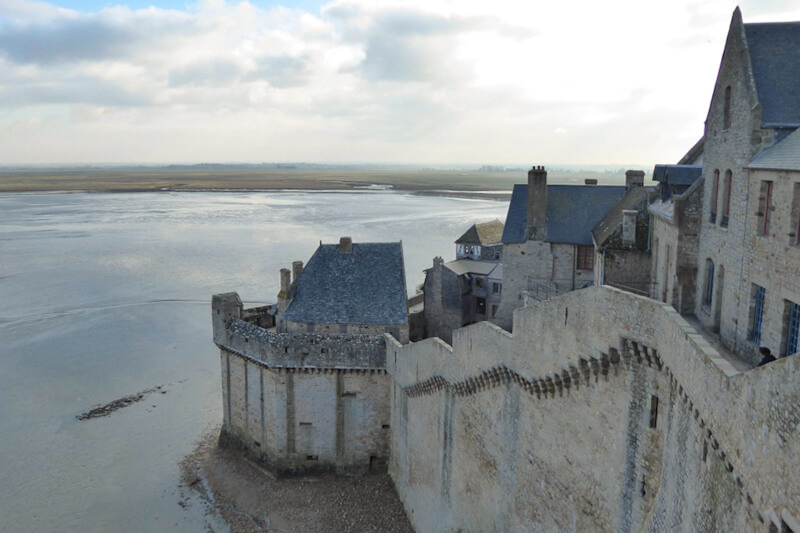
On the southern border of Normandy, there is another building that you should definitely visit: Mont-Saint-Michel. It is a former Benedictine abbey that was built on a rock in the sea in the Middle Ages.
It was later expanded and extended several times and now consists of an abbey, a church, a chapel and a village at its feet. All of this is protected by massive fortifications and stands on a high rock that stands out picturesquely from the otherwise flat landscape.
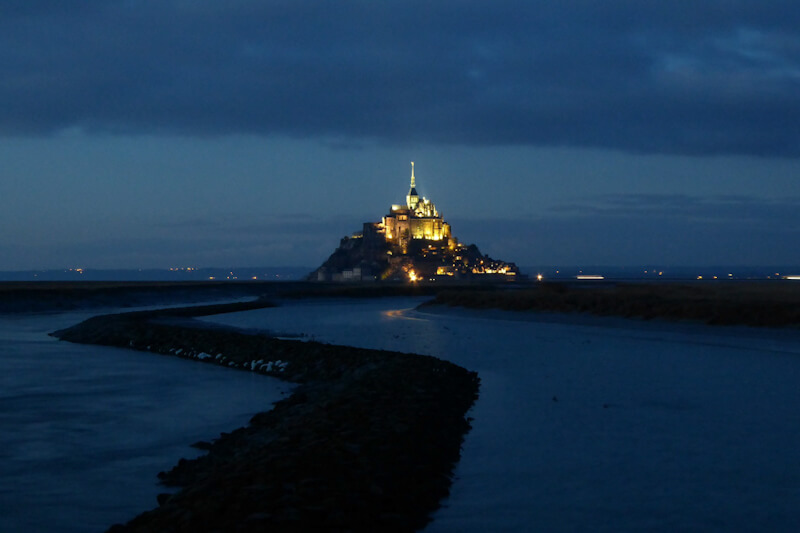
The tides are extremely strong here, and so Mont-Saint-Michel is completely surrounded by water at high tide. A narrow causeway leads there, but even that can be flooded. At low tide, however, it is possible to walk around part of the mountain.
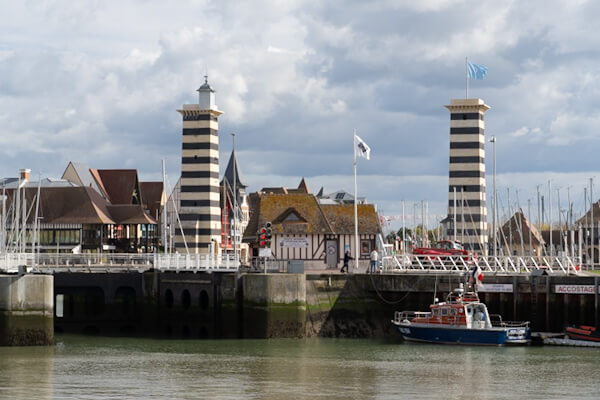
I’ve been here before and also took a guided tour of Mont-Saint-Michel, which I can highly recommend.
The building is a World Heritage Site and one of France’s most important landmarks. But here too, it’s best not to go during the summer holidays; spring or autumn are better times to visit, when it’s less crowded.
You can find more information about Mont-Saint-Michel and other sights in Normandy here: https://en.normandie-tourisme.fr/.
Just a few kilometres further on, Brittany begins – but that will be the subject of another article.
Helpful links for your travel planning
Lonely Planet France: You cannot go wrong with Lonely Planet – well written with lots of tips on and off the beaten path.
Lonely Planet Best Road Trips France: This one is focused on great road trips around France.
The Rough Guide to Brittany and Normandy: Lovely guide for an area that we absolutely love.
Lonely Planet France Planning Map: Very useful planning helper.
Photo Location Finder North West France: Find great vistas and photo spots at the Atlantic Coast
French Classics: The instant SUNDAY TIMES BESTSELLER: Enjoy french cuisine at home – while planning your trip.
Enjoy your reading!
Conclusion
Normandy is probably rather underrated as a holiday destination. Many people are drawn to the south, to the warmth (heat).
I say: there are southern travellers (we are not) and there are northern travellers (that’s us!). If you are a northern traveller, then you will certainly enjoy Normandy.
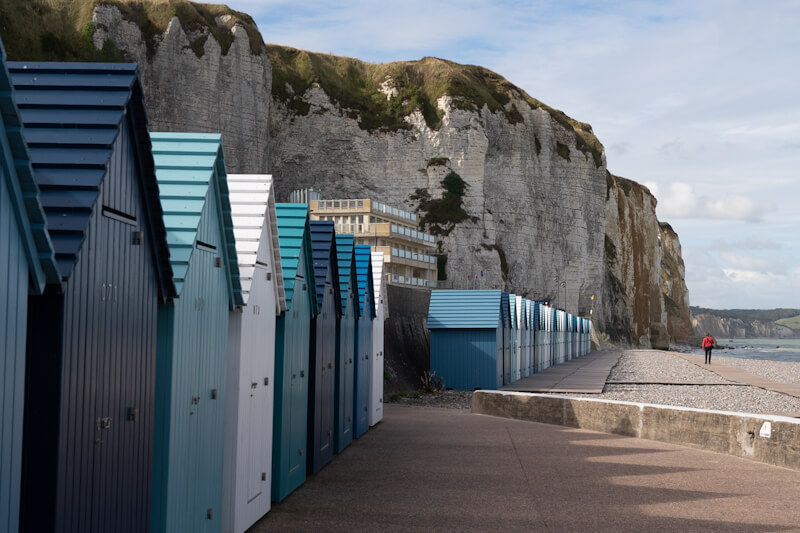
But we don’t need to polarise between north and south. Normandy is rural, fairly flat, with mostly small towns and few large cities. It is not overcrowded and you can move around freely and comfortably here.
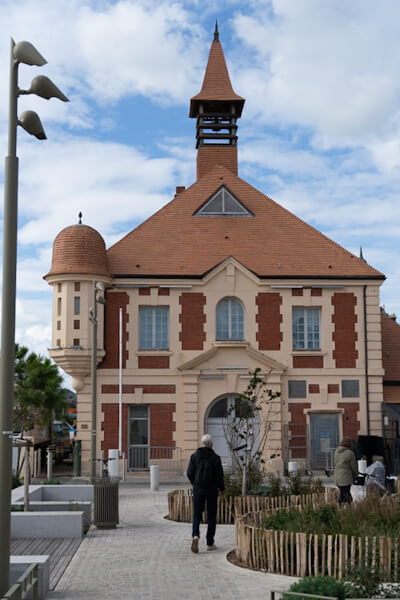
I like the quiet landscapes, the windy coasts, the endless sandy beaches, the small towns and the unobtrusive people here.
You could say that Normandy is ‘cool’, or even almost “Nordic”. And although we are here in Western Europe and not in Northern Europe, it definitely has ‘Nordic charm’!
More interesting articles for you
Bretagne: wild and enchanting
Travelling France by motorhome: experiences
Saint-Malo: massively impressive
Image credits Cover photo: View of Mont-Saint-Michel in the evening (Photo: Ulrich Knüppel-Gertberg)
