The old town of Saint-Malo is completely surrounded by high city walls, which are almost completely submerged by seawater at high tide. But it is not only the town itself that is impressive, but also its beautiful location…
Page Contents (click line to jump the text)
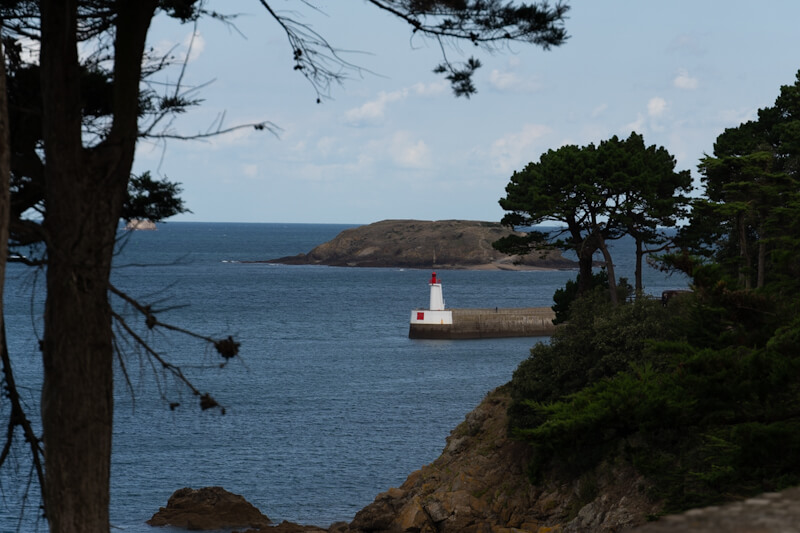
Intro and travel report
Saint-Malo is located in northern Brittany and north-western France. The impressive Mont-Saint-Michel (Normandy) is just a stone’s throw away, as are the Channel Islands of Guernsey and Jersey.
Although these are located off the French coast, they belong to England, on the other side of the English Channel, which is very wide at this point and soon merges into the Atlantic Ocean.
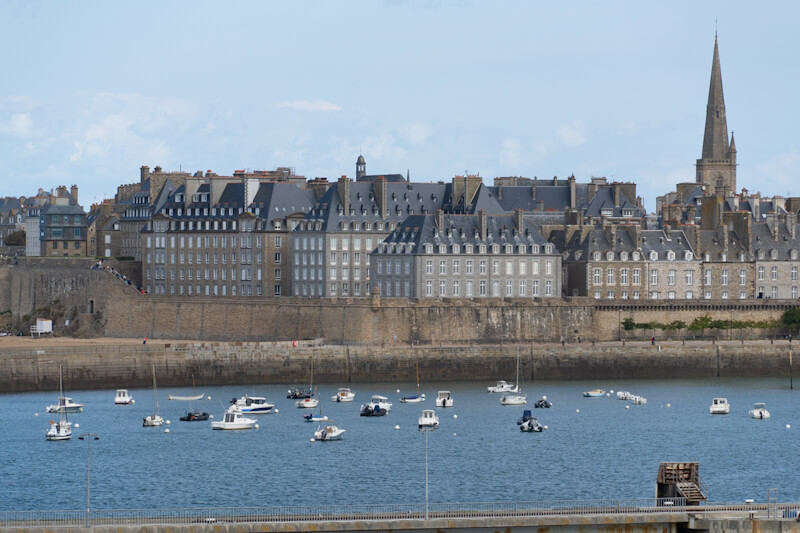
The old town is practically in the water. It was built on a small island off the mainland, which was later connected to the mainland, presumably by landfills. In fact, the land side is so narrow that it was probably easy to defend at the time. The location in the water gave the town protection, and the high walls, the Remparts, reinforced this protection in all directions.
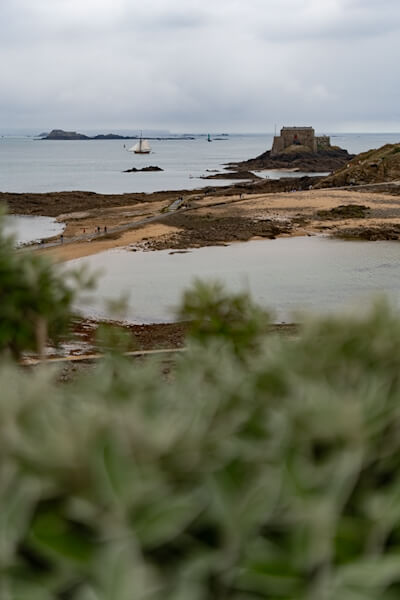
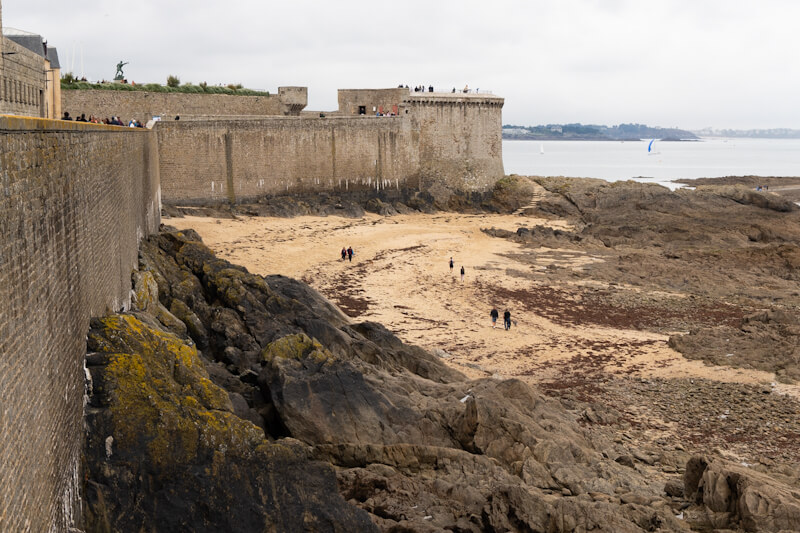
However, the situation looks very different at low tide and high tide, as the tides are very strong in northern Brittany and cause a difference of up to 12 metres in sea level. At low tide, you can therefore walk around most of the city, but at high tide you would have to take a boat.
The ramparts were first built in the 12th century and expanded in subsequent years. The reason for this was repeated raids on the town by the neighbouring Normans.
Incidentally, the original Gallo-Roman settlement was not built on this site, but on the neighbouring Alet peninsula, where the district of Cité d’Alet is located today. This mountainous peninsula also seemed suitable for Julius Caesar’s troops to establish a garrison here.
German troops during the Second World War apparently agreed, building an artillery and bunker complex on the hill of Aleth as part of the Atlantic Wall. Today, this complex houses a WW2 museum, which is obviously popular with numerous school classes, families and travellers.
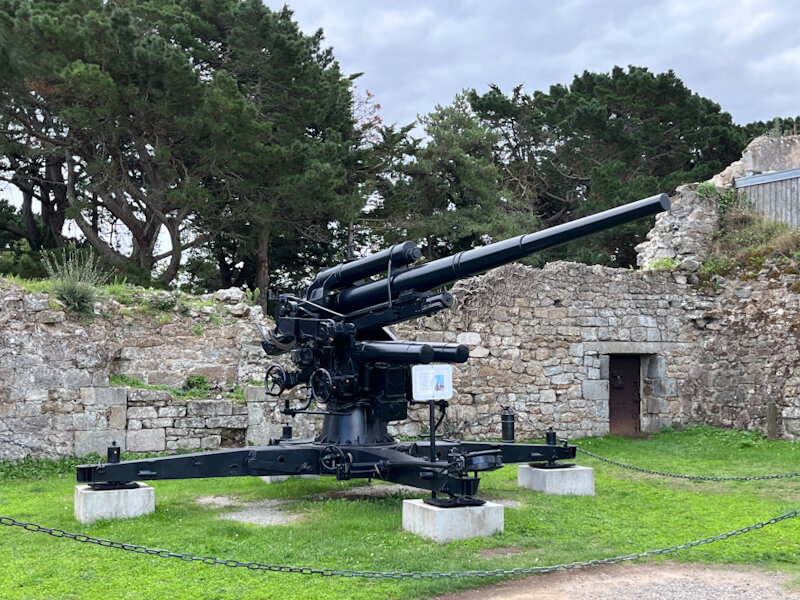
How do I know this? Directly below is a campsite where we parked our motorhome for several nights. The path to the complex leads right through the campsite, so many visitors walk through it every day.
Incidentally, the bunker facilities on the hill are completely open to the public. There is a large green area in the middle, and from the walls you have an incredible view of many small offshore islands and rocks, the harbour entrance of Saint-Malo, the bay of Les Corbières, where an incredible number of yachts are anchored, and of course the open sea.
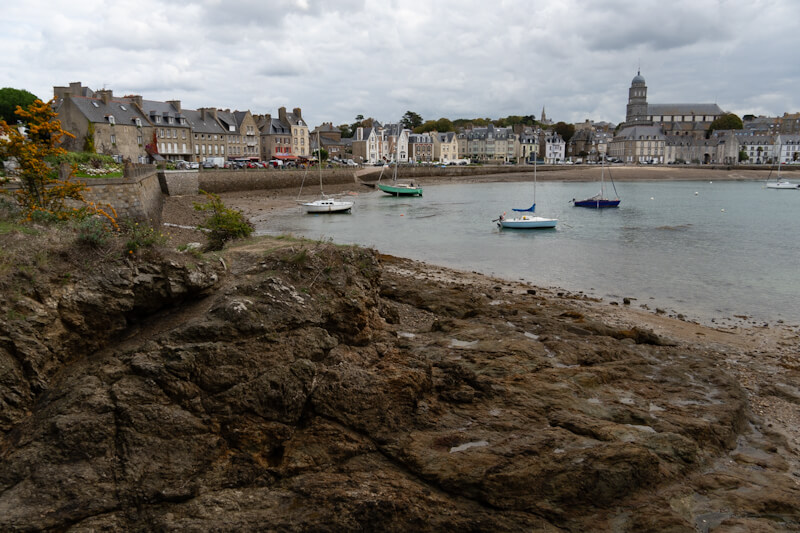
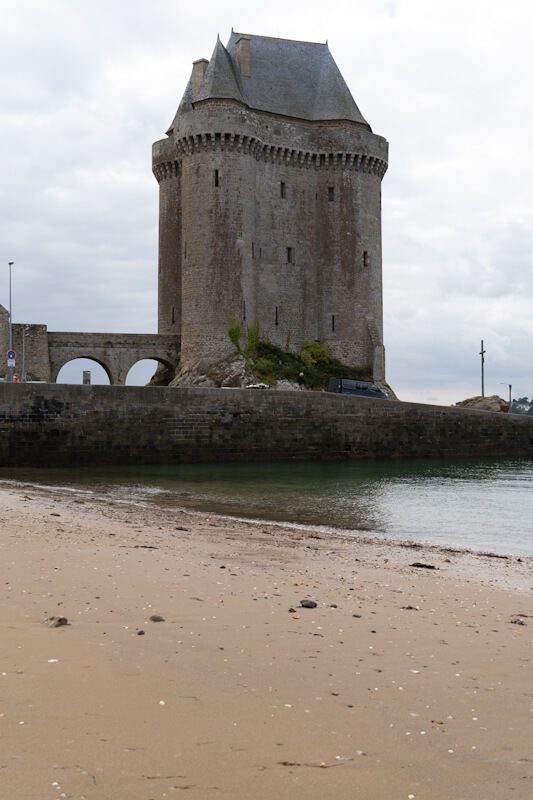
You can also walk around the peninsula halfway up, as there is a beautiful hiking trail that leads all the way around it. In the old harbour of Cité d’Alet, there is a single large old tower, the Tour Solidor.
It probably marked the entrance to the neighbouring Quai Solidor. The small bays with sandy beaches are beautiful and the houses around them are mainly detached old buildings – very nice!
On the other hand, you can follow the long Plage des Bas Sablons beach and reach the harbour area of Saint-Malo. The extensive complex consists of several outer and inner harbour basins connected by lift bridges.
If you want to go to Intra-Muros, the old town within the walls, you have to cross at least one of these bridges. And if a ship is passing through, you just have to wait a while.
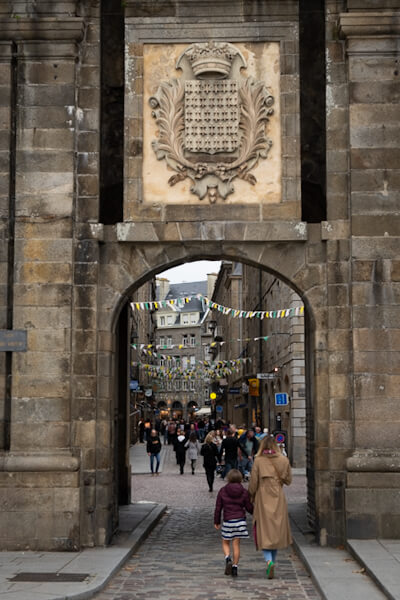
From Alet, it is very easy to reach Intra-Muros on foot or by bicycle. We have done both several times. Incidentally, the city was bombed and severely damaged by Allied troops during the Second World War. However, it was rebuilt by France from 1945 onwards based on the old model and restored to its present beauty.
Saint-Malo also has the largest and most important port in Brittany. Merchant ships and ferries, fishing boats and hundreds of sports yachts can be found here.
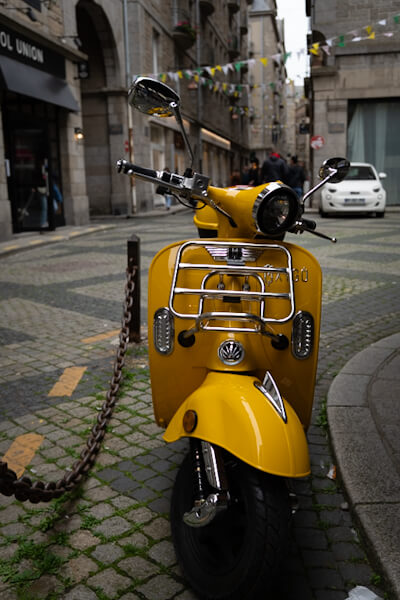
But Saint-Malo was not always a peaceful trading partner. In the 16th century, the corsairs (Les Corsaires) of Saint-Malo were considered the scourge of Dutch and English merchant ships. Corsairs were pirates authorised by the king who captured ships from other nations, from which the French crown also profited.
This was not unusual at the time; the English also had similar arrangements with pirates. The business of privateering, smuggling and slave trading was extremely profitable and contributed significantly to the city’s wealth.
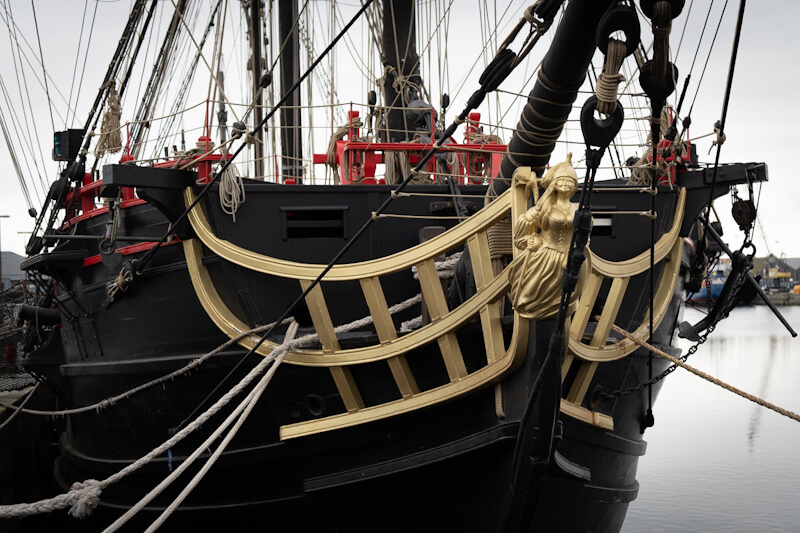
The term ‘Corsaire’ is often encountered in the city, and in the harbour there is a beautiful museum ship, the L’Etoile du Roi, which was once a corsair frigate. See: https://www.etoile-marine.com/visite-etoile-du-roy/.
Information on all of the city’s sights can be found here: https://www.saint-malo-tourisme.com/.
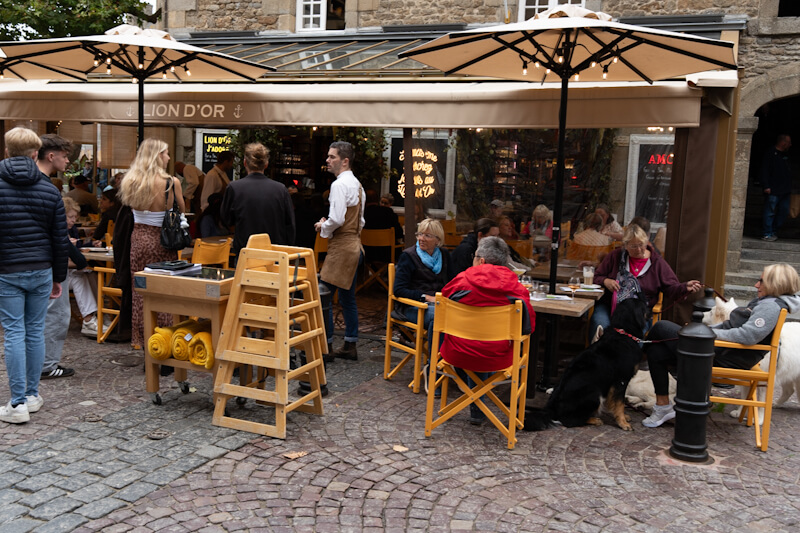
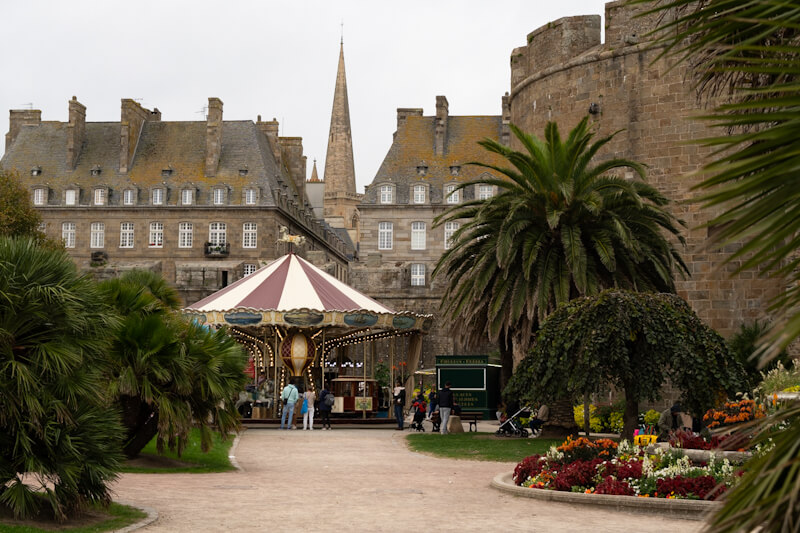
The town inside the walls is inviting even before you reach them. We experience a large swimming festival on the beach with lots of music, as well as a small fair in the park in front of the town gate.
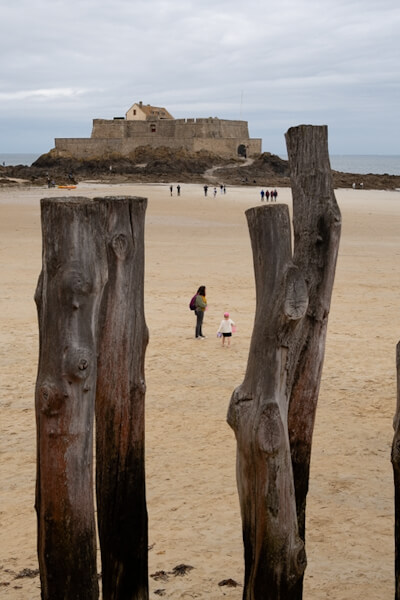
It is low tide and I walk across the beautiful sandy beach to the island of Fort-National opposite, on which, as the name suggests, there is a fort.
There are two more islands in front of the city, the Isles de Grand Bé and Petit Bé. On the latter, there is another fort, which probably once protected the sea side of the city.
In the rocky cliffs outside the town lies a tidal pool, an almost natural swimming pool where swimming lessons are currently being held for children, who can swim safely in the calm sea water.
In fact, I see an incredible number of families with children, most of them French. Saint-Malo is an attractive holiday or weekend destination, even now in autumn.
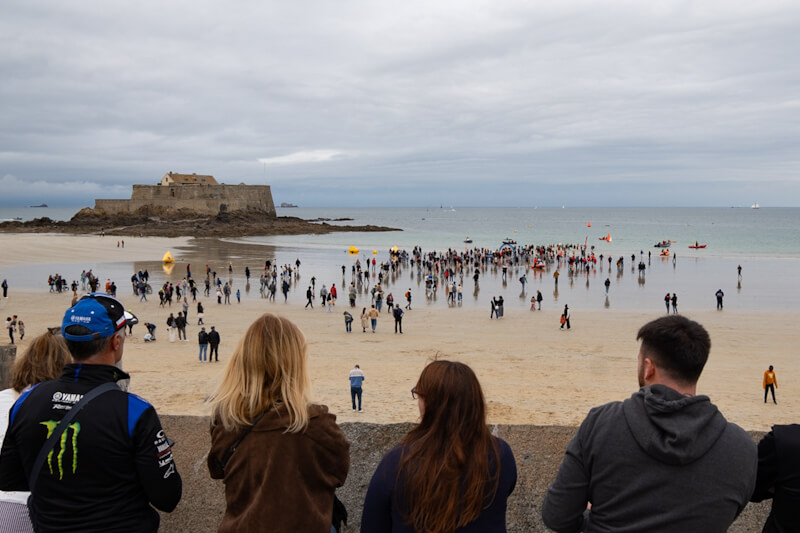
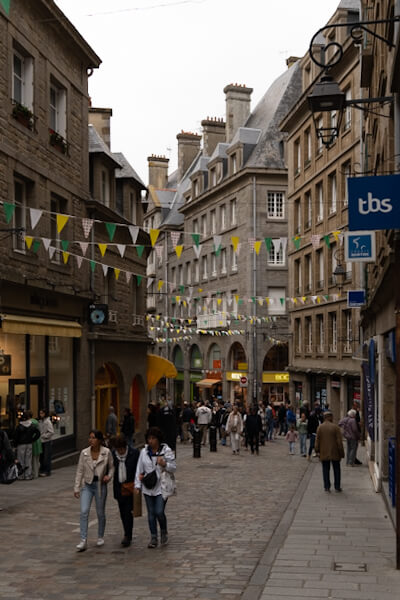
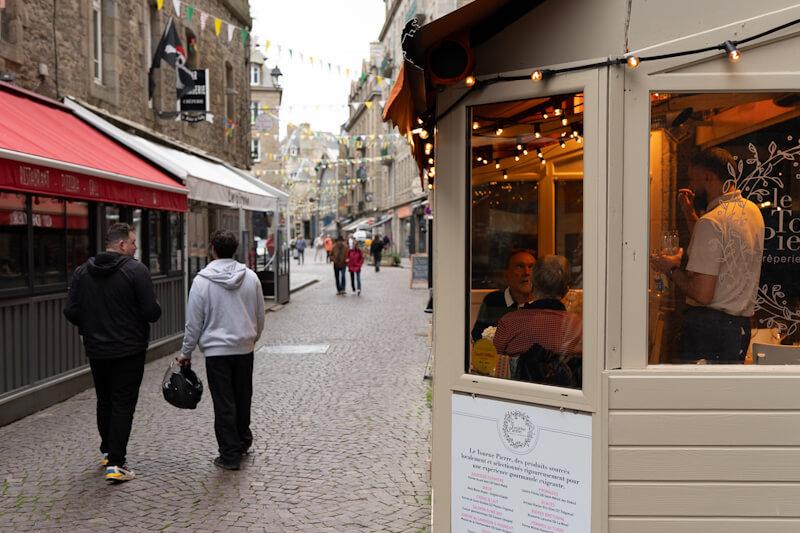
The city within the walls is correspondingly full of life. There is no car traffic, apart from a few delivery vans, but there are pedestrian zones, shops of all kinds, food and drink. There is no doubt that this city also thrives on tourism.
A highlight is definitely a walk on the city walls. I walk halfway around them and enjoy the incredible views of the coast. Islands, cliffs, sandy beaches and lots of sailing boats off the coast – wonderful!
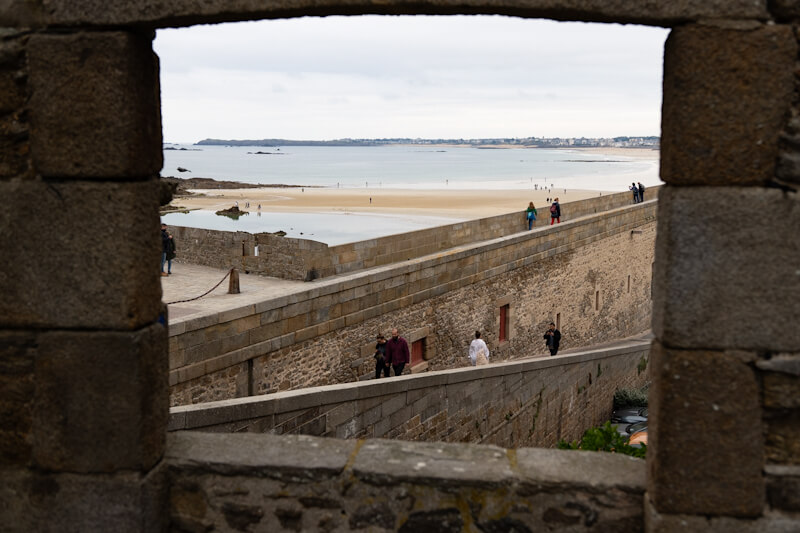
But the city itself is also worth seeing, as there are lots of beautiful historic buildings. One example is the Cathédrale Saint-Vincent de Saint-Malo, which I visit. It is a mixture of styles: Romanesque, Gothic and Renaissance elements alternate. The colourful stained-glass windows tell the story of the city.
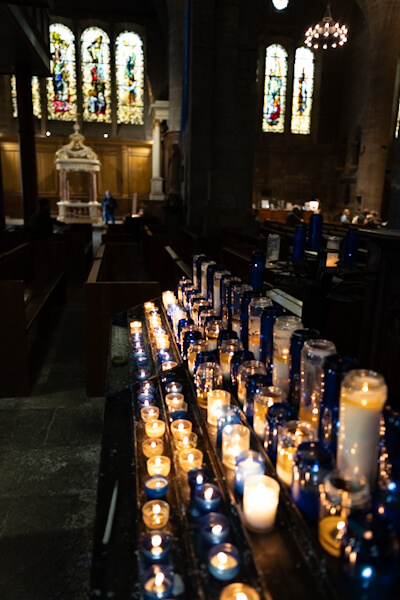
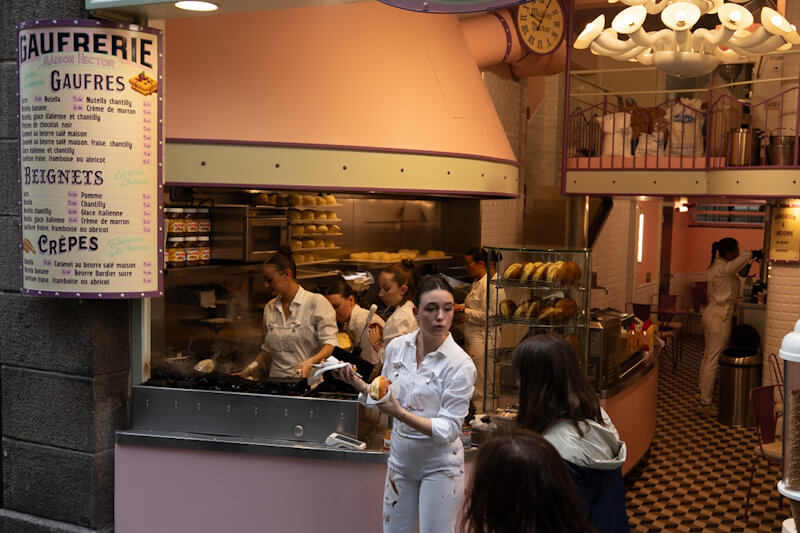
Hunger and thirst drive me out of the contemplative tranquillity of the cathedral and back into the colourful life of the old town. Food and drink are plentiful here, and soon I am wandering through the alleys again with my camera, finally ending up at the city gate with completely flat feet.
What a great city Saint-Malo is. We will definitely come back again!
Helpful links for your travel planning
Lonely Planet France: You cannot go wrong with Lonely Planet – well written with lots of tips on and off the beaten path.
Lonely Planet Best Road Trips France: This one is focused on great road trips around France.
The Rough Guide to Brittany and Normandy: Lovely guide for an area that we absolutely love.
Lonely Planet France Planning Map: Very useful planning helper.
Photo Location Finder North West France: Find great vistas and photo spots at the Atlantic Coast
French Classics: The instant SUNDAY TIMES BESTSELLER: Enjoy french cuisine at home – while planning your trip.
Enjoy your reading!
Conclusion
At the risk of repeating myself (again…), Saint-Malo is definitely worth a visit – no question about it!
But: it is a tourist town, where all hell breaks loose in high summer.
In spring and autumn, it is still busy here, but to a degree that is enjoyable! We visited Saint-Malo in autumn and loved it.
It can get windy and cool in northern France in autumn, but we much prefer that to sweating in the summer heat in a crowded city.
Well, tastes vary, and if you prefer summer, then go in summer (I warned you!).
Be sure to take a few days, at least two nights, to explore the old town within the walls and the surrounding area. You’re sure to love it!
More interesting articles for you
Bretagne: wild and enchanting
Normandie: nordic charme
La Rochelle: enchanting harbour town
Image credits Cover photo: View of the city of Saint-Malo, Intra-Muros, from the marina (Photo: Ulrich Knüppel-Gertberg)
