Page Contents (click line to jump the text)
We have actually known France for a long time, especially the Mediterranean coast, because we have been there on holiday several times in the past. But travelling along the Atlantic coast in a motorhome was a whole new experience…
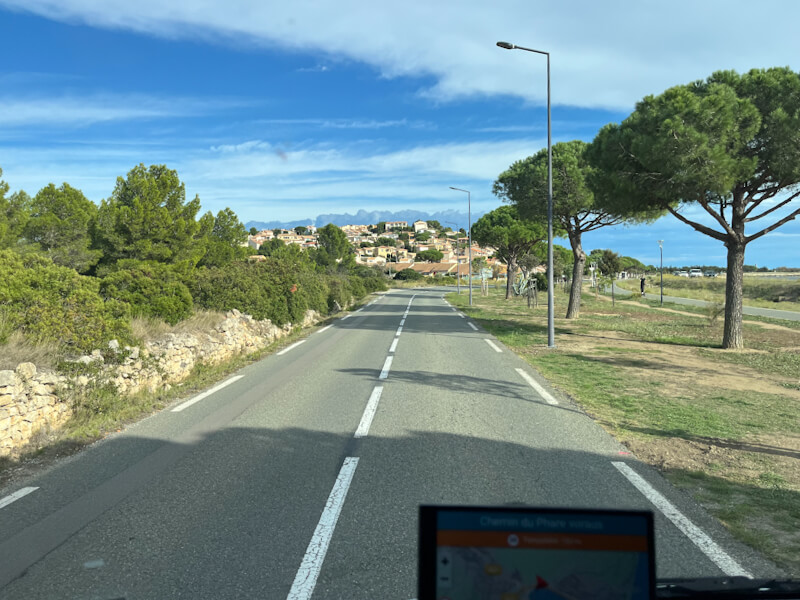
Intro and travel report
We are also familiar with parts of France’s Atlantic coast, particularly Normandy around Cherbourg. This is because we have often taken the overnight ferry from Cherbourg to Ireland, where we have our second home.
On the way, we have repeatedly visited the region’s beautiful beaches and seen one or two places.
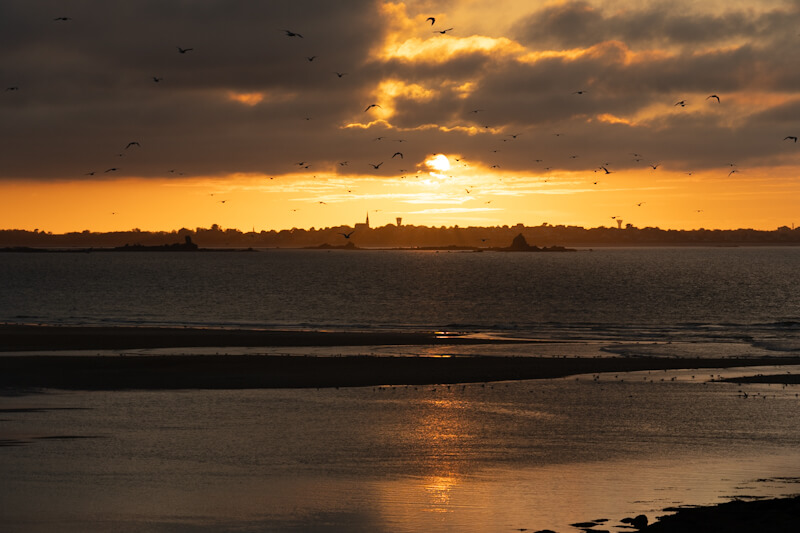
So we decide to skip this peninsula on our motorhome trip. We travel from Ireland via England and take a Channel ferry from Dover to Calais. This is located in the far north-west of France, on the border with Belgium, in the Hauts-de-Provence region.
We follow the coast southwards, always staying close to the coast. Many people are familiar with the white chalk cliffs of Dover (England). What many do not know is that such chalk cliffs also exist on the other side of the Channel, in north-western France!
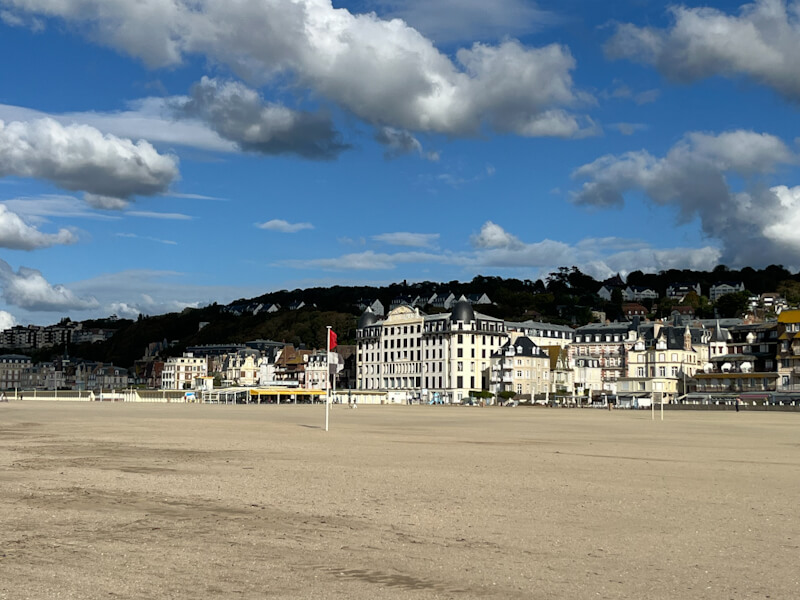
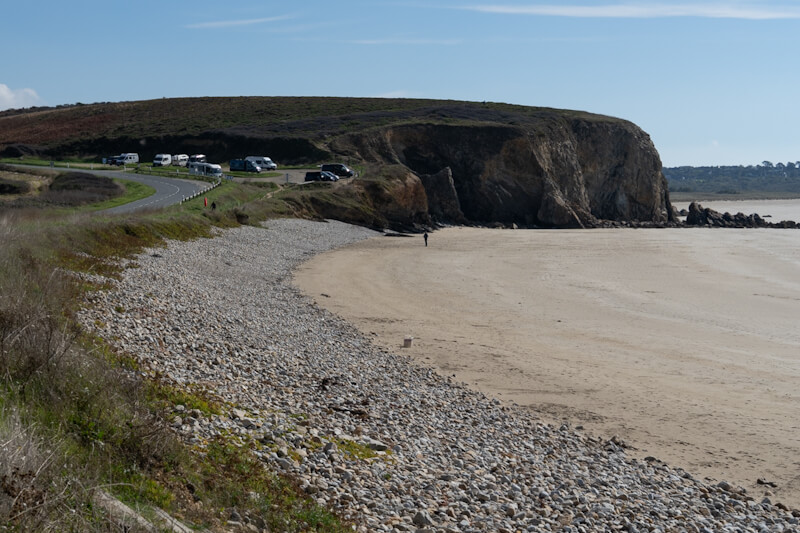
The further you travel into Normandy, the fewer rocks you find and instead you encounter wide, long, beautiful sandy beaches. In Brittany, the landscape becomes rocky again: brown and sometimes pink granite rocks alternate with small and large sandy bays.
In the south-west, sandy beaches dominate the coastline once more. The sand continues inland, where dry pine forests characterise the landscape. Near the Pyrenees, the terrain becomes rocky again, with many cliffs.
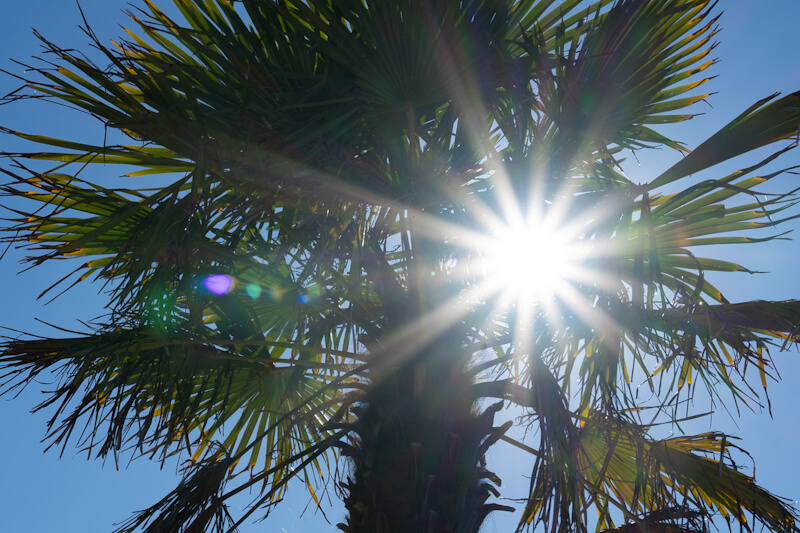
There are lots of beautiful seaside resorts and harbour towns along the Atlantic coast. The northern and southern parts of the Atlantic coast are fairly flat. In the west, in Brittany, there are lots of hills.
Apart from a few larger cities, such as Bordeaux, the coast is fairly rural. The towns are mostly not very big and agriculture dominates the inland landscape.
There are large fields of all kinds in Hauts-de-Provence, orchards and cattle pastures in Normandy, small fields in Brittany, vineyards in the west and forestry in the south. The soil, water and terrain determine what can grow there.
However, France’s Atlantic coast was not only shaped by agriculture and fishing, but also by maritime trade. Port cities such as Saint-Malo and La Rochelle emerged, whose prosperity was based more on trade than on fishing.
Wherever trade flourishes and prosperity reigns, construction follows. This was true in the past and remains so today. Monasteries and cathedrals, magnificent fortified towns, castles and palaces can be found in great variety along the French Atlantic coast.
But what was the weather like? Well, we were travelling in autumn and mostly had dry weather with pleasant temperatures. It was windy from time to time and there was occasional rain, but we found the weather very favourable for travelling. It was cooler in the north and warmer in the south – but that was to be expected.
Incidentally, we circumnavigated the Iberian Peninsula and travelled back to south-west Germany via the French Mediterranean coast. However, I won’t be writing about Spain and Portugal, as they weren’t really our thing…
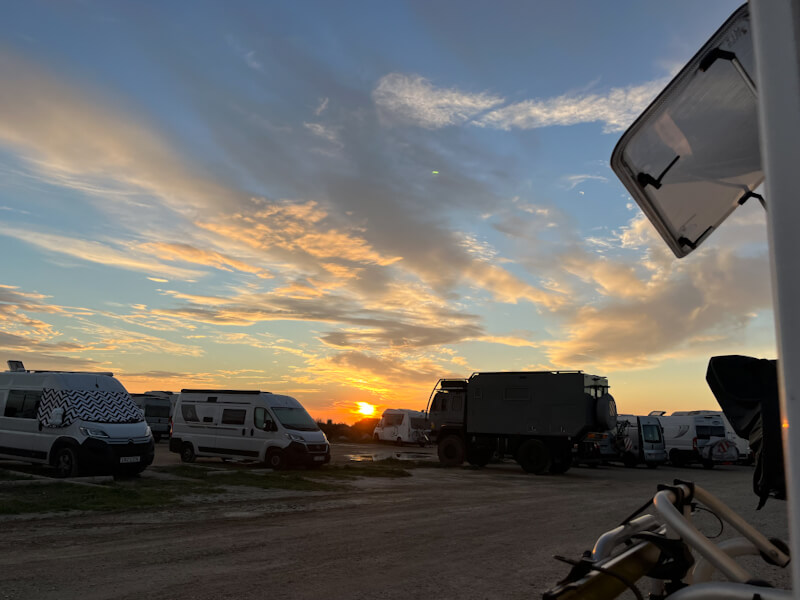
Let’s move on to travelling by motorhome in France: we saw a huge number of pleasure boats and yachts along the French coast, as well as a huge number of motorhomes. The French like to holiday in their own country and the infrastructure for campers is really good!
It was usually easy to find a good parking space or campsite for our motorhome, even though we were by no means the only travellers in autumn. In summer, of course, the sites can get quite crowded.
Incidentally, many campsites close for the winter, from around September/October to March/April. As we like to travel in spring and autumn, this affects us, as it does many others.
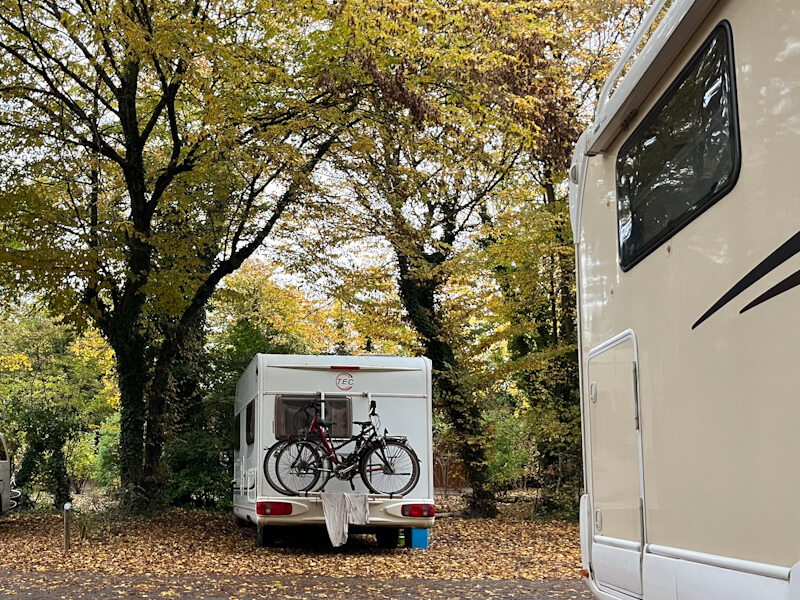
But that’s not a problem in France, because there are plenty of parking spaces. These are often automated. There is a barrier at the entrance, you pay a fair amount via app or card, and then you can drive onto the site, where there is also a supply and disposal station – also automated.
There are several chains in France that operate a whole range of such automated parking spaces. You take a membership card from the machine, load it with money and can then use many spaces in the same chain.
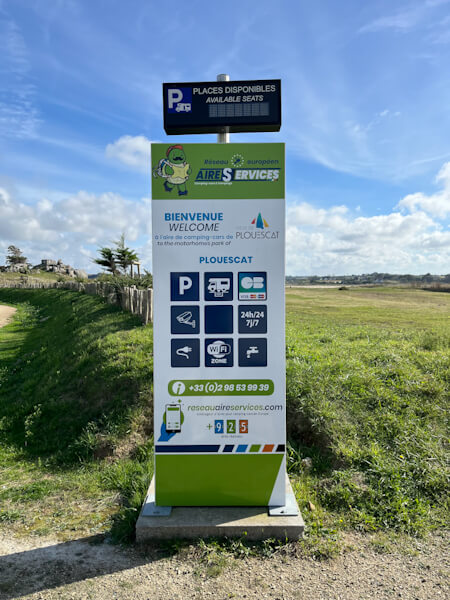
How do you find them? We usually found our parking spaces using Google Maps. The keywords are: ‘Aire de Camping Car’ for motorhome parking spaces and ‘Aire de Camping’ for campsites.
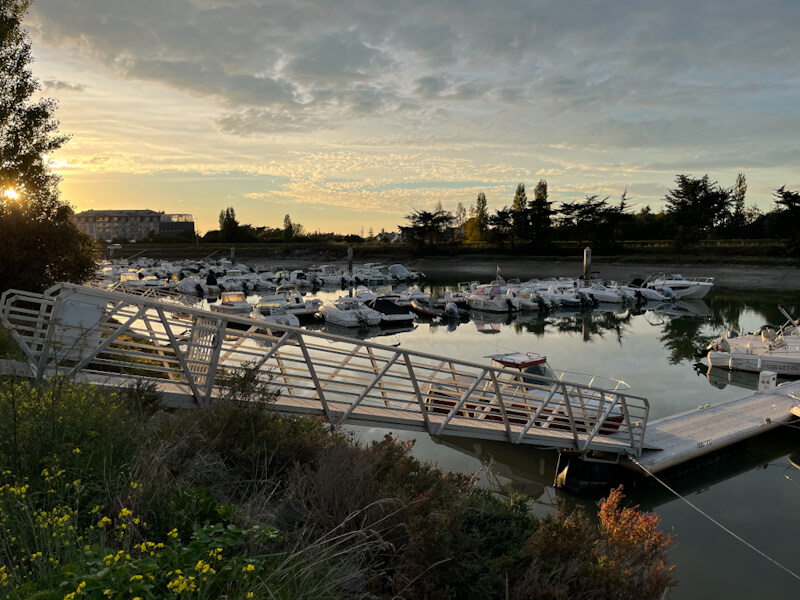
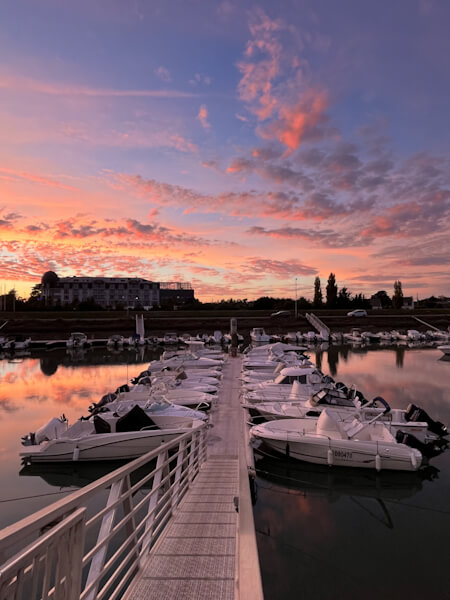
What does this have to do with boats and marinas? They are also campers who have similar needs to motorhome campers! We often had pitches right next to the marina, where there are sometimes automated showers and toilet facilities.
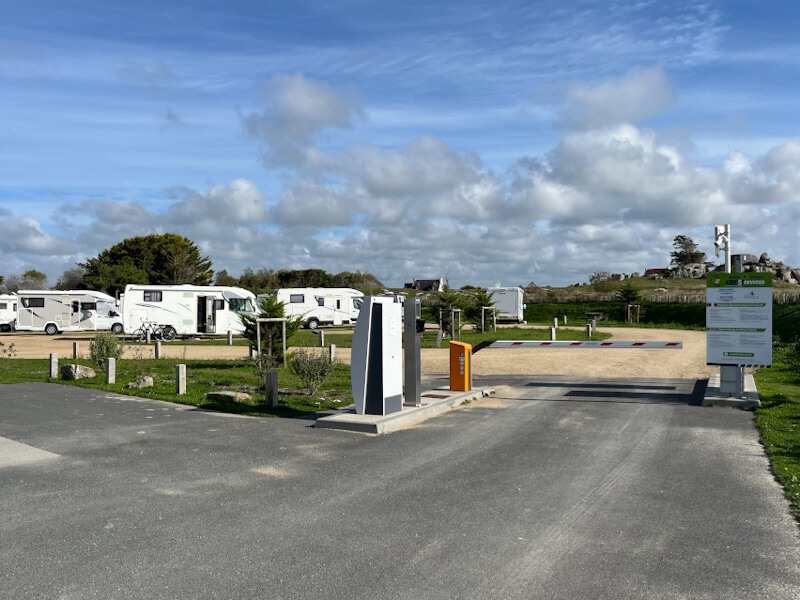
We speak reasonably good French. But even if you don’t speak French, the vending machines usually also speak English and other languages, so tourists can get by just fine.
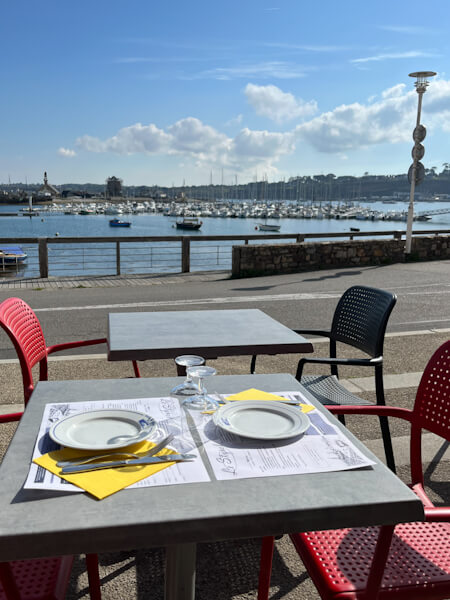
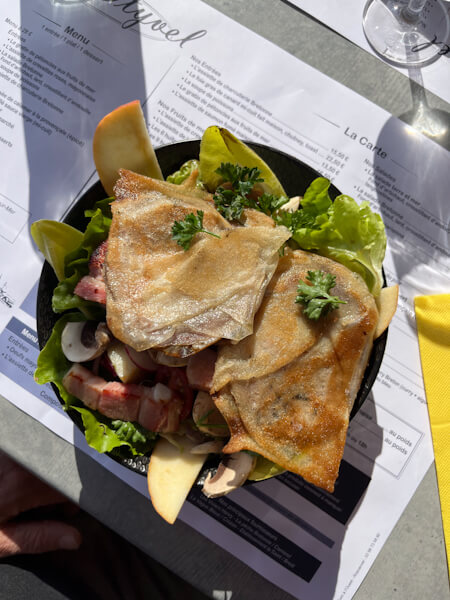
As for food and drink, there are wonderfully fresh baguettes and croissants, French cheese and all kinds of food everywhere. Restaurants often close for lunch and don’t reopen until the evening.
But there are also many cafés and bistros that are open throughout the day. Eroski Centres are supermarkets, by the way, in case you’re wondering about the name…
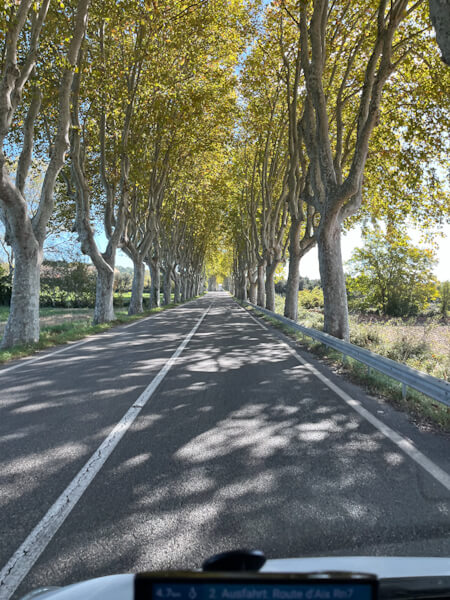
Let’s take a quick look at French road conditions for motorhomes: Having spent a lot of time in Ireland and the British Isles in recent years, where there are an extremely large number of narrow, tight and even single-lane roads, I found the roads in France to be mostly pleasant.
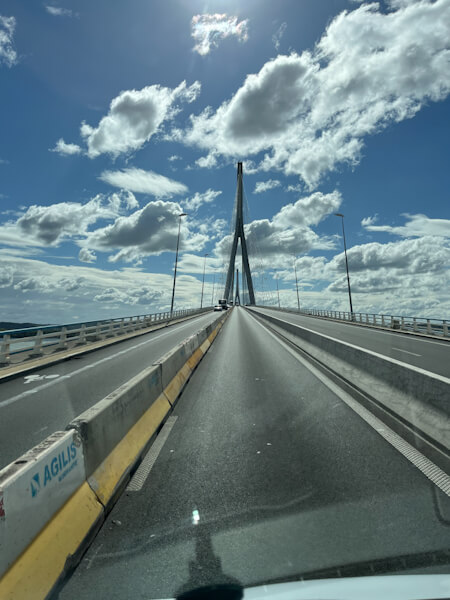
Reasonable road widths, good condition, good signage, everything is great. Motorways are usually fantastic, but they also charge tolls. However, we are happy to pay these in order to cover a distance a little faster.
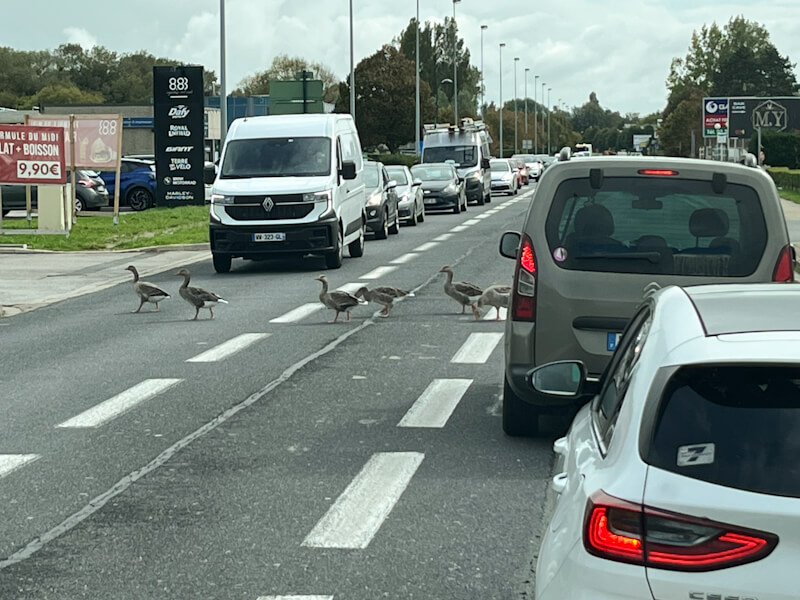
Traffic was mostly moderate. Only around the larger cities did it get busier at times. The French in the north generally drive pleasantly and considerately, while on the Mediterranean coast, things are much more Mediterranean: fast driving, cutting in and overtaking, accompanied by honking – which can be stressful in a motorhome.
I must expressly warn you about medieval towns, as they are not designed for large vehicles at all. They tend to be low, narrow and winding, and there are lots of one-way streets. Pure stress with a motorhome!
The alternative: park in a park-and-ride car park on the outskirts of town and take a bicycle or bus into the centre, which you can then explore on foot at your leisure.
We often found overnight parking spaces on the outskirts of town, spent the night there and then cycled or walked into the centre the next morning. Perhaps it would be worth staying for two nights.
Helpful links for your travel planning
Lonely Planet France: You cannot go wrong with Lonely Planet – well written with lots of tips on and off the beaten path.
Lonely Planet Best Road Trips France: This one is focused on great road trips around France.
The Rough Guide to Brittany and Normandy: Lovely guide for an area that we absolutely love.
Lonely Planet France Planning Map: Very useful planning helper.
Photo Location Finder North West France: Find great vistas and photo spots at the Atlantic Coast
French Classics: The instant SUNDAY TIMES BESTSELLER: Enjoy french cuisine at home – while planning your trip.
Enjoy your reading!
Conclusion
Can we recommend France for motorhome travel? Yes, absolutely!!! We particularly loved the Atlantic coast.
Driving is pleasant, the coast is beautiful and varied, there is good infrastructure for overnight stays, the many seaside resorts and harbour towns are great, and there are plenty of wonderful historic towns for those who like that sort of thing – like me, for example.
Depending on the season, the weather in the north of the Atlantic coast can be a little cooler and stormier than in the south or on the Mediterranean, but that doesn’t bother us. On the contrary, we are glad when it doesn’t get too hot.
We can imagine that some of the more popular harbour and seaside resorts can get very crowded in summer, but now, in autumn, that wasn’t a problem.
And because we liked Brittany so much, but didn’t have enough time there, we want to take another look at it next spring at our leisure.
I can highly recommend France as a motorhome destination and we will definitely be back – very soon!!!
More interesting articles for you
Bretagne: wild and enchanting
Normandie: nordic charme
La Rochelle: enchanting harbour town
Biarritz: charmingly sophisticated
Image credits Cover photo: At a campsite on the French Atlantic coast (Photo: Ulrich Knüppel-Gertberg)
