Have you ever heard of Dungarvan? No? You’re not the only one, because this pretty little harbour town on Ireland’s south coast is still a hidden gem – really! Let’s take a look…
Intro and travel report
Ireland’s south coast, particularly the eastern part of it, is often overshadowed by the much better-known Wild Atlantic Way – that is, the wild west coast. And that’s fine.
Because the south isn’t all about roaring waves and thunderous sounds, spectacle and noise. It’s more of a place for connoisseurs: plenty of sunshine, enjoyment and a relaxed, serene atmosphere are what matter here.
Sounds like Italy and la dolce vita? A bit, but we’re still in Ireland. In fact, the south-east – or the eastern south – of the island gets only half as many rainy days as the west coast.
That’s not just my opinion – it’s backed up by long-term weather statistics. And it’s warmer in the south than in the north. What’s more, Ireland’s weather is generally better than its reputation suggests, as Dublin gets less rain in summer than Munich, for example. That, too, is confirmed by long-term weather statistics.
So, to sum up: the weather is generally mild and sunny in the eastern south and south-east of Ireland, particularly during the summer months. That’s what the statistics say, and we’d agree, as we have our second home south of Dublin.
But in this article, we’re focusing on the area east of Cork – in other words, the eastern south, not the south-east. Incidentally, a cloudy sky on the islands doesn’t necessarily mean it’s going to rain. Right, let’s carry on…
Whilst the wild west coast is particularly striking for its breathtaking cliff landscapes, on the east coast you’ll find plenty of sandy beaches stretching for kilometres.
The south coast offers a lovely mix of both: beautiful cliffs that aren’t excessively high, as well as plenty of lovely sandy beaches.
In this varied and mild climate, you’ll find a large city – Cork – and several small, charming harbour towns, such as Yaughal or Dungarvan.
For us, Dungarvan is close enough to our holiday home for a day trip, and we’ve been here several times before.
But this time we’re driving past here in our motorhome. After a lovely tour of Ireland, we’ll spend a bit more time in Cork and also in Dungarvan before heading back home.
This little town, with its laid-back atmosphere, is exactly what we need after the hustle and bustle of Cork: a sense of calm and tranquillity!
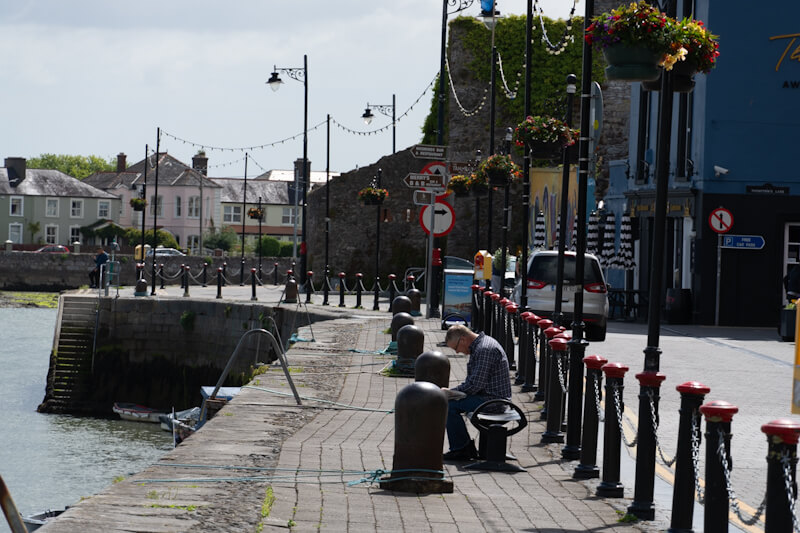
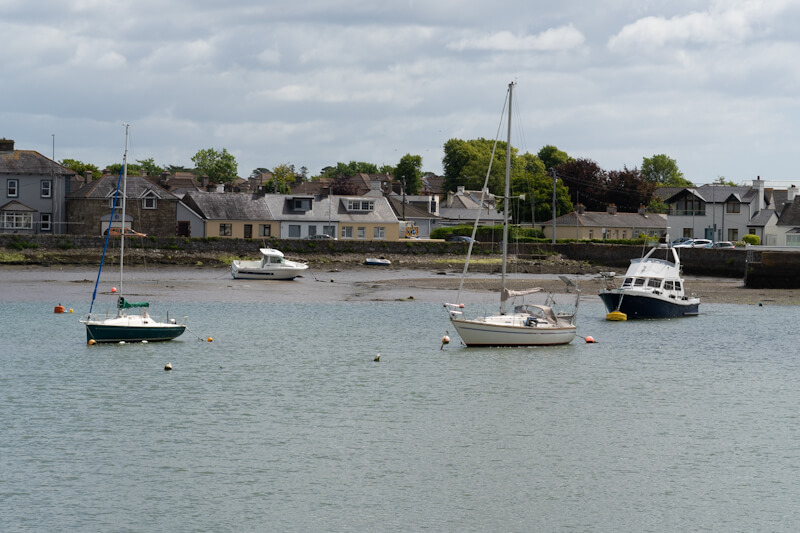
It’s beautifully situated on the wide, sandy bay. The little Colligan River divides it into two halves: on one side lies Abbeyside and on the other, the Old Town.
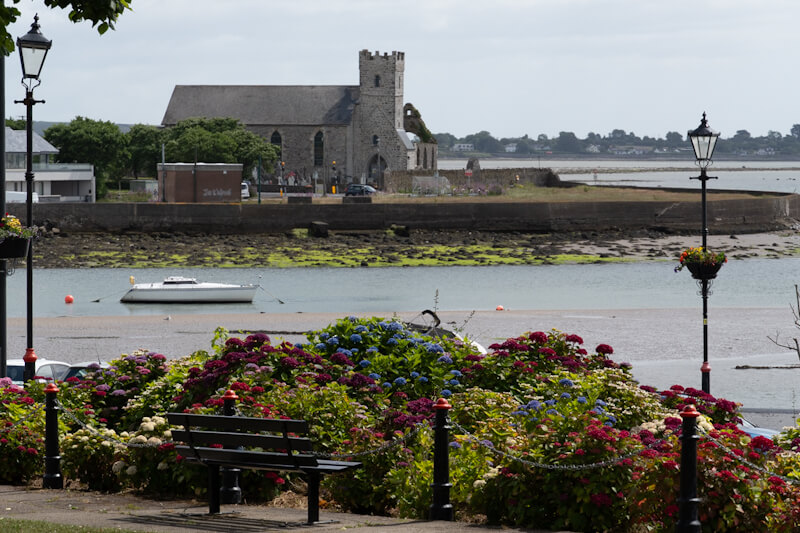
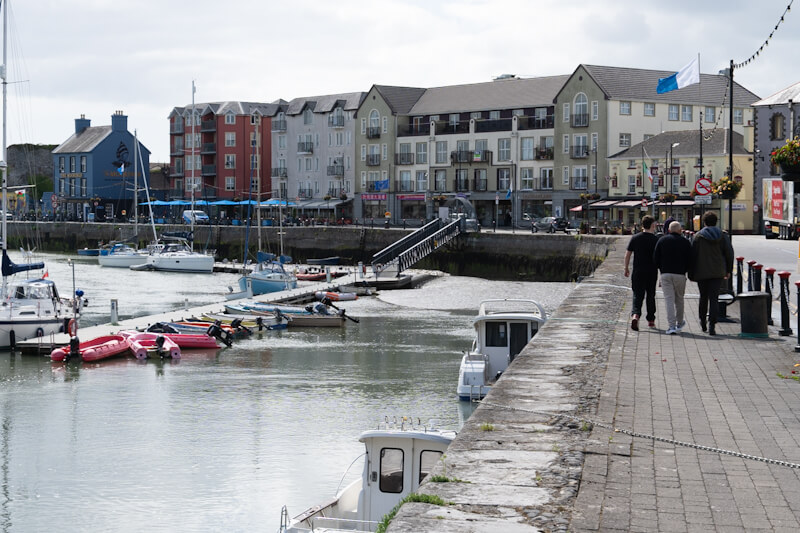
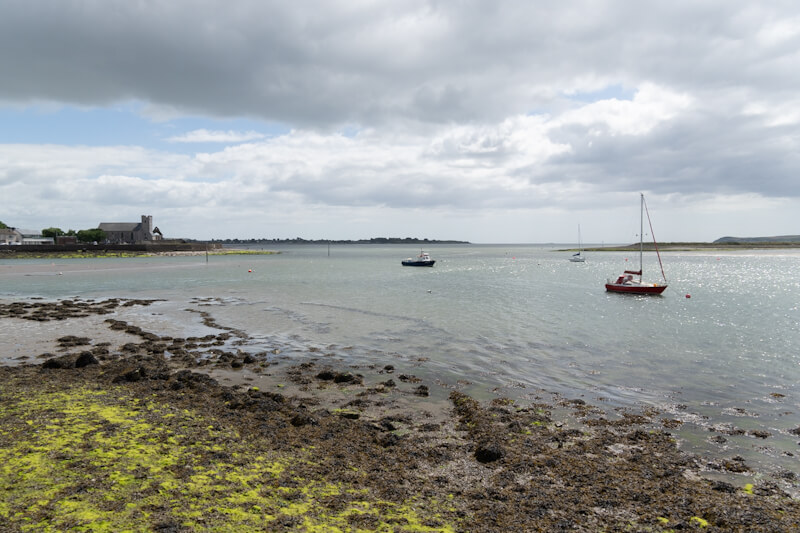
The view from Harbour Viewpoint across the harbour towards the old town, with the ruins of Dungarvan Castle, is stunning. A walk along Abbeyside Beach is also highly recommended.
The tides are strong on the island: at low tide, the coast is a vast expanse of sand, whilst at high tide the beaches are considerably smaller and the harbour is filled with much more water.
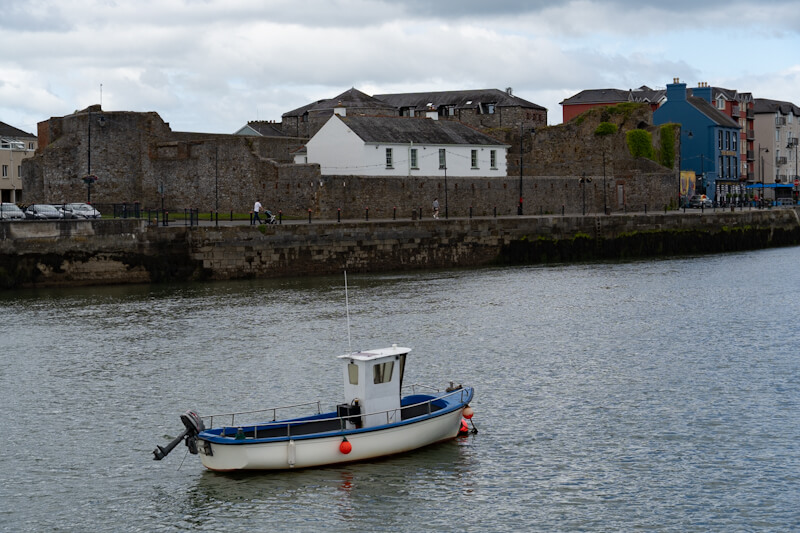
On Abbeyside, the remains of a 4th-century Augustinian monastery can still be found. The ruins of the castle bear witness to the fortress that once stood here, built in the 12th century by Jean Plantagenet. The name sounds French, as the Normans ruled over large parts of Ireland at that time.
Small boats bob in the harbour: colourful fishing boats, a few motorboats and a couple of sailing yachts. Some of them are aground; when the tide comes in, they will float again.
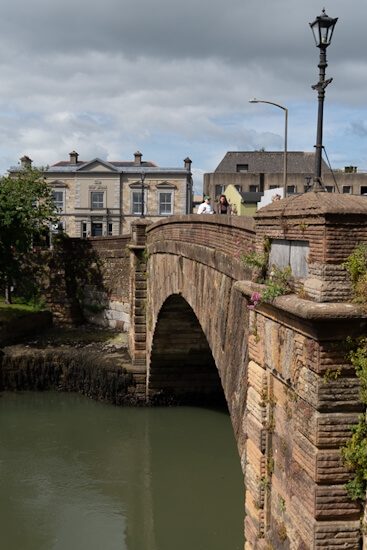
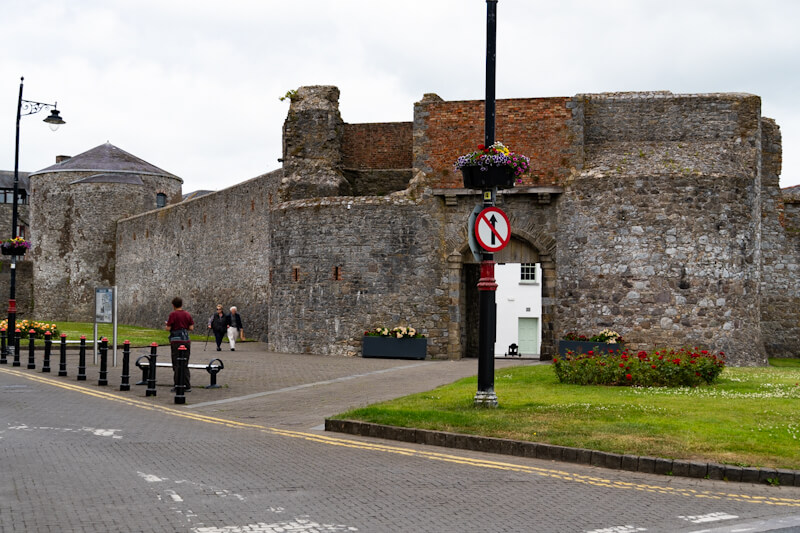
We cross an ancient little stone bridge to reach the old town. Strolling past pubs, cafés and restaurants, I wander through the old harbour. I soon pass the castle ruins and arrive at the Lookout, a viewpoint.
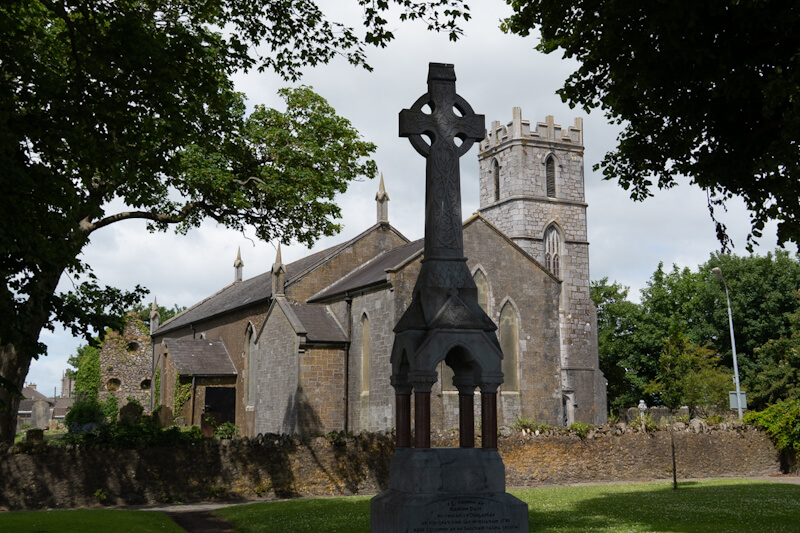
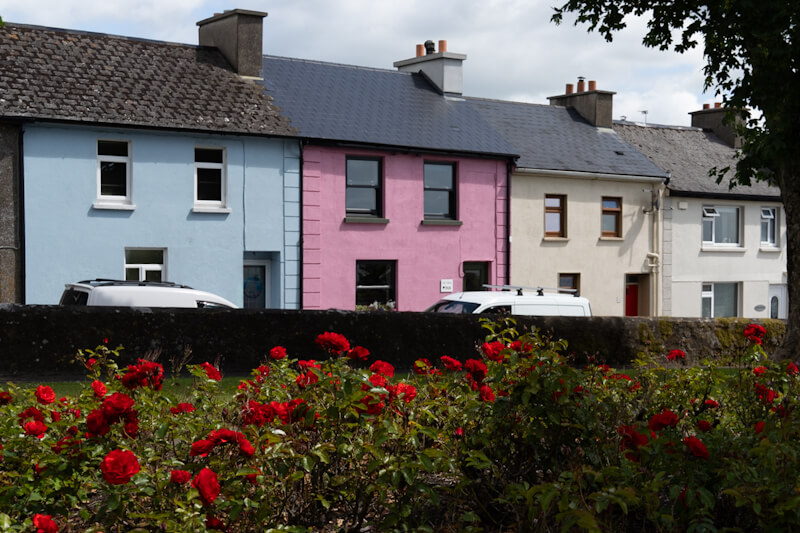
The view from the old town across to Abbeyside is just as beautiful as the view the other way round. A small park, adorned with lots of flowers, surrounds St Mary’s Church, and colourful little cottages surround both. It could hardly be more idyllic.
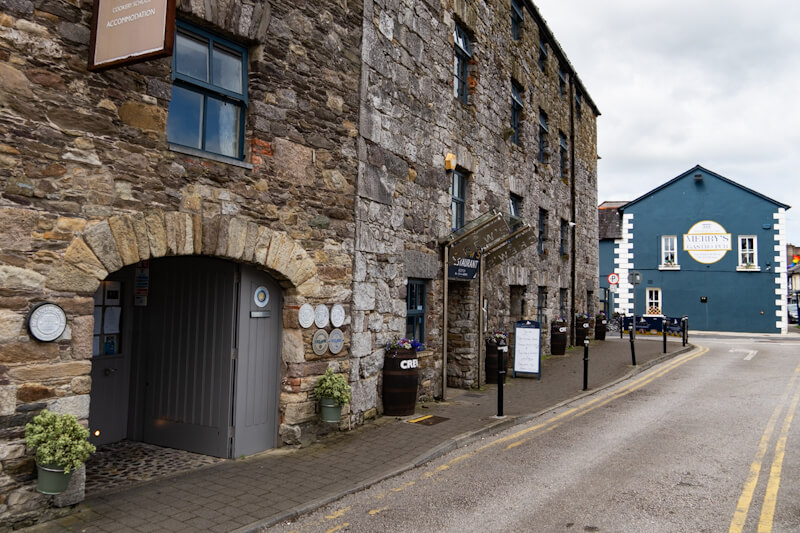
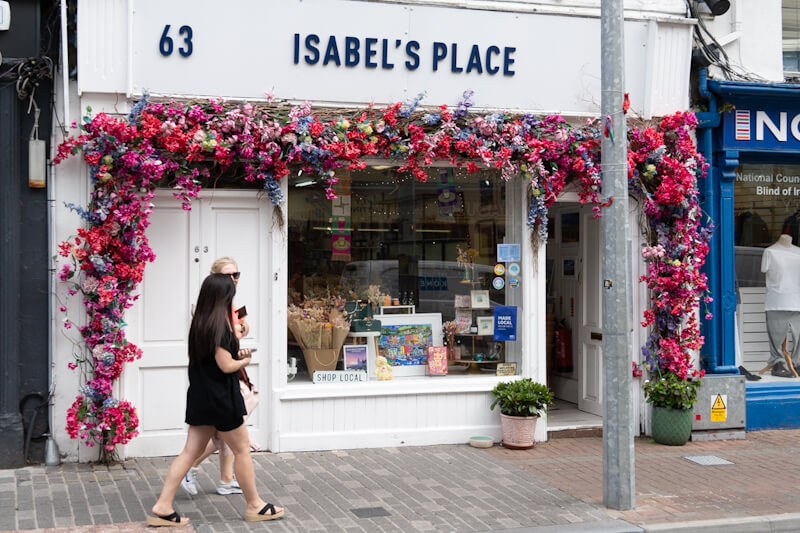
I stroll into the old town and wander through the narrow alleyways. Aimlessly, haphazardly, contentedly. Meanwhile, my wife goes off on her own (my constant photography doesn’t exactly make me the most sociable person either…). The little town makes a generally well-kept impression. People go about their business – not hectically, but calmly and serenely.
I find somewhere for lunch at Grattan Square. I have to walk round the square twice, as there are quite a few places to choose from. The same goes for the nearby harbour, where you can also enjoy a good meal and a drink. Too much choice delays my lunch – my stomach is rumbling and I finally make up my mind.
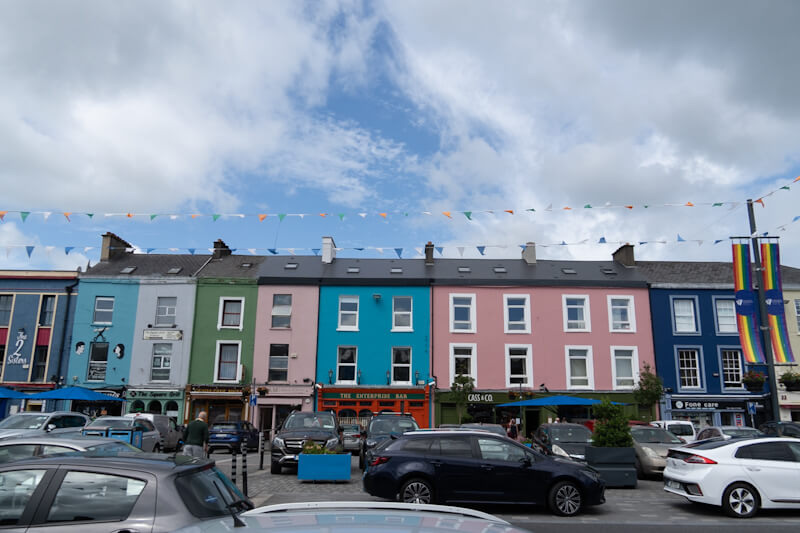
Sitting on a terrace, I’m not only enjoying my lunch but also the people who bring Grattan Square to life. Lots of families, children, teenagers – this place is buzzing! A lively, friendly, relaxed atmosphere.
The city’s sense of calm rubs off on me. As lovely as Dublin, Galway, Limerick or Cork may be, big cities are usually too big, too noisy and too hectic for me. That’s why I love cosy little towns all the more – like Dungarvan!
Conclusion
Dungarvan is situated on a very beautiful stretch of coastline in the south of Ireland. The smaller towns of Youghal and Waterford are not far away, and the city of Cork is also within easy reach from here.
Between Dungarvan and Waterford lies the stunning Copper Coast, and a little further on, already in County Wexford, lies the lovely Hook Peninsula with its magnificent Hook Lighthouse.
If you’re doing a round trip around the island of Ireland, you should definitely include this region in your itinerary. If you’re just looking to spend a few days exploring the east from Dublin, Dungarvan and the Waterford region are definitely worth a visit.
And a detour from Cork to Dungarvan or Waterford makes perfect sense too.
In any case, Dungarvan is simply lovely!
More interesting articles for you
CORK: LOVE AT SECOND GLANCE..?
LIMERICK: DEFINITELY WORTH A VISIT!
PRETTY COASTAL TOWNS OF COUNTY WATERFORD
Credit for cover photo: Boats in Dungarvan harbour (Photo: Ulrich Knüppel-Gertberg)
