That’s exactly the question I’ve asked myself several times – only to carry on driving every time. But this time, everything was different…
Intro and travel report
We – that is, my wife and I – have travelled through Ireland several times. On top of that, I’ve been on a few motorbike trips myself. Each time, the planned route was long, the schedule rather tight, and Sligo wasn’t really on the list.
What’s there to see? It is the adopted home of the Irish writer W.B. Yeats, who was born in the area and is also buried here, though he lived and worked in Dublin and England for a time.
Sligo also has a cathedral well worth a visit and the ruins of an old abbey. What else?
The small town – or, by Irish standards, a medium-sized town – is situated in the north-west of Ireland and is the county town of the county of the same name.
Interestingly, Sligo was founded neither by the Irish nor by the Vikings, but by the Norman Maurice FitzGerald, who had a castle built here in the Middle Ages and constructed a harbour in the sheltered bay.
At that time, the Normans ruled over large parts of the island and, to consolidate their rule, they built forts and castles everywhere, and this was probably the case here too.
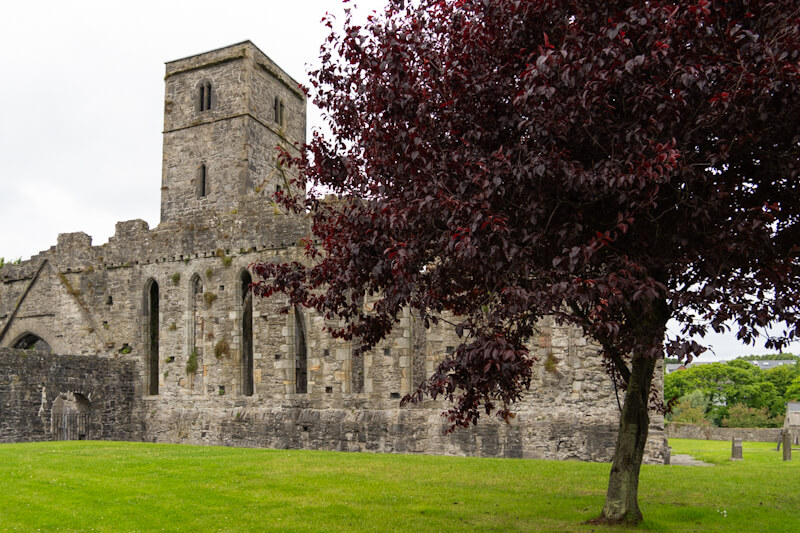
There is no trace of the castle today; only a few foundations of a fort remain. However, the ruins of the Benedictine abbey, which was also founded under Maurice FitzGerald, still stand in the town centre and can be visited there.
Outside the town, the imposing silhouette of Ben Bulben rises up into the sky. This huge table mountain is unique and a landmark for the entire region.
There are several lovely seaside resorts along the coast, and at the foot of Ben Bulben lies the beautiful Glencar Lough, with the small but charming Glencar Waterfall.
Inland, there is also the lovely Lough Gill, a popular area for walking and leisure activities. The region around the town of Sligo is therefore quite lovely and offers plenty of beautiful natural scenery. I’ve explored it on previous trips, but I hadn’t actually been to the town itself until today.
We park our motorhome in a large car park near the harbour and walk into the town centre.
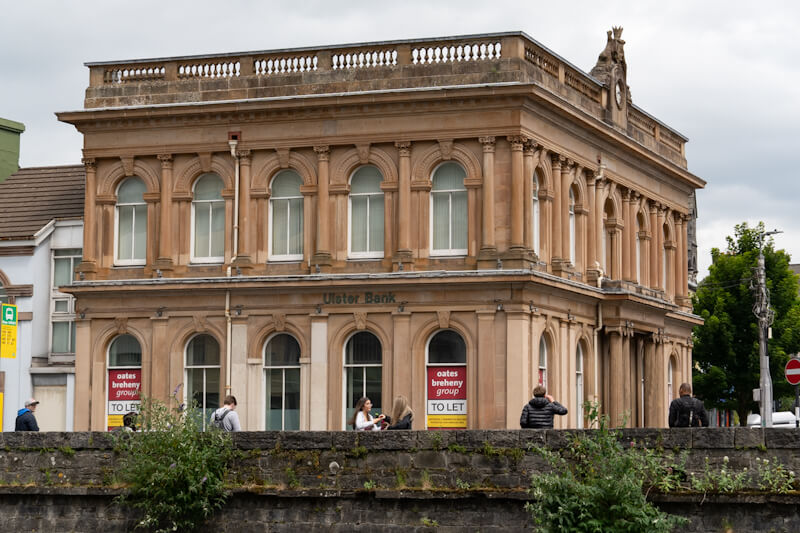
Sligo’s townscape isn’t particularly uniform, and our first impressions are mixed. The area around the harbour isn’t particularly attractive. The modern town centre, with its many shops, is all right, but nothing more than that.
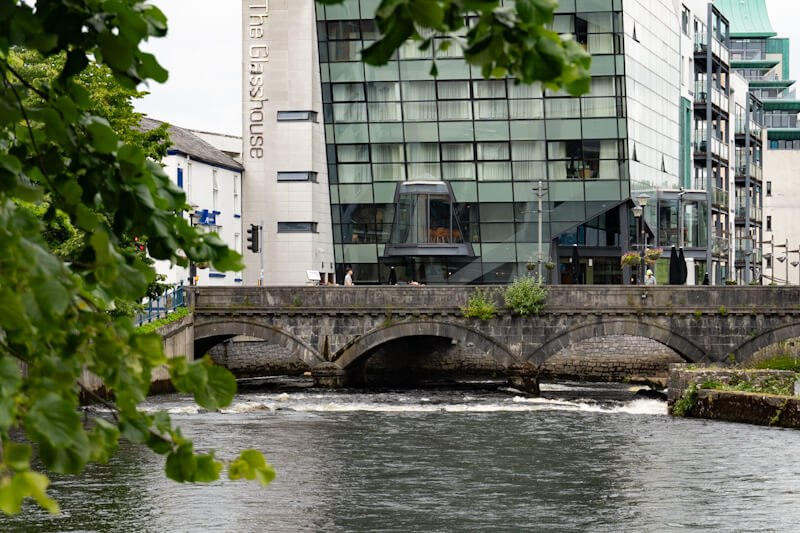
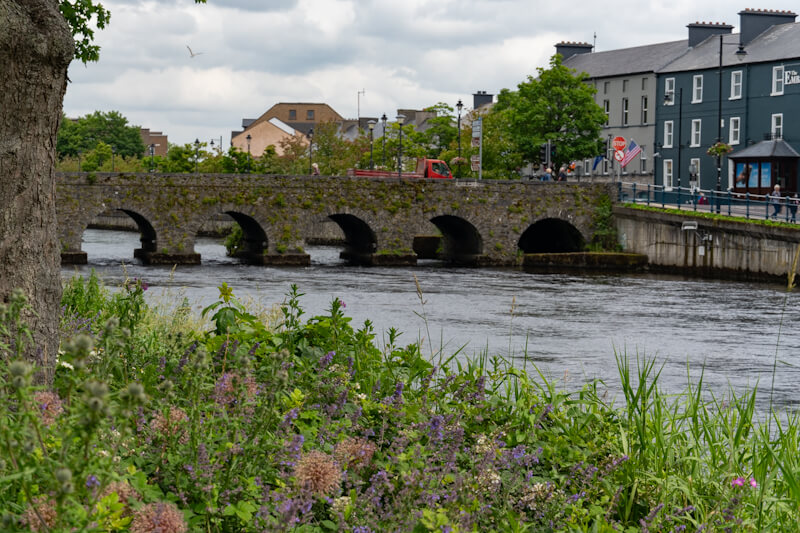
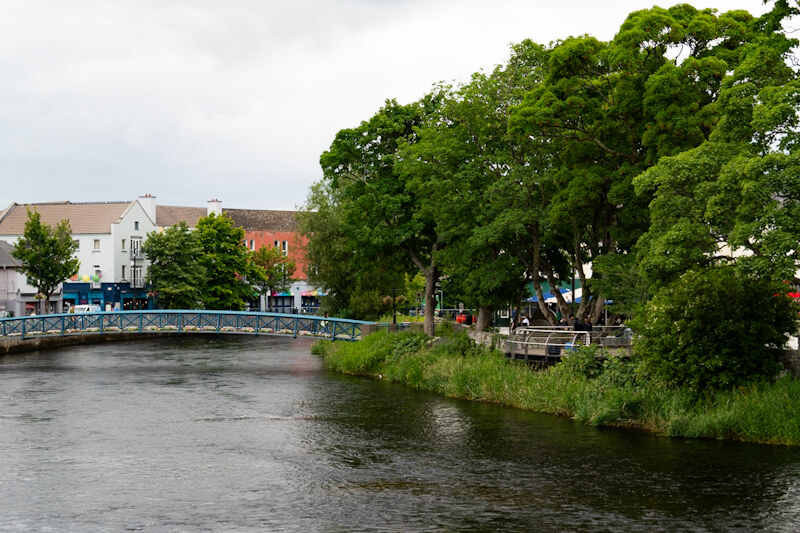
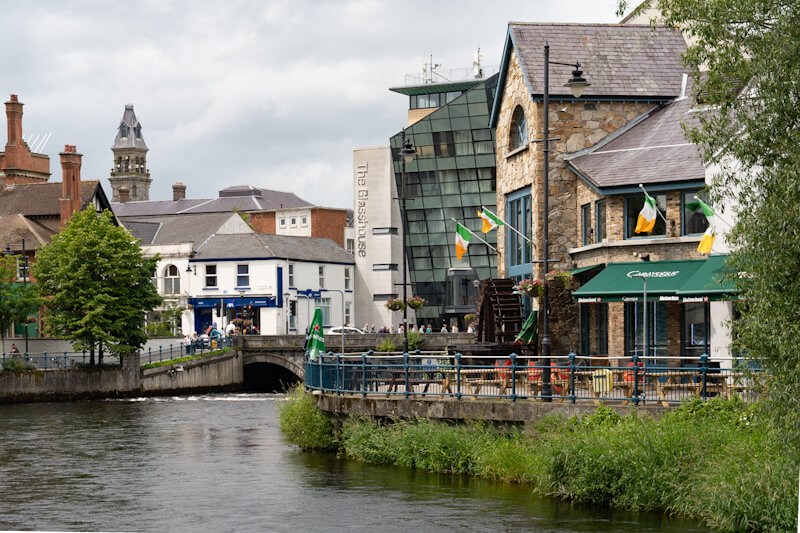
But then I come to the river that flows through the city centre, the Garvoge or Garavoge River. It originates at Lough Gill and winds its way through the city until it reaches the bay on the other side.
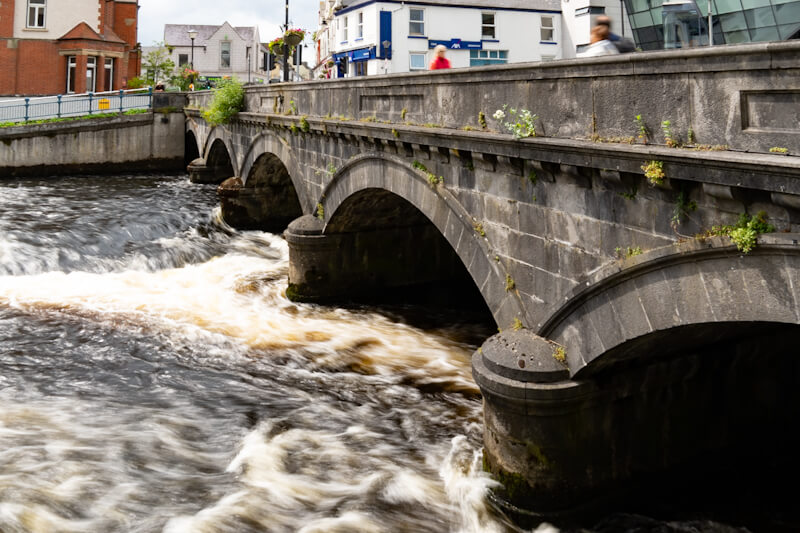
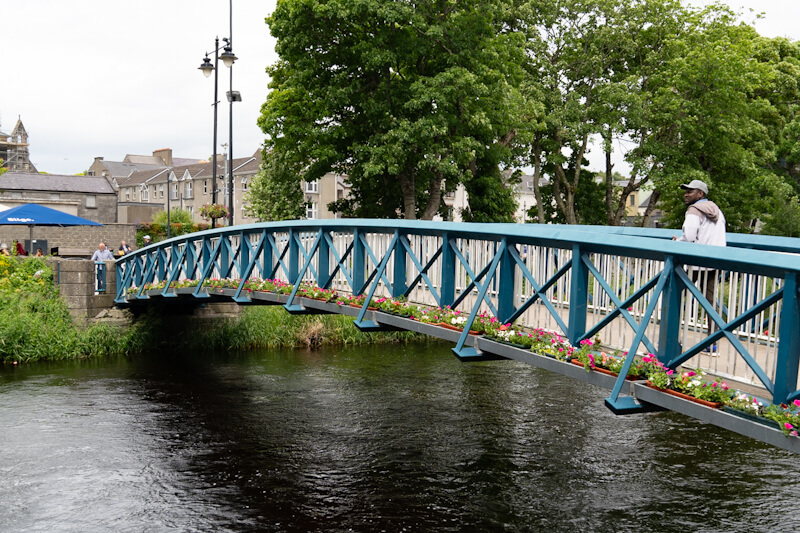
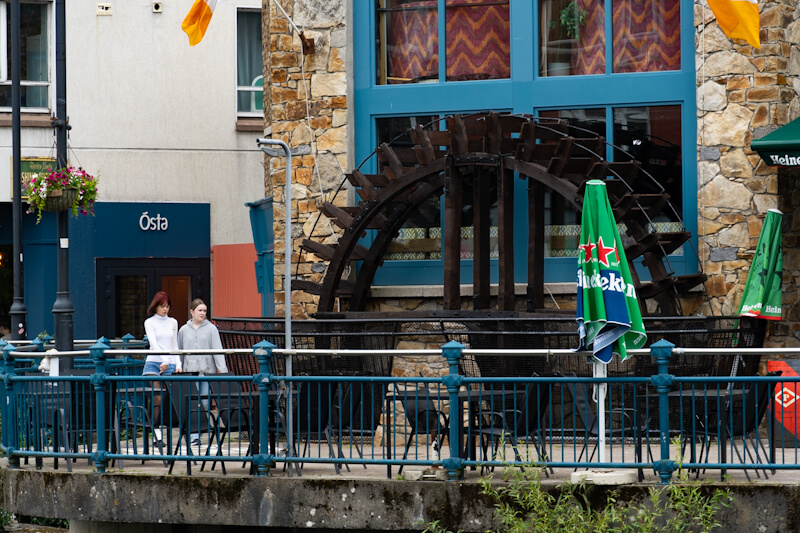
And this is where I usually find what I’m looking for: something like a cosy old town! I stroll along the river on paths both narrow and wide. An old watermill is now a pub, with little cottages, several narrow bridges and trees lining the banks.
The hustle and bustle of the main street is fading further and further into the distance, and I’m feeling more and more relaxed. At last, I feel like taking photos and capturing the details around me:
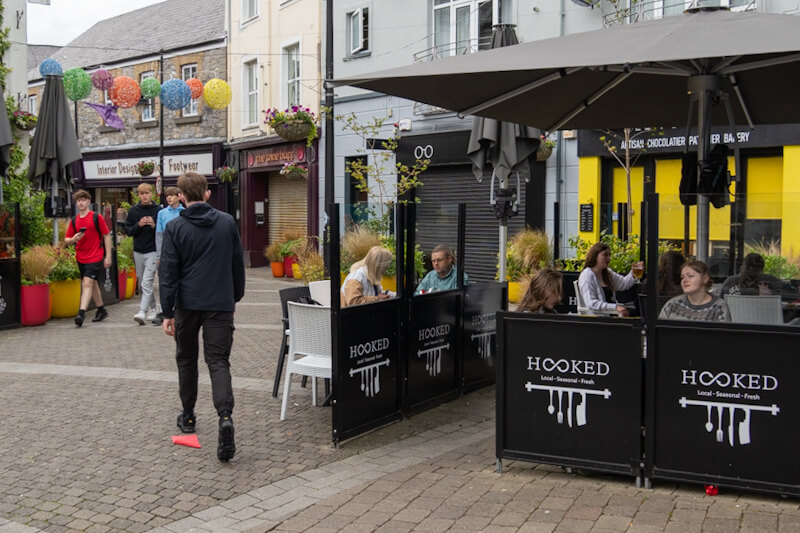
People enjoying their day, children playing, street cafés from which the murmur of relaxed conversation drifts out, punctuated by the occasional laugh. On the other bank of the river, a group seems to be looking around the old town – probably a guided tour.
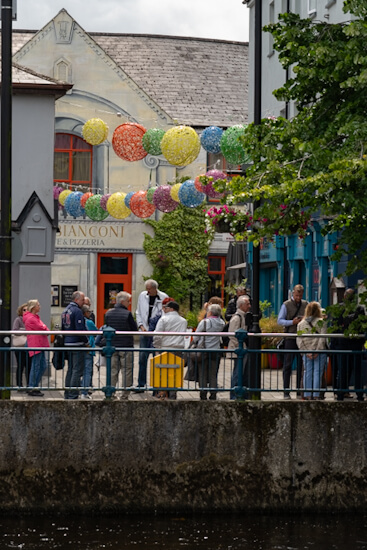
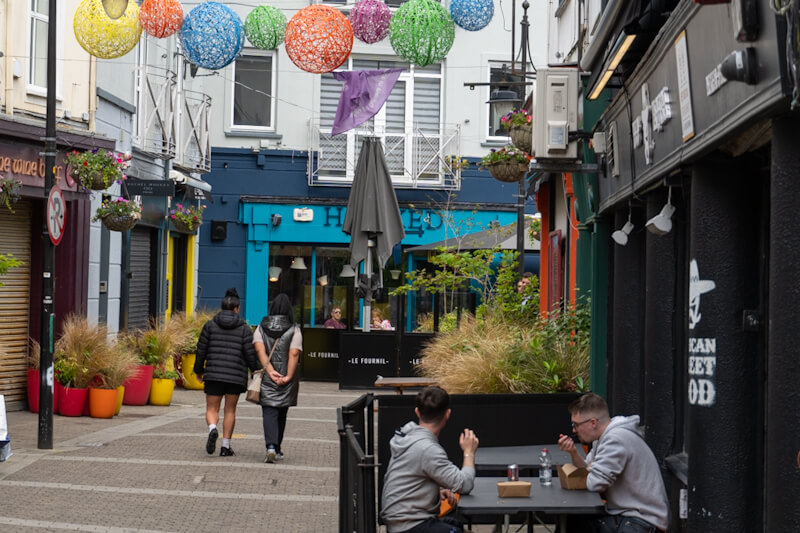
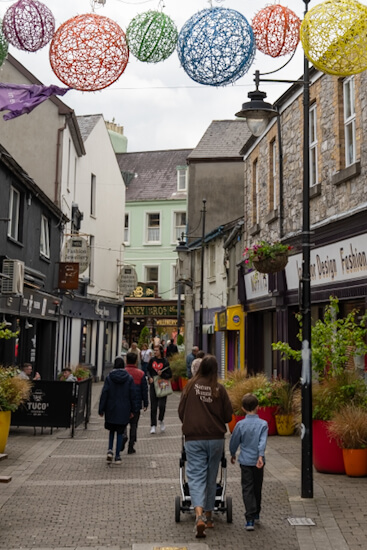
Colourful balls hang over the little street, and a pizzeria has decorated its façade very prettily with murals. There are even more cafés, restaurants and terraces to be found here. People are enjoying their lunch break, and I’m enjoying the cosy atmosphere.
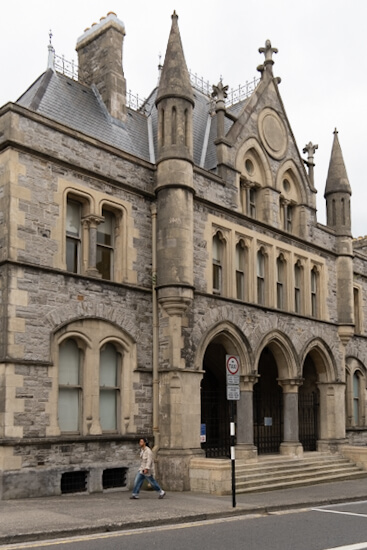
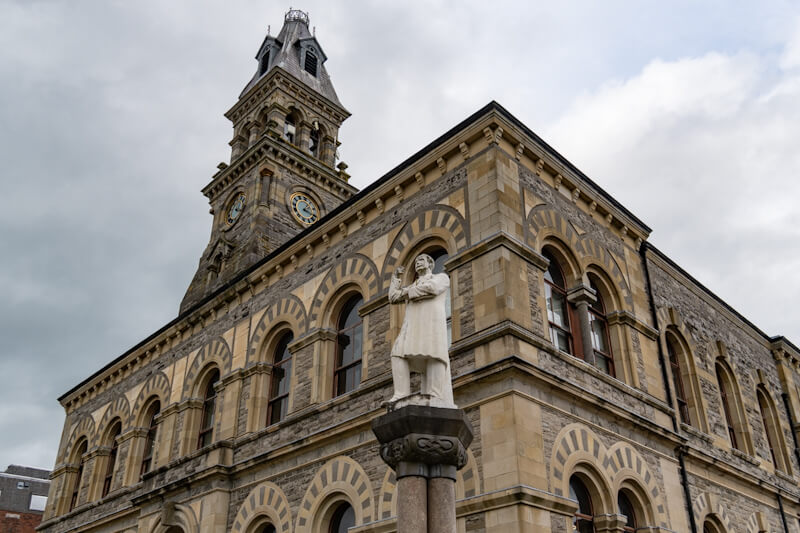
A little further on, I come to Sligo Abbey, which I’ll just admire from the outside today, and wander through the town’s streets for a while longer before heading back. Near the magnificent City Hall, I reach the river again and, shortly afterwards, the old harbour.
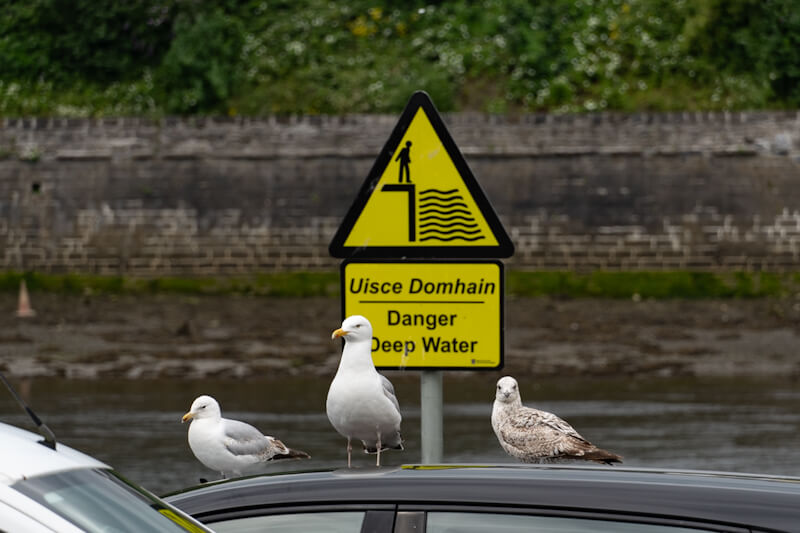
I like harbours and I like boats – usually. This harbour has a somewhat dilapidated industrial charm, and the wooden hulls of several boats lie in the mud along the riverbank. But at least there are plenty of seagulls – and I like them too.
Back in the campervan, we compare our impressions: is Sligo a lovely town? To some extent – the old town on both banks of the river is certainly very nice.
Would I recommend the region for a stay of several days? Yes, I certainly would – there are plenty of lovely excursions, explorations and walks to enjoy here, and the seaside resorts along the nearby coast are lovely too.
Ultimately satisfied with our trip, we leave the little town of Sligo and continue our journey in the motorhome.
Conclusion
If you’re taking a tour along the Irish Atlantic coast and don’t necessarily want to travel as far as the far north-west, or don’t have the time to do so, then you can just as easily end (or start) your trip in Sligo and return to Dublin from there.
The little town has a charming old town and you can easily spend a few hours here. Personally, though, I’d look for a B&B or Airbnb just outside the town, as the surrounding countryside is scenic and much quieter than the town itself. But that’s a matter of taste, of course.
Do make a detour to Glencar Lough and Waterfall at the foot of Benbulben and visit one of the lovely coastal villages. There are several beautiful sandy beaches here; Strandhill Beach, for example, is just a few minutes’ drive away.
More interesting articles for you
GALWAY: COOL VIBES
GLENVEAGH CASTLE: A DREAM IN THE MIDDLE OF NOWHERE…
BALLINA: SALMON – AND WHAT ELSE?
CARRICK-ON-SHANNON: BEAUTY BY THE RIVER
Credit for cover photo: Queen Maeves Square in Sligo (Photo: Ulrich Knüppel-Gertberg)
