In a faraway land, beyond the seven mountains, amongst the seven dwarfs – that sounds more like the fairy tale of Snow White than a trip to Ireland. But a trip to Glenveagh Castle feels rather like that…
Intro and travel report
You can hardly get any further away in Ireland. Donegal is ‘the forgotten county’, as it is the furthest from Dublin and was long ignored there. The county lies in the far north-west of Ireland, right next to the Republic of Northern Ireland, which makes up the north-eastern part of the island.
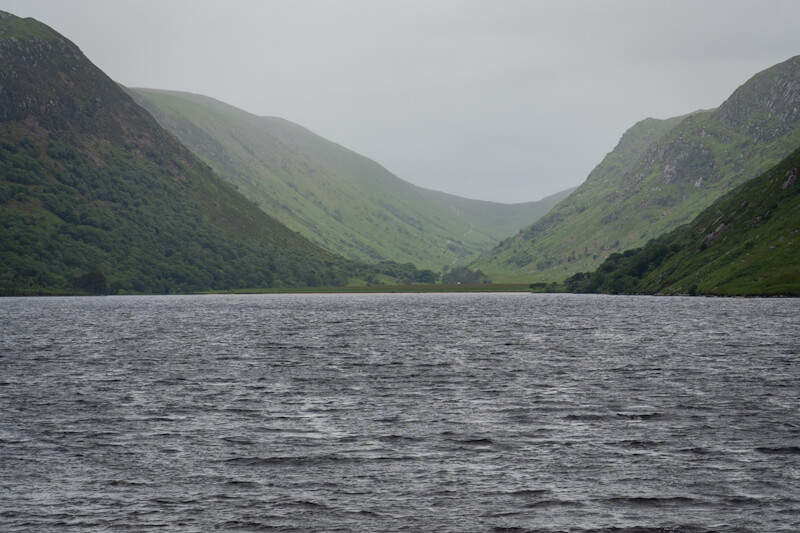
In the heart of County Donegal lies Glenveagh National Park, a mountain range that rises high above the flatter coastal areas. Incidentally, its Gaelic-Irish name is Gleann Beatha, the ‘Valley of Life’, or Gleann Bheithe, the ‘Valley of the Birch’.
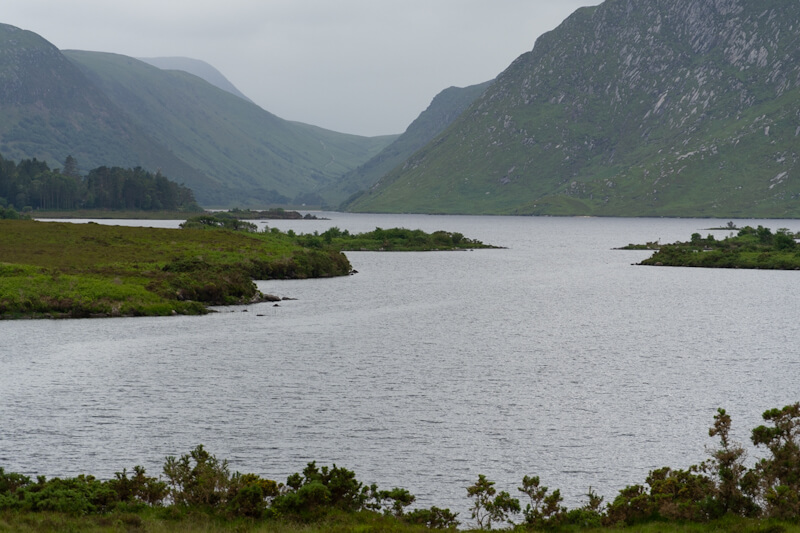
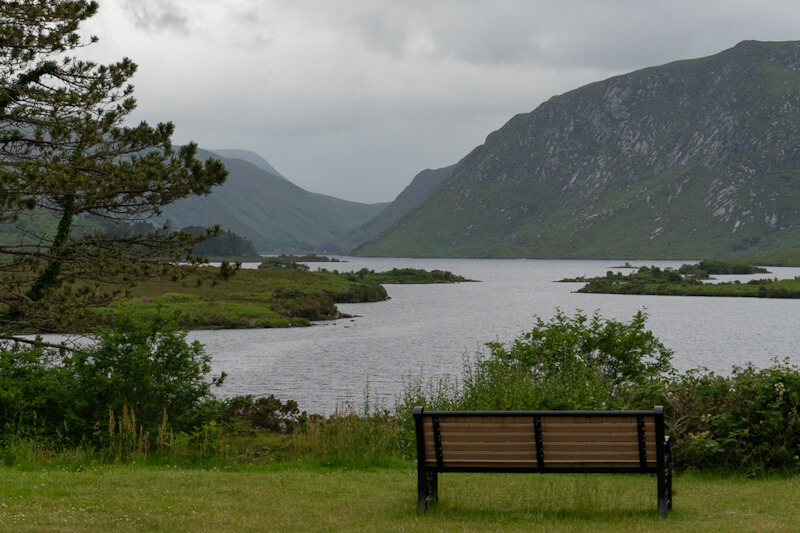
In Scandinavia, the birch is the tree of life (as far as I know) – is that the case here too? In any event, the Valley of the Birch cuts through the largely treeless green mountains and is home to a long, narrow lake, Lough Beagh, or Lough Veagh, as it used to be called.
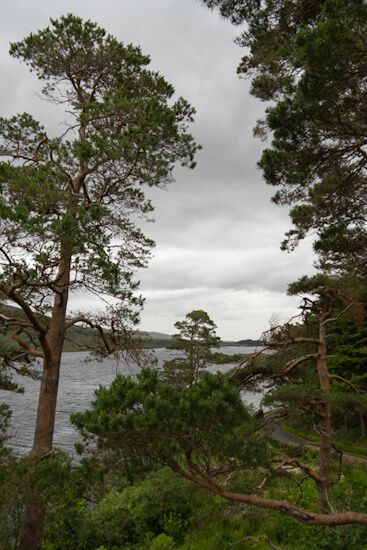
There are indeed a few trees and small copses growing on its banks; otherwise, it is rather reminiscent of the Scottish Highlands: green mountain slopes, rocky outcrops and cliffs, and raised bogs in places. A wild landscape in the midst of a sparsely populated mountainous region.
The green slopes provide grazing for a few sheep and red deer. There are apparently plenty of them in this region. Unfortunately, we didn’t see any during our visit.
We did, however, see plenty of walkers. The region is well known for this, and you can find plenty of information about the park at the National Park office at the entrance to the valley.
Incidentally, the valley is a dead end. If you want to go in, you have to park your car – or, in our case, our motorhome – at the entrance and walk a few kilometres to the castle, following the lake all the way. Alternatively, you can bring or hire a bike, or take one of the small shuttle buses.
The journey is included in the admission price, and as we have to travel a bit further today, we opt for the ‘lazy’ option. The weather forecast may also have played a part in our decision, as light rain is expected to set in shortly.
The little bus races along the narrow, single-lane road towards Castle at breathtaking speed. At the last moment, it brakes to let an oncoming bus pass.
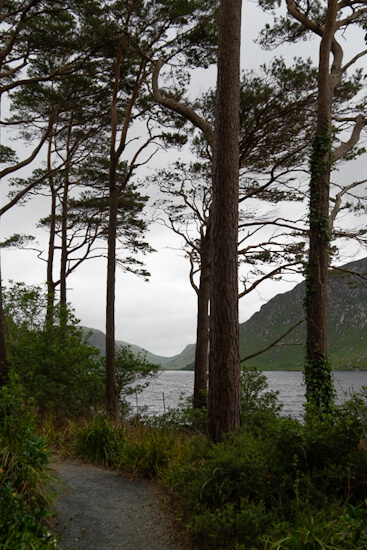
The passing place is barely any wider than the road, but somehow the two minibuses manage to get past each other… This happens several times. During the fast-paced journey, I watch the lake glide past us. Sheep on the shore, mountains in the background – I love these landscapes!
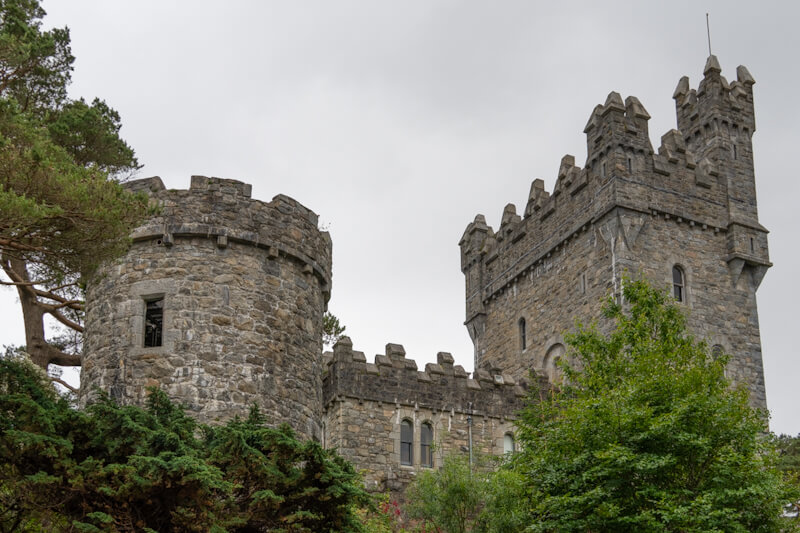
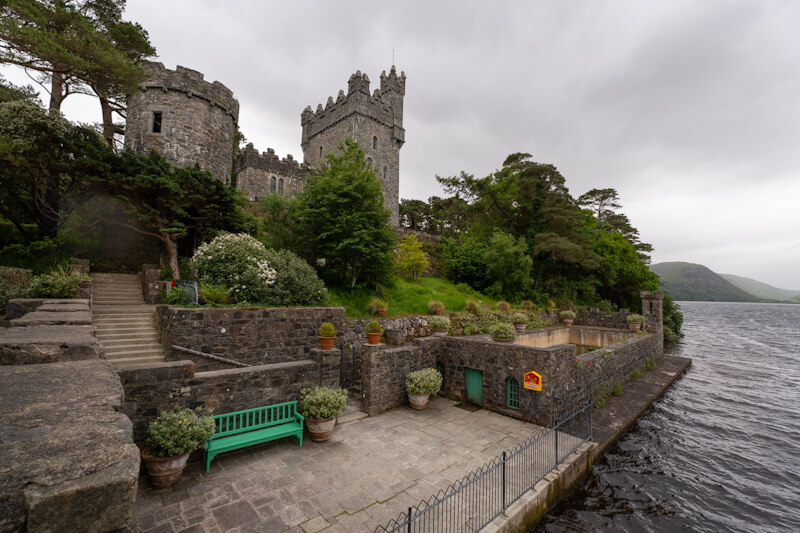
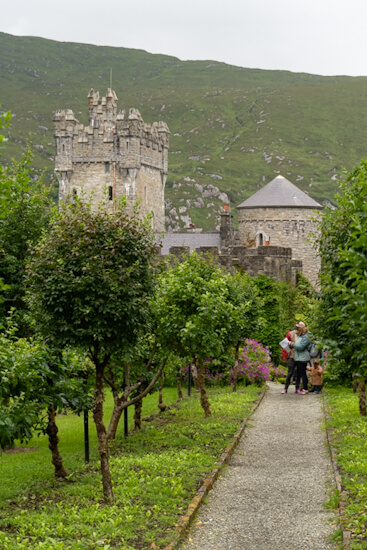
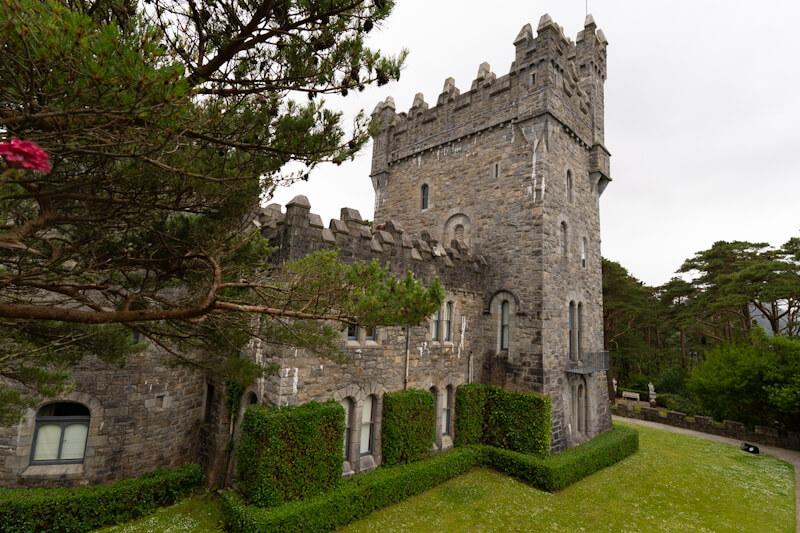
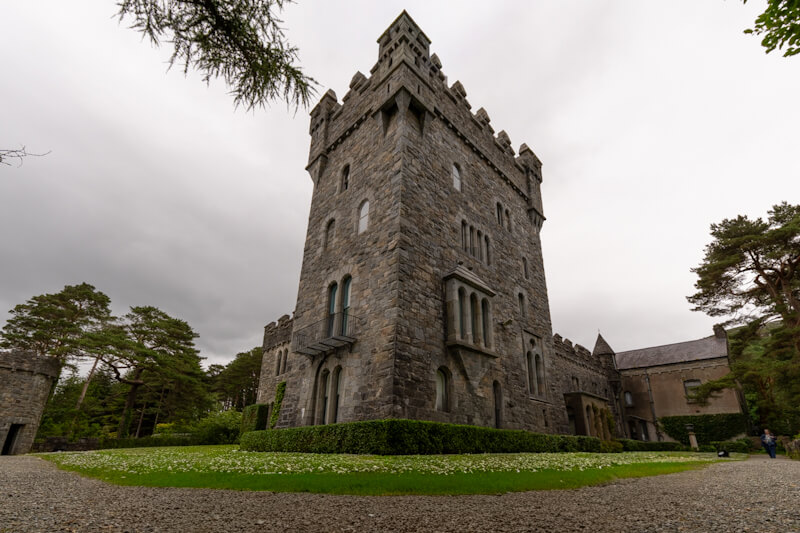
A forest appears ahead of us and the minibus brakes one last time: we’re here! A Scottish-style castle lies right in front of me. It towers majestically over the lakeshore, flanked by a high wall.
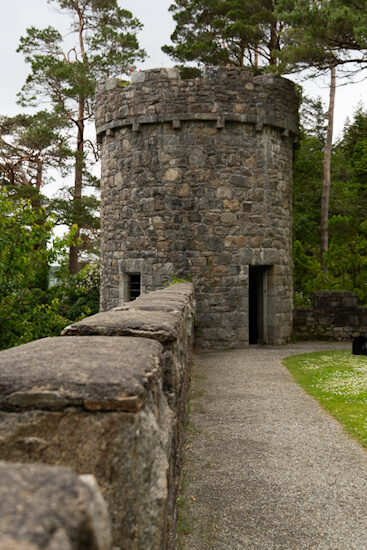
However, it certainly does not date back to the Middle Ages, as it is in fact a large country house with battlements. It was built here from 1870 onwards by Captain John George Adair in the Scottish Baronial style. The estate covers over 160 square kilometres and includes several hills, valleys, lakes and forests.
Adair acquired the land bit by bit and consolidated it to create this vast estate. His dream was to surpass Balmoral, the Scottish retreat of the English royal family!
In my humble opinion, he may not have quite succeeded in that, but his life’s work is nonetheless remarkable!
Incidentally, this also explains the castle’s marvellous condition, as it is not very old at all and has never been besieged or destroyed.
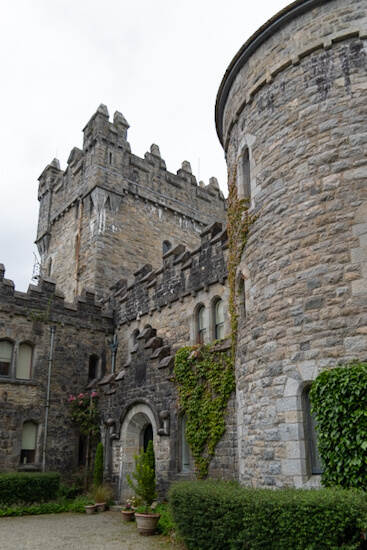
However, Captain Adair did not earn himself a good reputation in Ireland whilst pursuing his dream, for, following the example of the Scottish Highland Clearances, he evicted his tenants from their leased land in order to manage it himself.
People moved to Letterkenny to live in the workhouse or emigrated to America and Australia. This was common practice and a bitter reality in 19th-century Ireland.
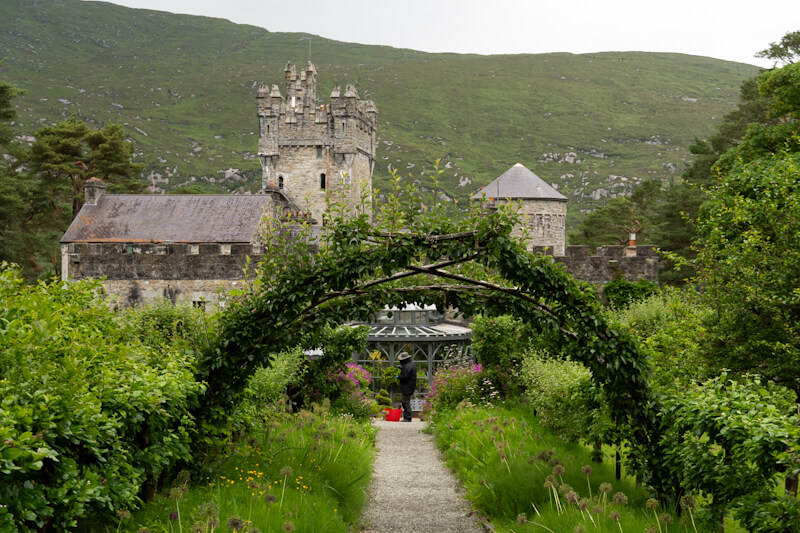
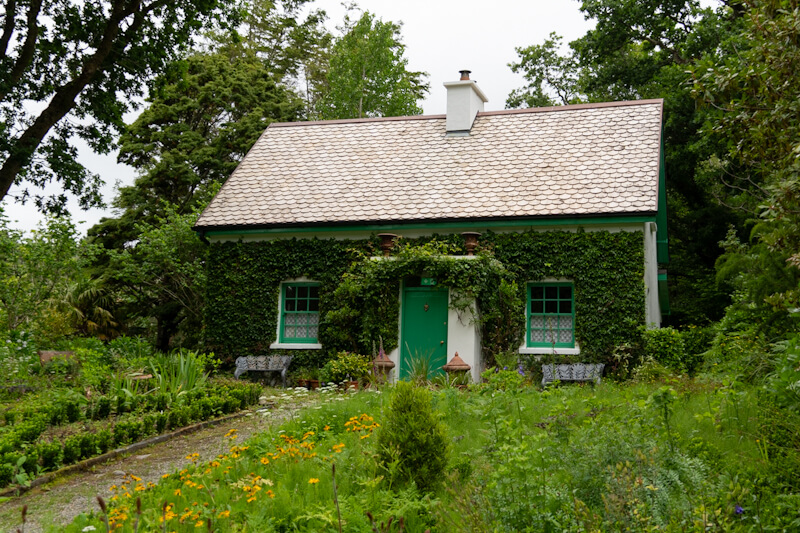
Captain Adair died in 1885. His widow, Cornelia, remained at the magnificent estate; she treated people much more fairly and considerately, and developed the castle’s gardens into the splendour they are today.
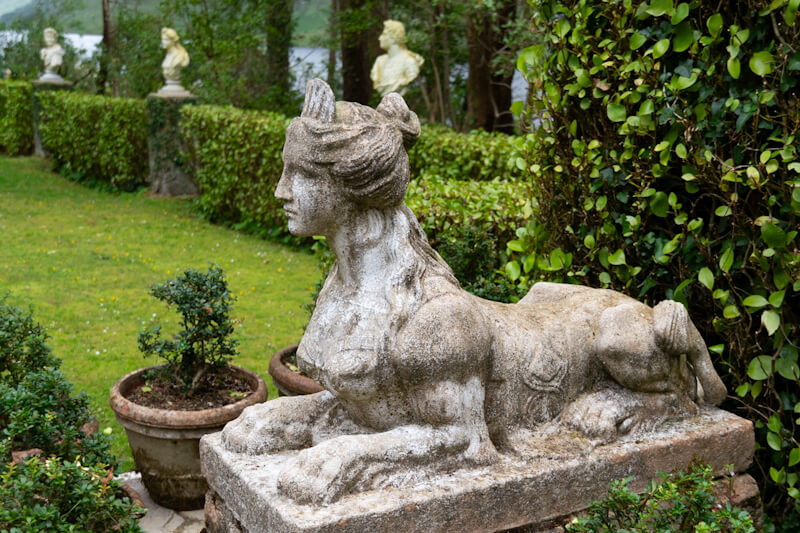
And what splendour it is: I spend at least two hours strolling through the extensive grounds, walking along the lakeshore and discovering the various gardens one by one.
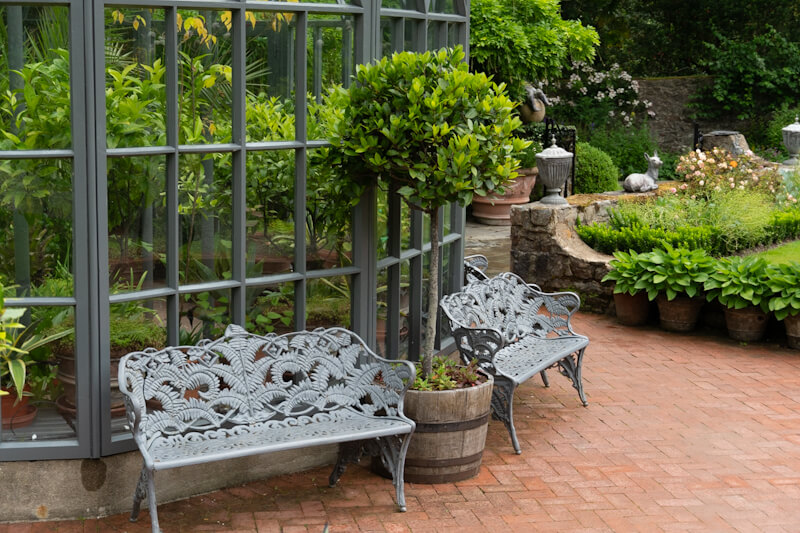
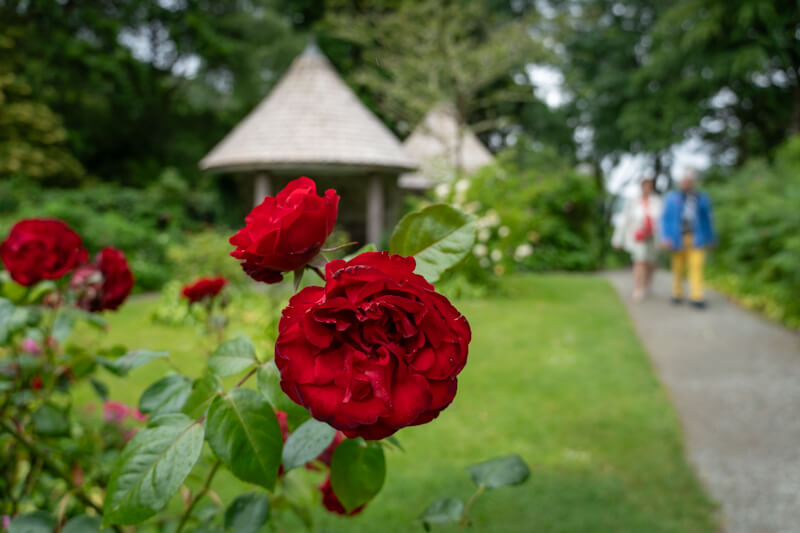
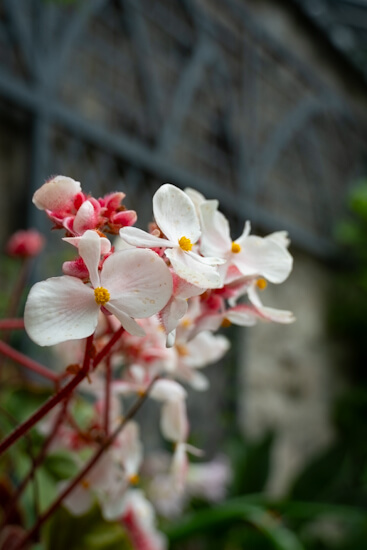
You’ll find everything here: native plants, herbs, a splendid array of blooms of all kinds, a wonderful collection of old trees and a rose garden.
A beautiful glasshouse is home to orchids and other exotic plants that probably wouldn’t always cope with the weather outside.
A light drizzle has now set in. The wind has picked up slightly and waves are lapping against the shore of the lake. The mountains are shrouded in a misty, light-grey blanket of cloud, and the pale light seems to bring out the green of the mountain slopes even more.
With the rain come the midges – those pesky little gnats, or rather tiny biting flies – emerging from the bushes. Midges are a real nuisance in the Scottish Highlands during the summer months.
Here in Ireland, they’re not much of an issue. But they can occasionally turn up near still water here too and be a bit of a nuisance.
But that doesn’t matter, because our feet are aching and our stomachs are rumbling. Perfect conditions for the return journey, which is just as brisk as the outward one.
At the visitor centre, we enjoy a lovely lunch and then set off again in the motorhome along the narrow, winding mountain roads, heading north towards the coast.
Conclusion
I’ve been out and about in the mountains of Donegal before, on my motorbike. The scenery is simply fantastic, and the Donegal coastline is breathtakingly beautiful too.
Gleneagh National Park is a must for keen walkers, and Glenveagh Castle on Lough Beagh is a stunningly beautiful estate with wonderful gardens and parks. I highly recommend it!
You’ll need to allow a bit of time, though, as you’ll inevitably have to drive slowly on the narrow roads in the area, and a visit to the castle – whether by shuttle bus, on foot or by bike – takes a couple of hours.
But for those who’d rather explore than rush about, County Donegal, Glenveagh National Park and Glenveagh Castle are absolute hidden gems!!!
You can find all the information you need here: https://www.nationalparks.ie/glenveagh/.
Have a great trip!
More interesting articles for you
CARRICK-ON-SHANNON: BEAUTY BY THE RIVER
DONEGAL TOWN: THE NORTH-WEST IS COOL!
BALLINA: SALMON – AND WHAT ELSE?
Credit for cover photo: In the gardens of Glenveagh Castle (Photo: Ulrich Knüppel-Gertberg)
